A lot of people start their loc journey expecting their hair to look better and better every week. Then the frizz shows up. The unraveling starts. Your locs shrink, puff up, or suddenly look nothing like you imagined, and panic quietly settles in.
What many people do not realize is that the hardest part of the early stage is often not the hair itself. It is not understanding what your hair is actually doing.
And when every change feels unexpected, it becomes very easy to assume something is going wrong when it is actually part of the process.
I talked about this a little bit when we went deep into the ugly stage in my last post, The Honest Truth About the Loc Ugly Stage and How to Push Through. If you have not read that one yet, it is worth going back to because a lot of what we are covering today connects directly to it.
But today I want to go even deeper. I want to actually explain what is happening inside your hair from the moment you start your locs. The science of it, but explained in a way that actually makes sense and does not require a degree to understand.
Because once you get this, everything changes. The frizz makes sense. The shrinkage makes sense. The weird in-between phase makes sense. And you stop fighting your hair and start trusting the process instead.
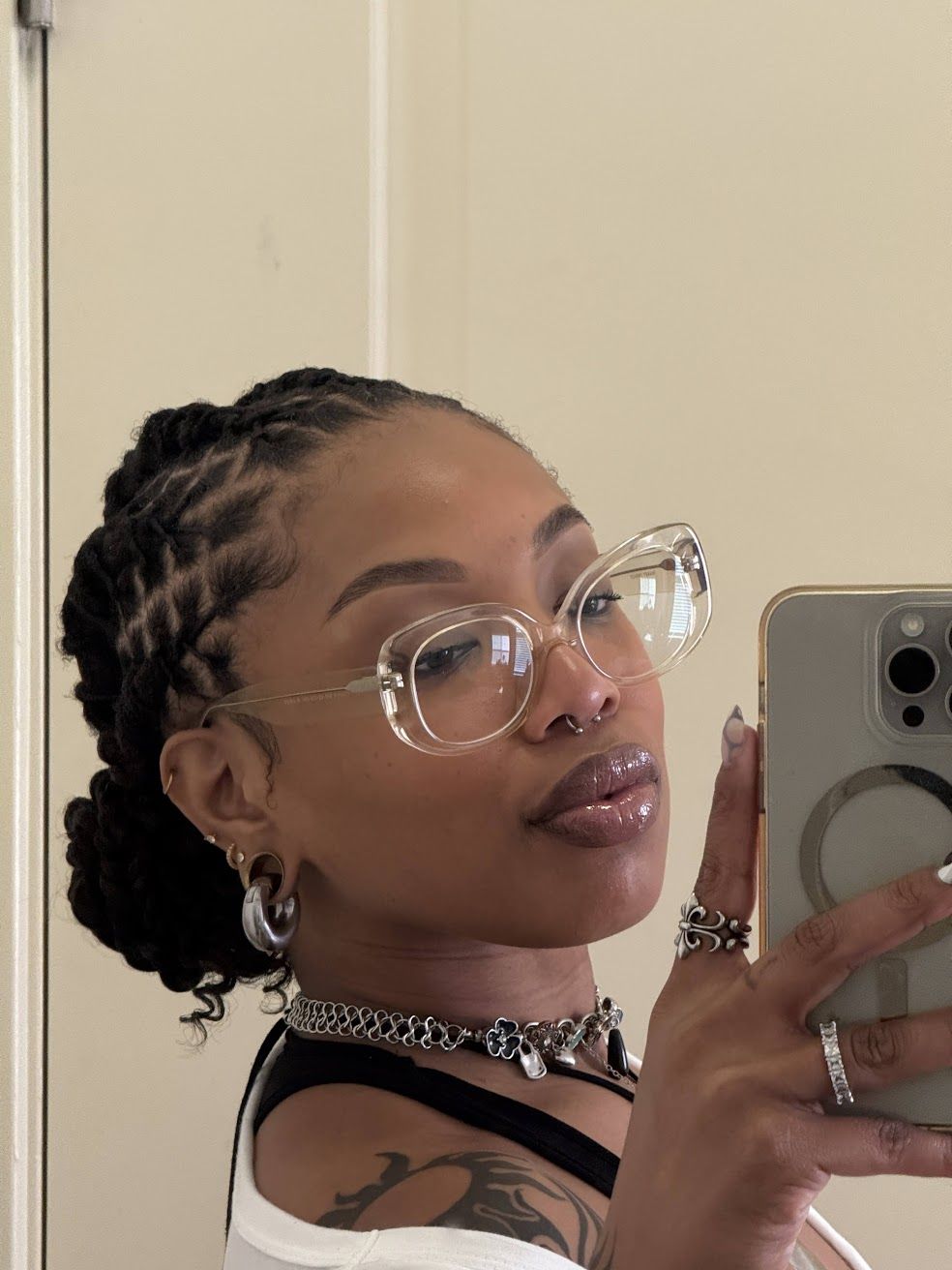
This Is the Post I Wish Every New Loc Starter Would Read First
I say that because so much of the anxiety around starting locs comes from the unknown. People see the finished result, those long beautiful mature locs, and they want that. But they have no idea what the road between here and there actually looks like from a hair science perspective.
So let us get into it.
Your Hair Was Actually Built for This
First things first. Let us talk about what natural hair actually is and why it locs so naturally in the first place.
Natural afro-textured hair has a unique structure that makes it different from straight or wavy hair types. Each strand grows out of the scalp in a coiled or zig-zag pattern depending on your specific curl type.
And because of that shape, the strands have a natural tendency to wrap around each other, tangle together, and interlock when left to their own devices.
You have probably experienced this already if you have had natural hair for any length of time. Leave it undetangled for a few days and it starts to knot up on its own. That is not a problem with your hair. That is just your hair’s natural behaviour.
Locs are essentially that natural behaviour being guided intentionally into sections.
The Structure of Your Hair Strand
To really understand what happens when hair locs, it helps to know a tiny bit about the structure of a single hair strand.
Each strand of hair has three layers. The innermost layer is called the medulla. The middle layer is called the cortex and this is where the strength and shape of your hair comes from.
The outer layer is called the cuticle and it is made up of tiny overlapping scales, a bit like roof tiles or fish scales, that lie flat when your hair is healthy and moisturised and lift up when your hair is dry or damaged.
Here is the important part. When those cuticle scales are lifted, whether from dryness, manipulation, or simply the natural texture of your hair, the strands grip each other more easily. They catch on each other. They tangle.
And when that tangling happens consistently within a contained section over a long enough period of time, those strands begin to permanently interlock.
That is locking. That is all it is. Your hair strands gripping each other so consistently and so thoroughly that they eventually become one solid, unified structure.
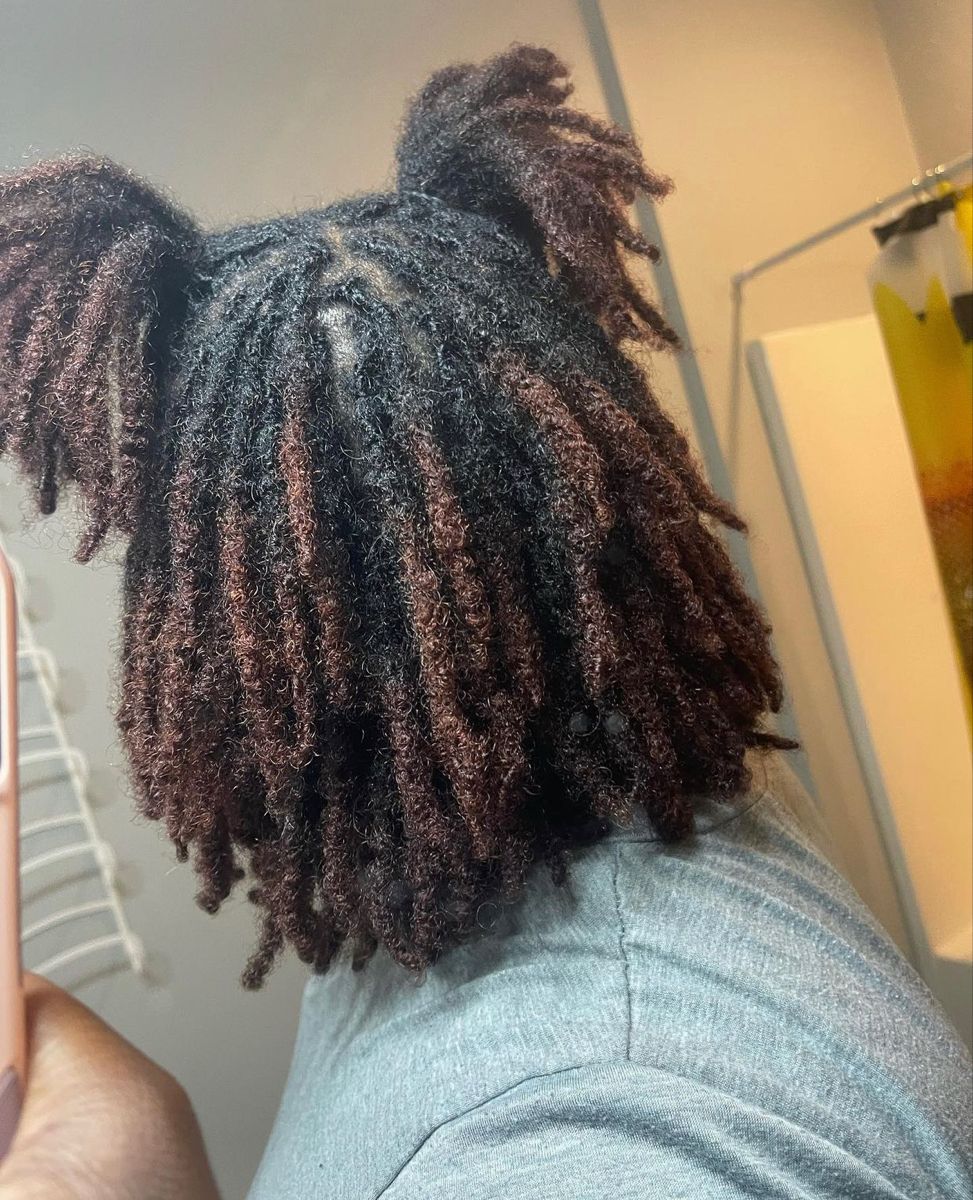
Let me walk you through this stage by stage because it is not one single event. It is a whole process that happens gradually over months.
Save this for your loc journey: How to Sleep with Locs Without Ruining Them
Stage One: The Starter Stage
This is day one. Your loctician has sectioned your hair and created your starter locs using whichever method suits your hair type. Maybe coils, maybe two strand twists, maybe interlocking. At this point your locs are neat, defined, and honestly kind of adorable.
But here is what is happening underneath the surface. The individual hair strands within each section are just sitting next to each other. They have not gripped each other yet.
They are not locked. They are just contained within a section and held in a pattern by the starting method.
This is why starter locs can unravel if you are not careful. There is nothing permanent holding them together yet. The locking has not actually begun. What you have at this stage is potential locs, not actual locs.
Stage Two: The Budding Stage
This is where things start to get real and also where things start to look a little chaotic. This is the stage most people call the ugly stage and it usually begins somewhere between four and eight weeks after you start depending on your hair texture.
What is happening here is that the hair strands inside your locs are beginning to tangle and interlock with each other for real.
You will start to feel small bumps or knots forming along the length of your locs. These are called buds and they are genuinely exciting when you know what they mean. They mean your hair is locking.
The outside of your locs will look frizzy during this stage because the hairs that have not yet been pulled into the locking structure are sticking out.
Your locs might feel soft and squishy rather than firm. They might look thinner in some sections and puffier in others.
All of this is normal. All of this is progress.
Stage Three: The Teenage Stage
I love this name because it is so accurate. Just like actual teenagers, your locs during this stage are awkward, unpredictable, and not quite sure what they want to be yet.
This stage usually kicks in around three to six months in. Your locs are starting to lock more consistently but they are not uniform yet.
Some sections might look almost mature while others are still in full budding chaos. Your locs might be at that in-between length where they are too short to style properly but too long to just leave alone.
What is happening inside your hair during this stage is that the interlocking is deepening. The buds you felt in stage two are now becoming more solid as more and more strands join the locked structure. The core of each loc is getting firmer. But there is still loose hair on the outside that has not been pulled in yet.
This is also the stage where shrinkage is most noticeable. As the strands compress and tighten around each other, the overall length of your loc shortens. People often feel like their hair has stopped growing during this stage but it has not. It is just condensing. The length will come back.
Stage Four: The Mature Stage
This is the stage everyone is waiting for. Mature locs are fully locked from root to tip. When you squeeze them they feel solid and firm. The frizz has calmed down significantly.
The surface looks smoother and more uniform. And crucially, the length starts to become much more visible because your hair is no longer shrinking as it locks.
At this stage the internal structure of your locs is completely different from what it was at the start. What was once individual strands sitting next to each other is now a tightly interlocked mass of hair that has essentially become its own unified structure.
The individual strands are no longer distinguishable inside the loc. They have become one.
This is also the point where your locs become the most versatile in terms of styling. Mature locs can be curled, coloured, trimmed, styled in updos, adorned with accessories, and so much more. The work you put in during those early stages pays off fully here.
Stage Five: The Elder Stage
Not everyone talks about this stage but it is real. Elder locs are locs that have been growing and maturing for many years, sometimes decades.
At this stage the locs are incredibly long, often very thick, and have a kind of weight and density to them that is different from younger mature locs.
The hair at the root continues to grow and lock throughout your lifetime as long as your locs are maintained. Elder locs can reach waist length, hip length, and even longer.
The people you see with floor-length locs have simply been on their journey for a very long time and taken good care of their hair throughout.
Come back to this when you need it: How to Keep Your Scalp Healthy and Moisturised with Locs
Why Different Hair Types Lock Differently
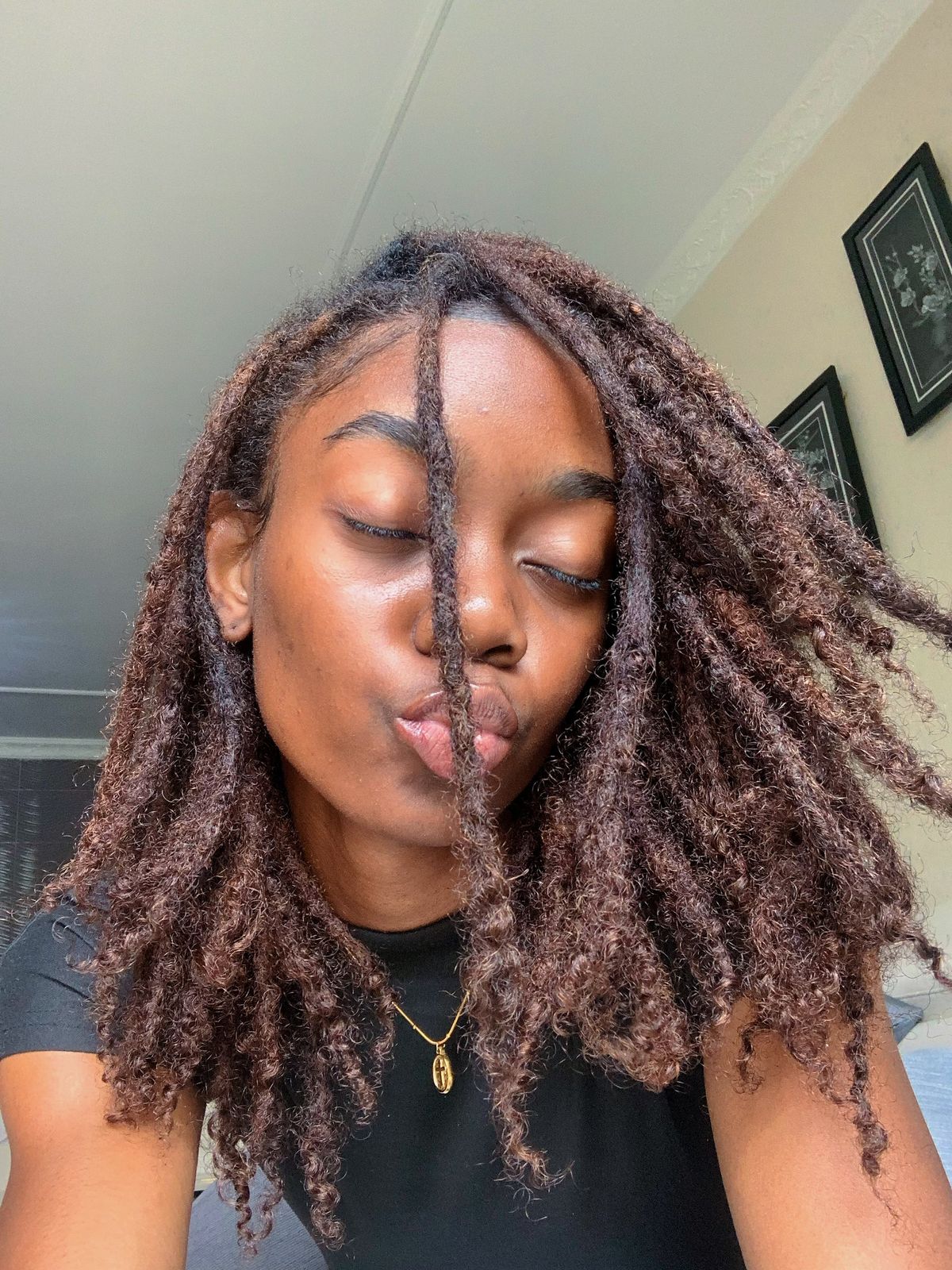
This is something I think is really important to talk about because a lot of people compare their loc journey to someone else’s and get discouraged when things look different.
The reason journeys look different is because hair is different.
Keep this guide handy: 10 signs you need a loc detox right now
Curl Pattern and Texture
Tighter curl patterns, think 4A, 4B, and 4C hair, tend to loc faster and more easily. This is because the tight coil shape means the strands are already wrapping around each other naturally before any locking technique is even applied.
The cuticle scales grip each other quickly and the locking process begins relatively fast.
Looser curl patterns and wavy textures take longer to loc because the strands are smoother and have less natural grip. This does not mean locs are not possible on these hair types, they absolutely are, it just means the process takes more patience and consistency.
Hair that has been chemically treated, whether relaxed, permed, or colour damaged, can also take longer to loc or may have a different texture to the new growth that is coming in.
This is why many locticians recommend transitioning to fully natural hair before starting locs, although it is not always a requirement.
Hair Density and Thickness
People with very dense, thick hair will often find that the interior of their locs locks before the outer layer does. This can make locs look frizzy on the outside for longer even when they are actually quite solid on the inside.
People with finer or less dense hair may find their locs look neater earlier but take longer to develop that solid, firm core.
You’ll want to revisit this: 7 reasons your locs are not progressing (and how to fix each one)
What This Means for How You Care for Your Hair
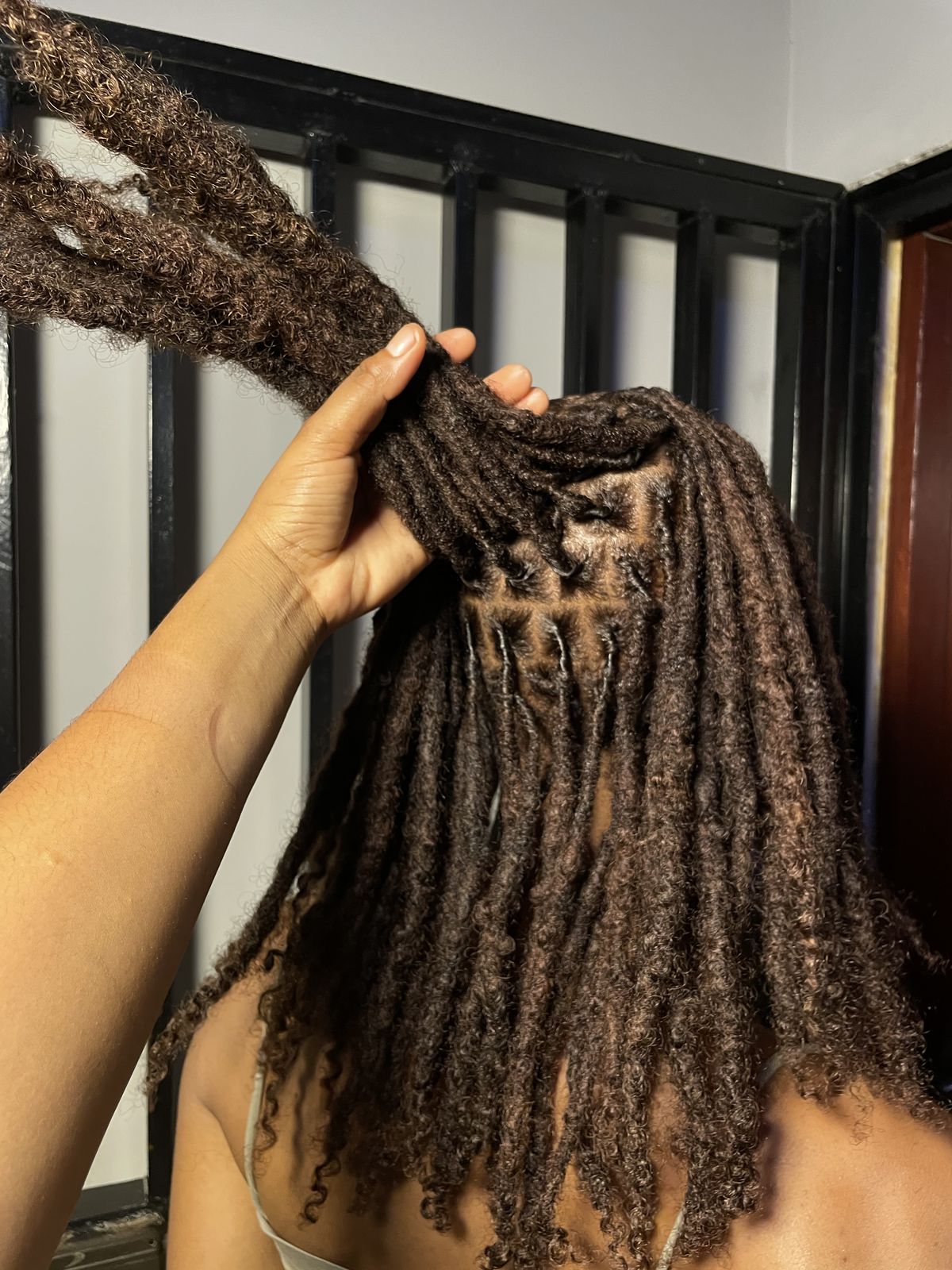
Understanding the science of locking changes how you approach your care routine and honestly makes everything simpler.
Don’t lose this post: How to wash locs without unraveling them (the right way)
In the Early Stages Keep It Simple
During the starter and budding stages your only real jobs are to keep your scalp clean, keep your hair moisturised with something light, and show up to your loctician appointments consistently. That is genuinely it.
The locking is happening on its own inside each section. Your job is just not to interfere with it.
Heavy products, constant manipulation, re-twisting at home between appointments, sleeping without a bonnet, all of these things disrupt the locking process.
They either prevent the strands from gripping each other properly or they introduce buildup that coats the strands and makes it harder for them to interlock.
Do Not Skip Wash Days
I know I said this in my last post but I will keep saying it because the myth that you should not wash new locs is still so widespread. Clean hair locks better. Full stop.
The natural oils and product residue that build up on unwashed hair actually create a coating on the strands that reduces their ability to grip each other.
Wash your locs regularly with a residue free shampoo, make sure you dry them thoroughly afterwards, and do not let them stay wet for extended periods. That is the routine. Simple and consistent.
Save this for future reference: The truth about loc buildup: what it is and how to get rid of it
Trust the Timeline
Every single stage I described above is necessary. You cannot skip the budding stage to get to the mature stage.
You cannot rush the teenage stage by over-manipulating your locs. The process has a timeline and your hair will follow it if you let it.
What you can do is support the process by being consistent with your maintenance, being gentle with your locs, giving your scalp the moisture and care it needs, and showing up for your professional appointments.
Pin this for later: How to Maintain Your Locs When You Have a Genuinely Busy Schedule
The Moment It All Makes Sense
There is this moment that I see happen with my clients, usually somewhere in the mature stage, where they just get it. They look at their locs in the mirror and they understand what their hair has been doing this whole time.
They can feel the difference between a mature loc and what their hair felt like in month two. And they always say some version of the same thing.
I wish I had understood this at the beginning. I would have stressed so much less.
That is exactly why I write these posts. Because the loc journey is so much more enjoyable when you understand what your hair is doing and why. The frizz is not failure.
The shrinkage is not regression. The fuzzy, in-between, slightly chaotic middle phase is not your hair going wrong.
It is your hair doing something genuinely remarkable. It is literally weaving itself together from the inside out.
And when you look at it that way, the whole process becomes something to marvel at rather than something to worry about.
Leave a Reply