Let me tell you something that a lot of people do not realise when they first start their loc journey.
You do not have to wait until your locs are long and mature to start having fun with them.
This is one of the biggest misconceptions I come across in my salon. People start their locs and then spend the next year or two just waiting. Waiting for length, for maturity. Waiting for the day their locs are finally long enough or established enough to do something interesting with.
But here is the truth. There are beautiful, easy styles you can do at almost every stage of your loc journey. And starting to experiment with your locs early, even in the budding stage, is actually one of the best things you can do for your confidence during those months when things feel uncertain.
In my last post about 10 Starter Loc Methods and Which One Is Right for Your Hair Type I talked about how your starting method affects how your locs look and behave in the early stages. Well your starting method also affects which styles are available to you early on. Two strand twist starter locs, for example, have a different texture and flexibility than coil started locs. So keep that in mind as you read through these styles.
Today I am giving you fifteen styles that are genuinely beginner friendly. Some work best on shorter or newer locs. Some work better once you have a little more length. I will tell you exactly where in your journey each style works so you can bookmark the ones that apply to you right now and come back to the others later.
A Quick Note Before We Start
When I say easy to recreate I mean easy relative to loc styling in general. Some of these styles do require a little practice. But none of them require professional training. None of them require heat. And none of them require your locs to be a specific length that takes years to achieve.
These are real styles that real people with beginner locs wear every single day. So let us get into them.
Bookmark this for later: What to Expect Financially When You Start and Maintain Locs Professionally
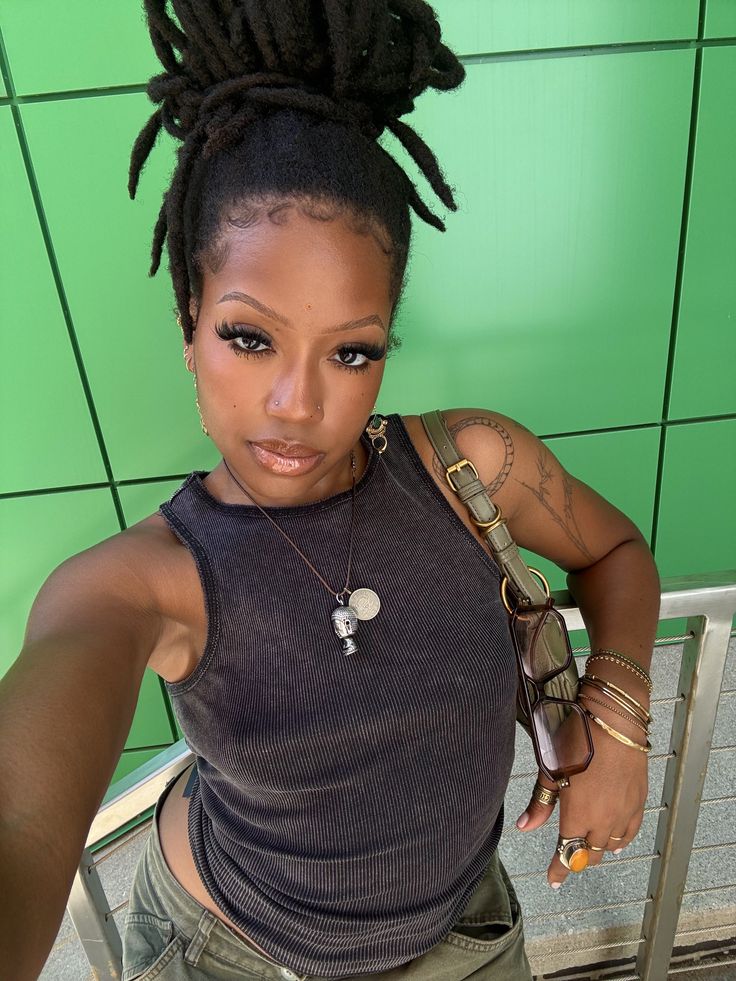
Works best from: Three months in and beyond
Let us start with the most accessible style on this entire list. The loc puff is exactly what it sounds like. You gather all your locs up and away from your face into a rounded shape on top of your head and secure them loosely.
This style works from the very early stages of your loc journey. Even when your locs are short, fuzzy, and very much in the middle of the budding stage, a loc puff pulls everything together and makes your hair look intentional and put together.
Save this for your loc journey: 5 stages of locs and what to expect at each one
How to Do It
Start by gathering all your locs upward using your hands. Do not use a regular hair tie because the elastic will create tension and can cause thinning and breakage right at the point where it grips your locs. Instead use a satin scrunchie or a soft loc band.
Once you have everything gathered, arrange the locs into a rounded shape. You can make it neat and smooth or let it be a little more full and natural. Both look great.
The beauty of this style is that it hides whatever is happening at your roots between retwist appointments. Fuzzy roots, new growth, uneven locking, all of it gets gathered up into the puff and suddenly your hair looks like a deliberate style rather than a work in progress.
Come back to this when you need it: How long does it actually take to get fully mature locs
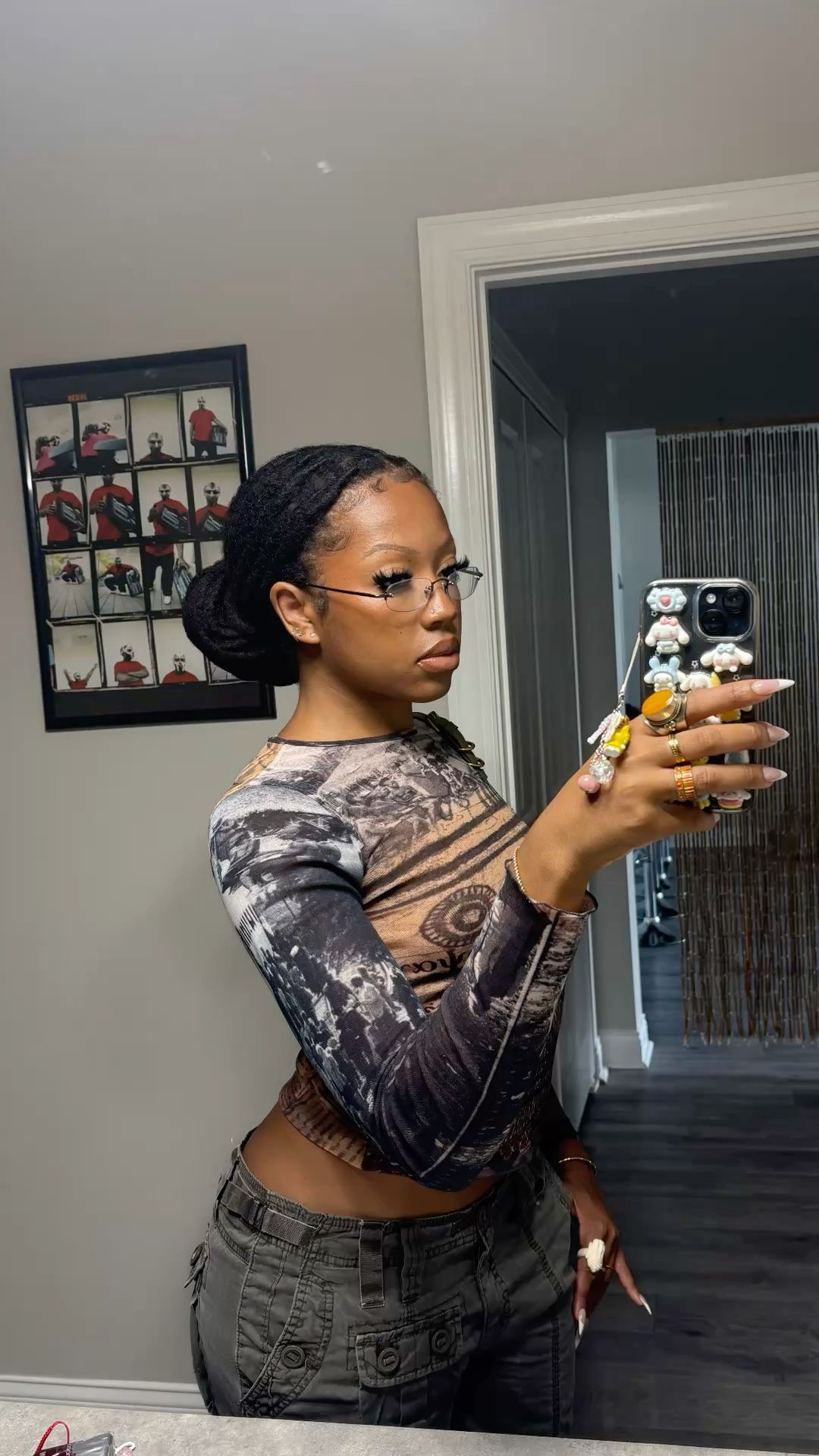
Works best from: Three months in and beyond
The low bun is a close relative of the puff but with a sleeker, more polished feel. Instead of gathering your locs upward you gather them back and down into a bun at the nape of your neck or just above it.
This style looks incredibly clean and professional. It is actually the style I recommend most often to my clients who work in corporate or formal environments and feel uncertain about wearing their locs down during the early stages.
Keep this guide handy: The honest truth about the loc “ugly stage” and how to push through
Gently gather your locs at the back of your head at whatever height feels comfortable. Then twist or coil them around each other into a bun shape and secure with a satin scrunchie or a loc pin. A few locs framing your face can soften the look and make it feel less severe.
If your locs are not yet long enough to form a full bun, do not force it. A half up half down version of this style works beautifully on shorter locs. Simply gather just the top section of your locs into a small bun at the crown and let the rest hang down.
You’ll want to revisit this: 20 medium loc styles that are trending right now
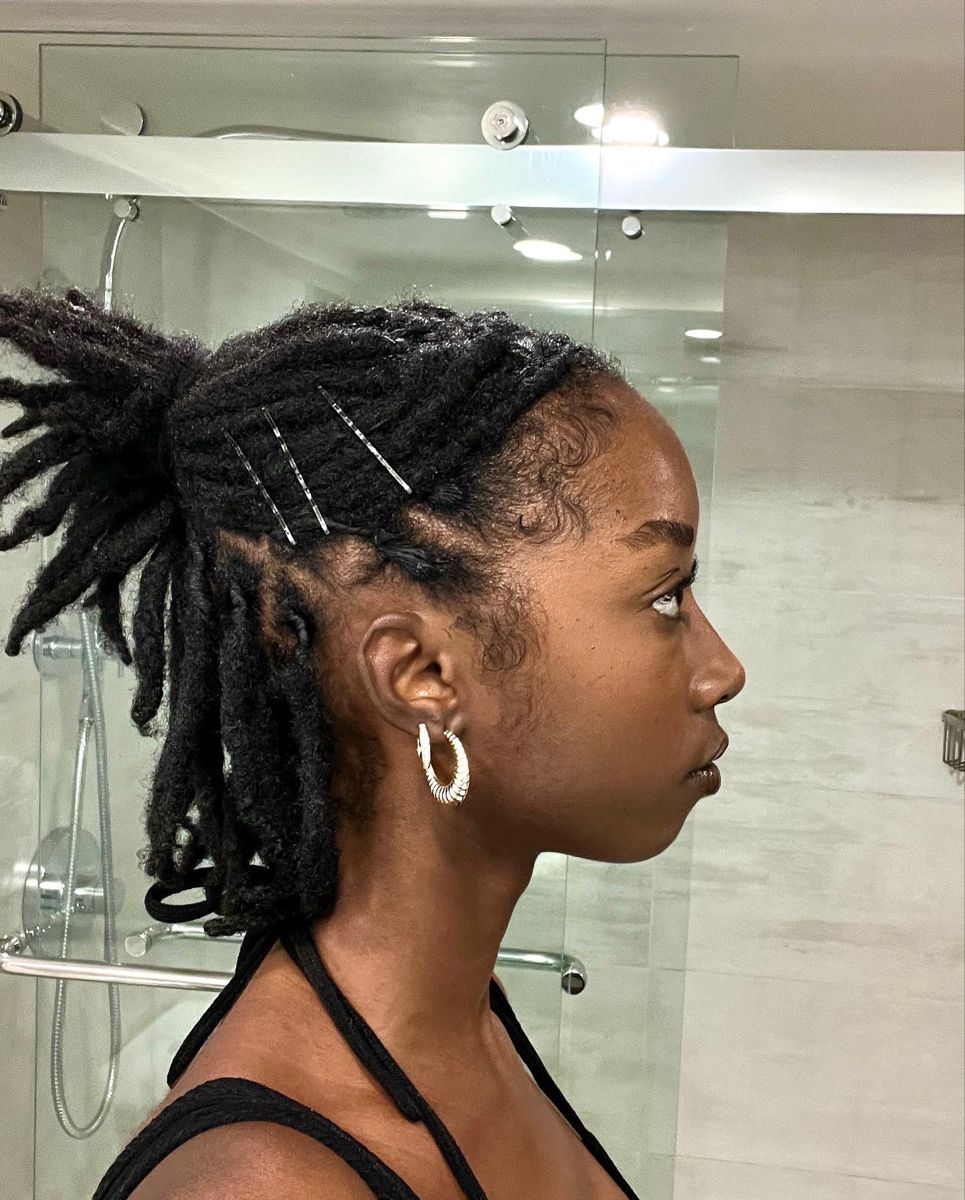
Works best from: Two months in and beyond
The half up half down is one of the most flattering and versatile loc styles for beginners. It works on almost every face shape, every loc size, and every stage of the journey from the very beginning.
The idea is simple. You take the top half of your locs, from ear to ear across the top of your head, and secure them up while leaving the bottom half to hang down freely.
Don’t lose this post: 15 loc styles for men that are stylish and low maintenance
How to Do It
Begin by sectioning off the top half of your locs from ear level upward. Then gather this section and secure it at the crown of your head with a satin scrunchie or loc band. You can make it into a small bun, a puff, or just a simple ponytail at the top while the bottom section hangs down naturally.
What makes this style so great is how customisable it is. You can make the top section sleek and smooth or deliberately full and voluminous. Or pull a few locs loose around your face for softness. You can dress it up for a formal occasion or keep it casual for everyday wear.
It also works brilliantly during the ugly stage because the gathered top section hides a lot of the frizz and new growth that tends to be most visible at the crown.
4. The Loc Ponytail

Works best from: Three months in and beyond
The classic ponytail translates beautifully to locs. It is simple, it is quick, and it looks polished with almost zero effort. In fact a loc ponytail takes about sixty seconds once you have done it a few times.
Save this for future reference: 15 freeform loc inspo photos that will make you ditch the retwist
How to Do It
Simply gather all your locs back into a ponytail at whatever height feels right for you. High ponytails look energetic and fun. Low ponytails look sophisticated and professional. Mid ponytails are great for casual everyday wear.
As always, secure with a satin scrunchie rather than a regular elastic. This is genuinely important because regular elastics grip locs too tightly and the repeated tension in the same spot causes thinning and breakage over time.
One thing to watch for is not wearing your ponytail in exactly the same spot every single day. Varying where you place it means no single group of roots is bearing constant tension. So try to rotate between a high, mid, and low position throughout the week.
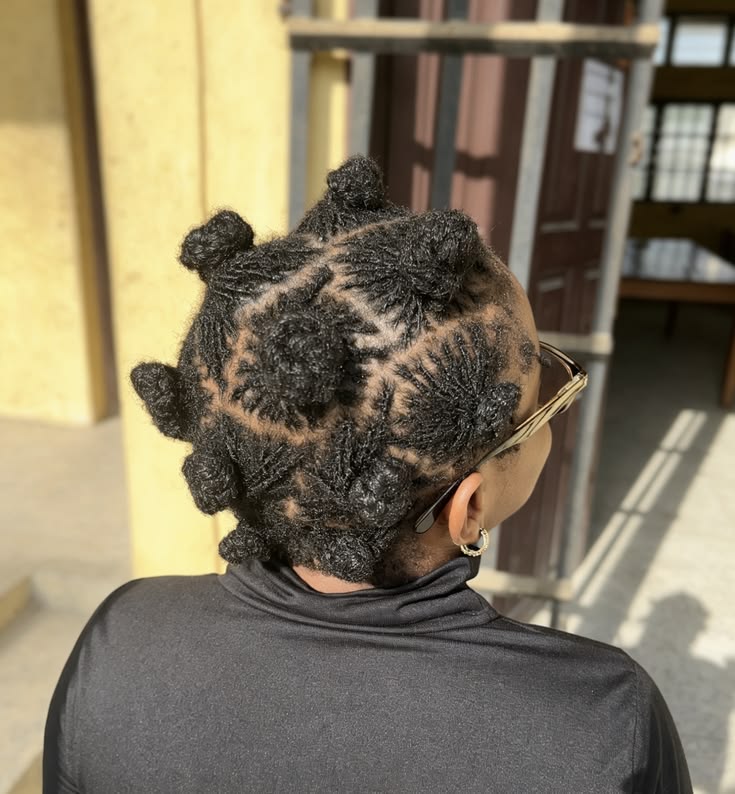
Works best from: Three months in and beyond, works best with some length
Bantu knots are beautiful. They are cultural, they are striking, and on locs they look absolutely stunning. And what makes Bantu knots on locs even better is that they double as a styling tool. Wear them as Bantu knots and then take them down for a completely different look.
Pin this for later: 10 loc hairstyles perfect for a 9-to-5 job
How to Do It
Start by sectioning your locs into equal parts across your head. The number of sections determines the size of your Bantu knots. More sections mean smaller knots while fewer sections mean larger, more dramatic ones.
From there, take each section and twist the locs around each other tightly while simultaneously coiling the whole section downward onto the scalp in a circular motion. Tuck the ends under or secure with a small loc pin. Then repeat across your entire head.
You can wear them as Bantu knots for a bold, beautiful look. Or alternatively, leave them set overnight and take them down the next day to reveal soft, spiralled waves running through your locs. That second day look is honestly gorgeous and requires no additional effort at all.
Works best from: Week one and beyond
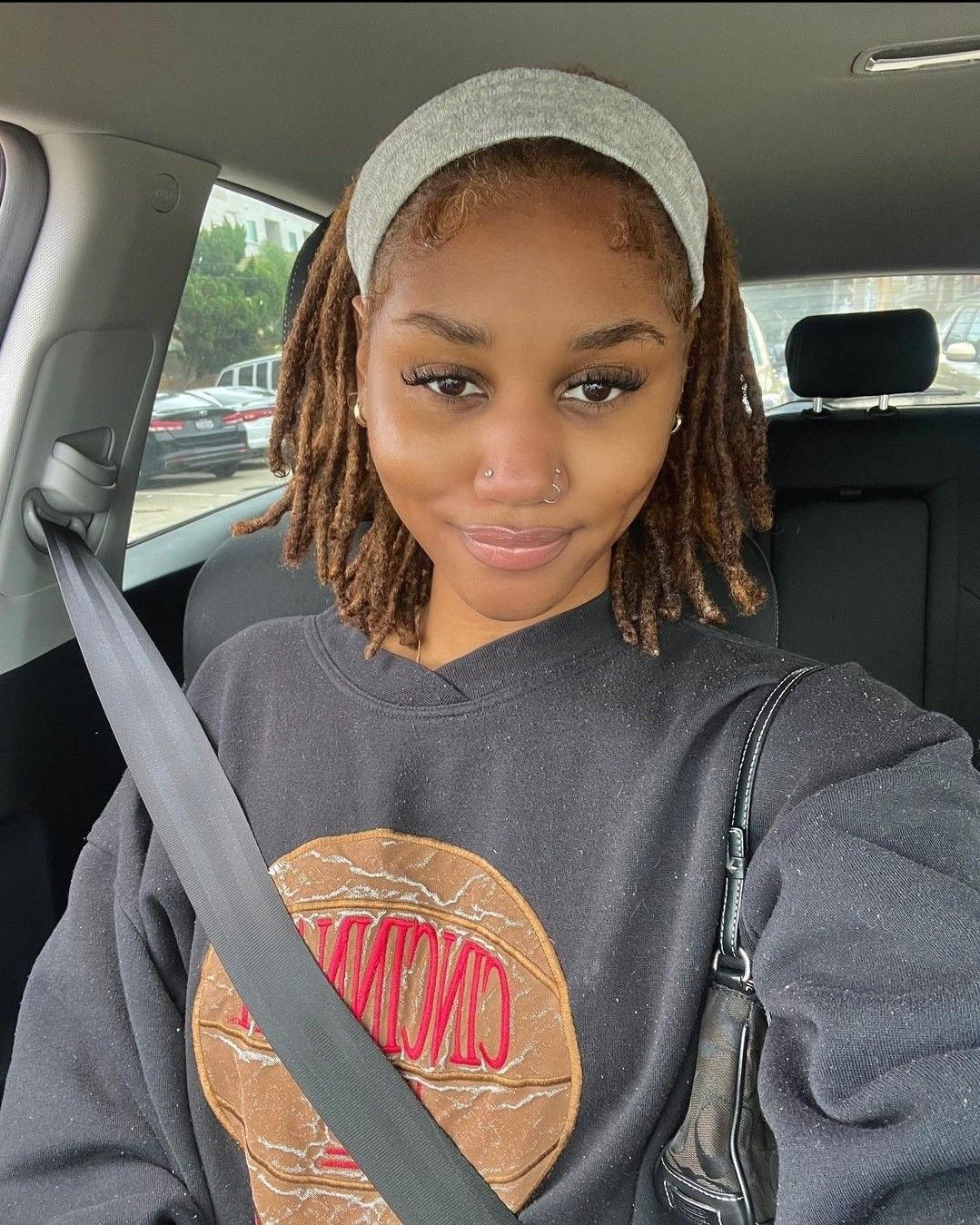
This is honestly might be the easiest style on this entire list. And I am including it because it is genuinely one of the most effective ways to elevate your loc look with absolutely minimal effort or skill.
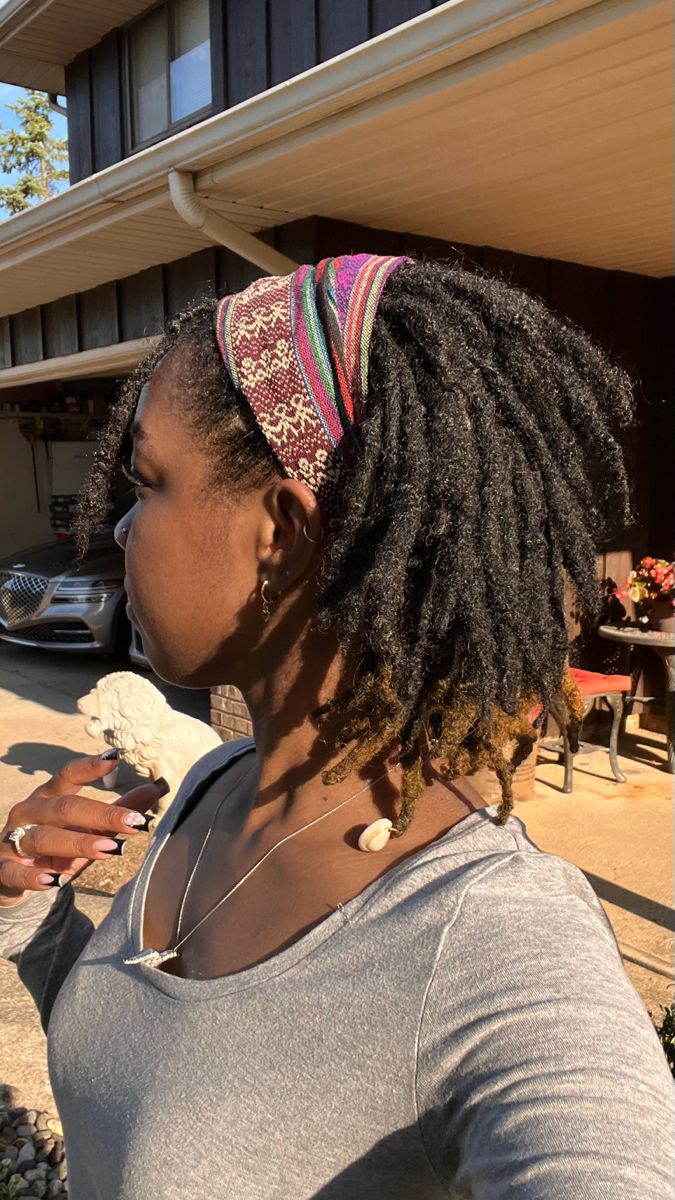
A wide fabric headband, a silk scarf folded into a band, or a loc headband worn across your forehead or pushed back on your head instantly transforms a simple wear-down look into something that feels intentional and styled.
Add this to your reading list: 20 beautiful short loc styles for women
How to Do It
Simply wear your locs down or loosely gathered. Then place your headband across your hairline or push it back to sit behind your front locs. That is genuinely it.
The headband draws attention to your face and frames your features beautifully. It also adds a pop of colour, pattern, or texture to your look without touching a single loc.
So keep three or four headbands and scarves in different colours and patterns accessible in your bathroom or bedroom. On the days when your locs are not cooperating and you do not have time to style them properly, a headband saves everything.
This is one to come back to: 12 cute ways to style locs with accessories and jewelry
Works best from: Two months in and beyond
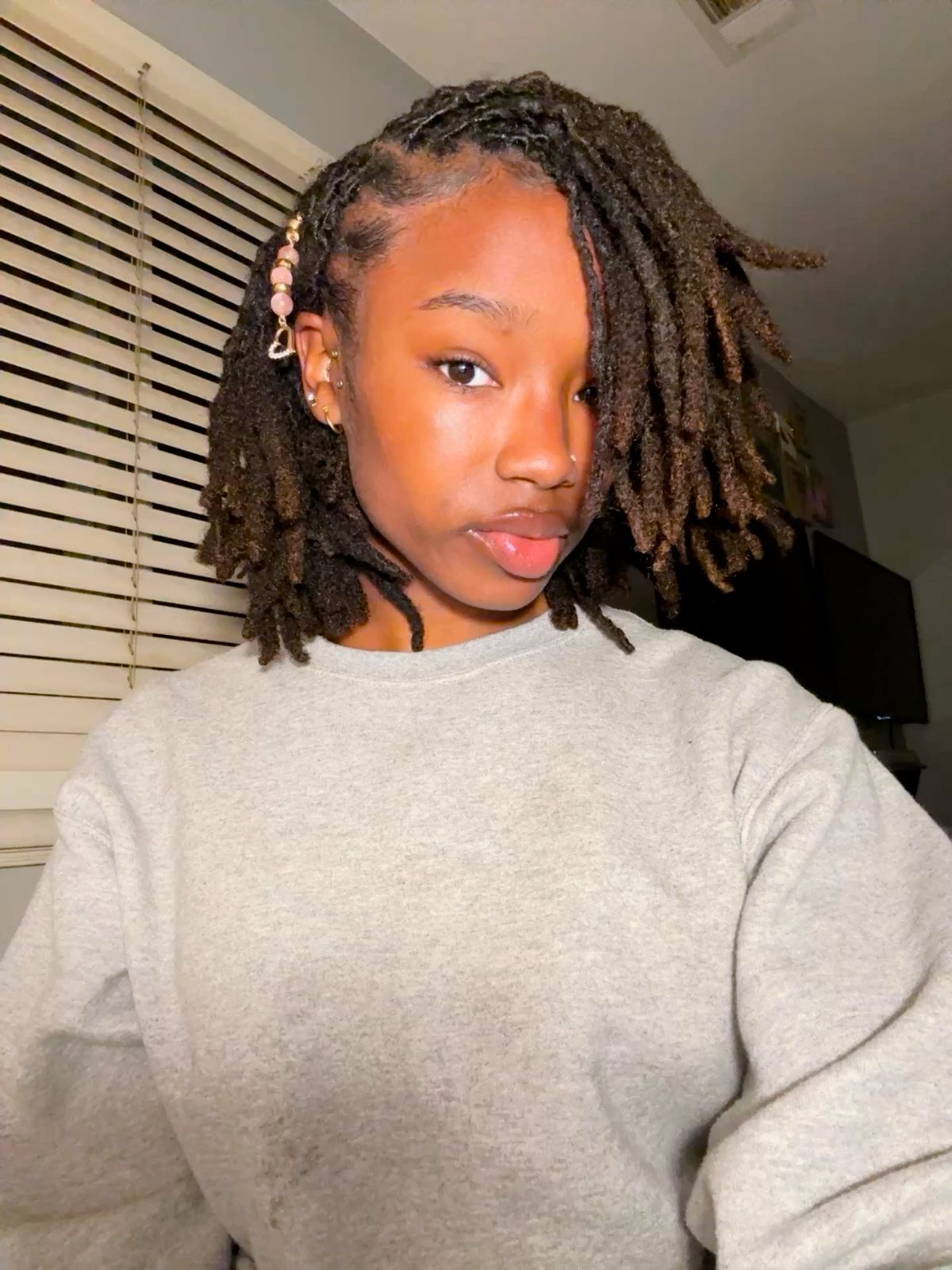
The side sweep is one of those deceptively simple styles that looks like you put in a lot more effort than you actually did. All you are doing is gathering all your locs to one side of your head and letting them fall over one shoulder.
How to Do It
Gather all your locs to one side. You can leave them loose to fall naturally over your shoulder or you can gather them into a loose side ponytail or side bun secured with a satin scrunchie. A few locs left out on the opposite side frame your face nicely.
The side sweep works beautifully for special occasions because it photographs really well. It also works as an everyday style because it takes about thirty seconds and keeps your locs out of your face without the fullness of a ponytail or bun.
Works best from: Four months in and beyond
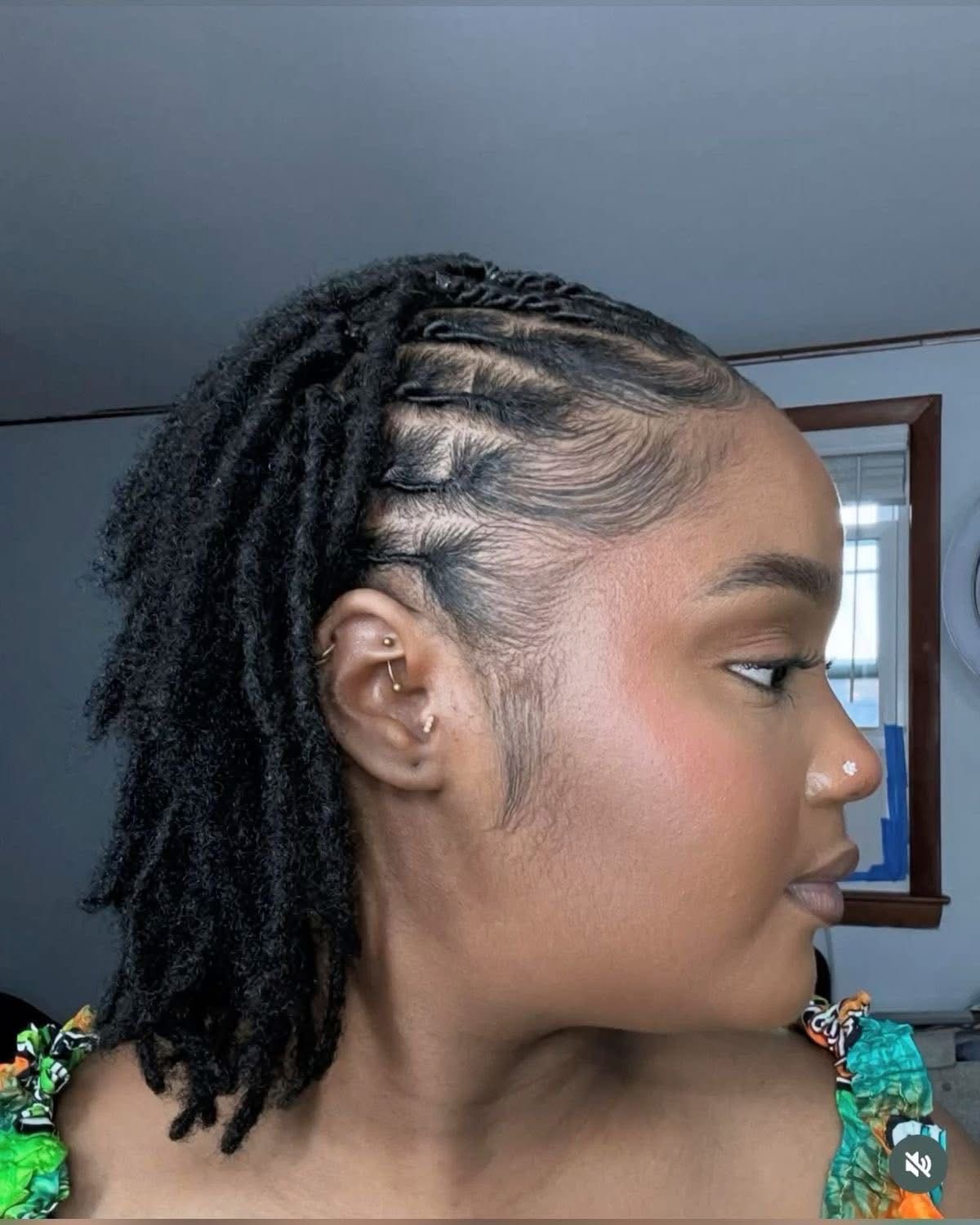
This style takes a tiny bit more skill than the others so far but it is still very much beginner friendly. Essentially you take two sections of locs at the front of your head, one on each side, and flat twist them back along your scalp before pinning them at the back. The rest of your locs hang down freely.
How to Do It
Begin by taking a section of locs from the front right side of your head, starting at your hairline. From there, flat twist these locs back along the scalp, picking up additional locs as you go in a technique similar to a flat braid. Secure at the back with a small loc pin or bobby pin.
Then repeat on the left side. The two twisted sections frame your face beautifully and give a styled, intentional look to what is essentially a wear-down style.
This is one of my favourite beginner styles because it is simple enough to learn quickly but looks polished enough for almost any occasion. It also works brilliantly during the budding and teenage stages because it sweeps the frizzy front locs back and away from your face.
Works best from: Six months in and beyond
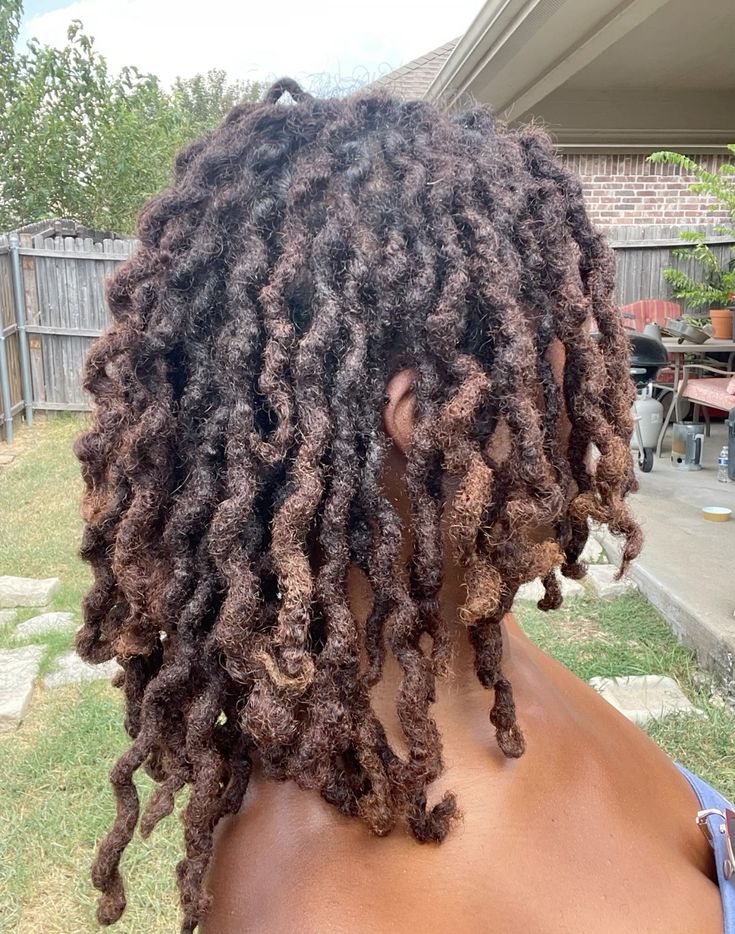
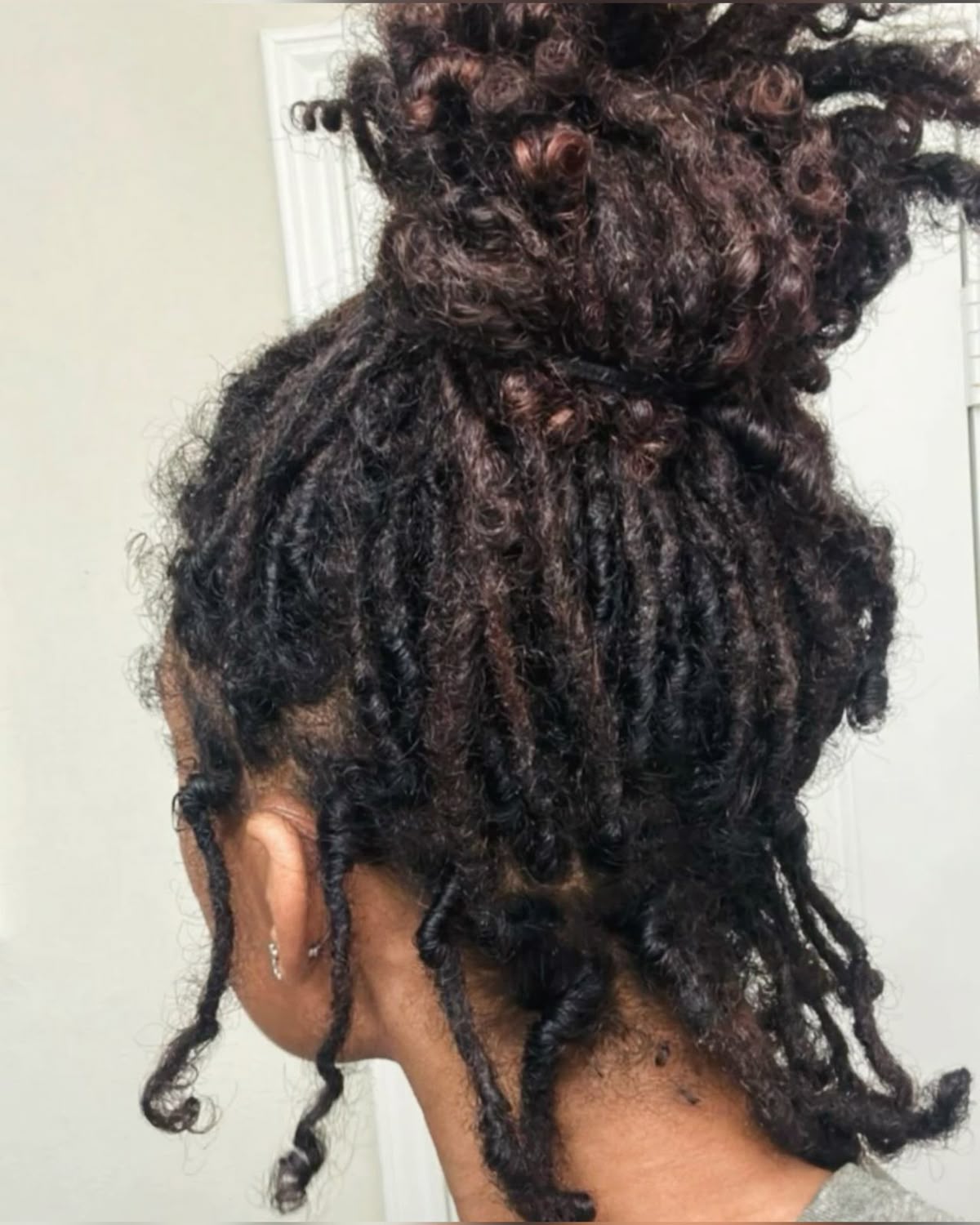
The loc braid out gives you waves and texture running through your locs without any heat. The idea is simple. You braid your locs while they are damp, allow them to dry completely, and then take the braids out to reveal a beautiful wave pattern.
How to Do It
Start on wash day while your locs are still slightly damp. Divide them into sections and then braid each section loosely from root to tip. Next, allow your locs to dry completely while still in the braids. This part is really important. Taking the braids out before your locs are fully dry will not give you the wave pattern and can leave your locs looking frizzy rather than wavy.
Once they are fully dry, take the braids out gently. Then run your fingers through your locs lightly to separate them and you will see a soft, natural wave pattern running through each loc. The result looks completely effortless and the waves will last for one to two days before your locs return to their natural position.
Works best from: Four months in and beyond
The messy bun is different from the low loc bun we talked about earlier. Where the low bun is polished and sleek, the messy bun is intentionally undone. Loose. Relaxed. A little bit everywhere. And somehow it always looks amazing.
How to Do It
Start by gathering your locs up as if you are making a regular bun. But instead of neatly coiling them around each other, just pile them on top of or behind your head loosely. Let some locs escape. Let some stick out at different angles. Then secure the bulk with a satin scrunchie but leave the ends free and unrestrained.
The key is to make it look deliberately undone rather than accidentally messy. The difference is confidence. So wear it like you meant for it to look exactly that way. Because honestly a messy loc bun is one of the most stylish things you can wear.
On top of that, this style hides a lot of the things that people feel self-conscious about during the early stages of their journey. The frizz, the uneven locking, the new growth. A beautiful messy bun makes all of that invisible.
11. Pinned Up with Loc Pins
Works best from: Three months in and beyond
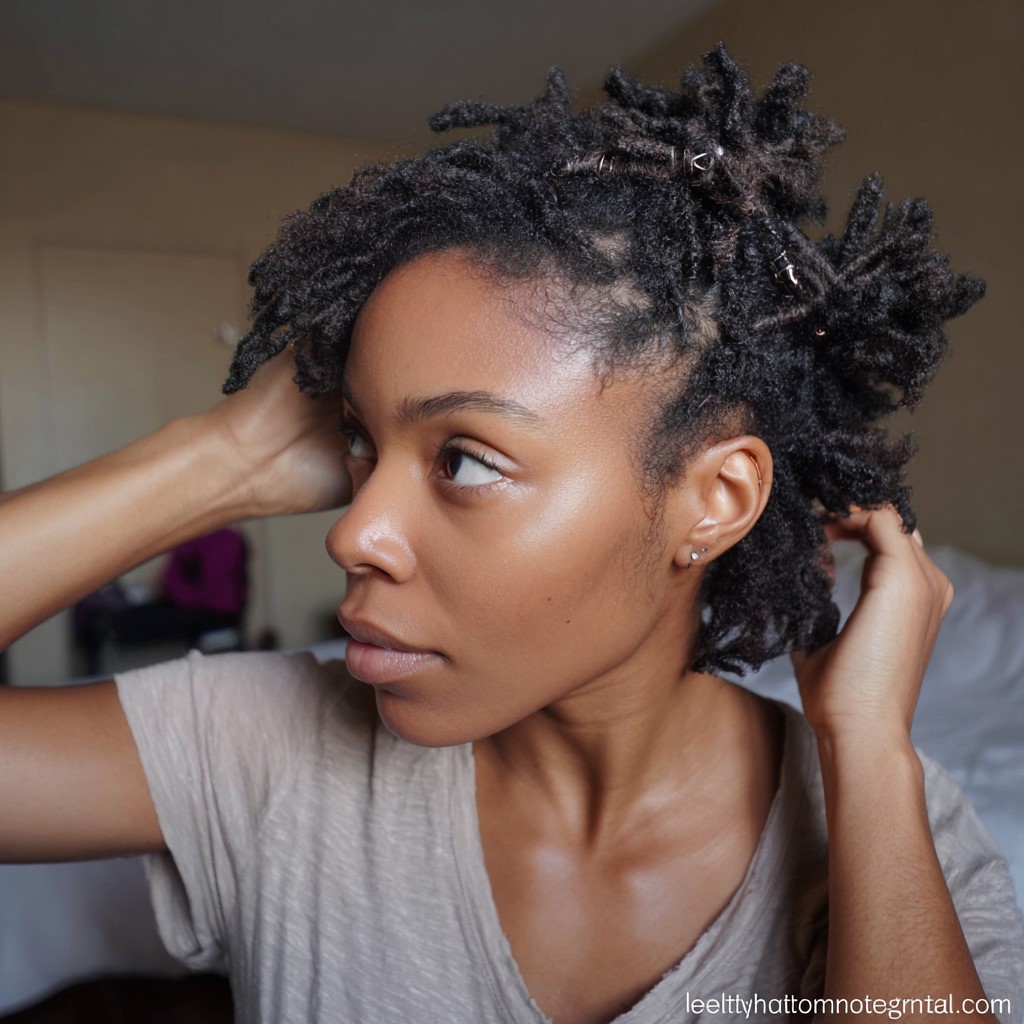
Loc pins are one of the most underused tools in the beginner loc toolkit. They are small pins specifically designed for locs that allow you to tuck, pin, and arrange your locs into all kinds of shapes without needing rubber bands, heat, or a lot of skill.
How to Do It
The simplest version of this style is to take sections of your locs and pin them up against your head in a pattern. For example you can create a pinned crown look by pinning sections upward around your head. You can also pin locs flat against your scalp in a sleek pattern or cross sections of locs over each other and pin them down for a woven appearance.
The best advice I can give here is to get a set of loc pins and just play. This style is one of the most creative and customisable options for beginners because there is no single right way to use pins. Every person who uses them creates something slightly different and that is exactly the point.
Works best from: Week one and beyond
Similar to the headband style but more dramatic and more versatile. A silk or satin scarf wrapped around your locs creates a completely different look from your locs alone and takes about two minutes to do.
How to Do It
There are several ways to wrap a scarf around locs. The simplest is to fold a square scarf diagonally into a triangle, place the middle of the scarf at your forehead, and then wrap the two ends around to the back of your head and tie them. Your locs hang out below the scarf naturally.
Alternatively you can gather your locs up into a bun first and then wrap the scarf around the bun for a turbaned effect. Or wrap just the front section of your locs in the scarf for a half wrapped look.
To make this style work even harder for you, invest in a few scarves in different prints and colours. Ankara prints, solid silks, and bold patterns all look stunning wrapped around locs. This style photographs beautifully and works for everything from casual days to formal occasions.
Works best from: Six months in and beyond
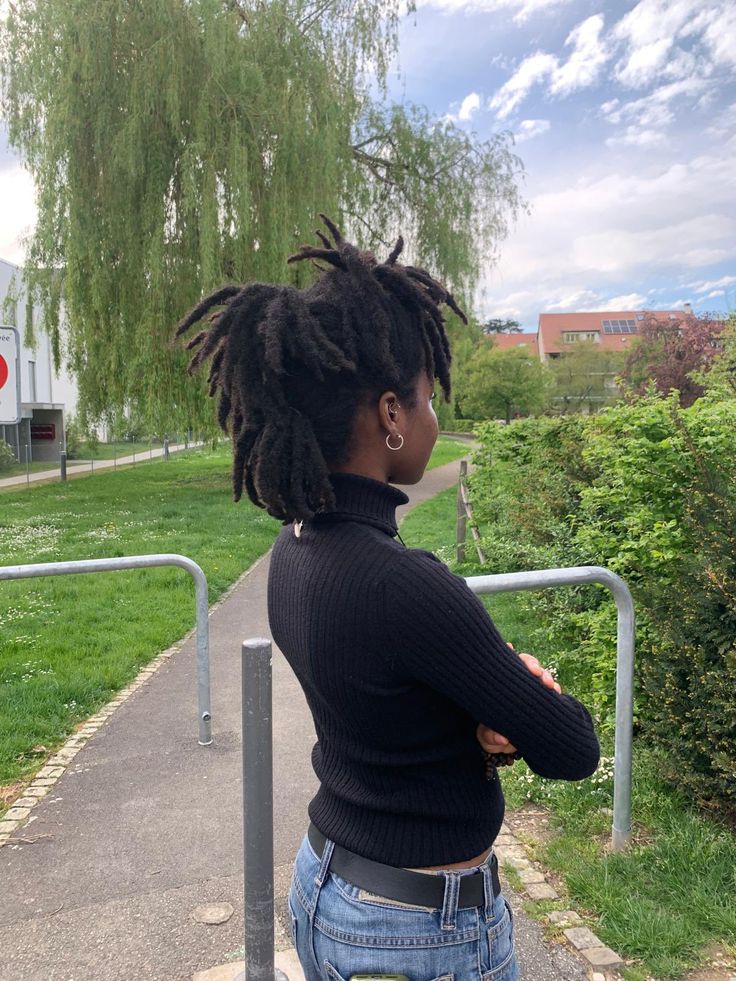
This is a slightly more involved style but it is still very much within beginner reach. The idea is to take sections of your locs and twist them together in groups before pinning the twisted sections up into an updo shape.
How to Do It
Begin by dividing your locs into four to six sections across your head. Then take two adjacent sections and twist them around each other. Once twisted, pin the pair up against your head with loc pins. Continue repeating this with the remaining sections until all your locs are twisted and pinned up.
The result is a beautiful, textured updo that honestly looks like you spent much more time on it than you actually did. It works for formal occasions, special events, and professional settings. And because all the locs are pinned up rather than hanging, it is a great style for showing off your face and your neckline.
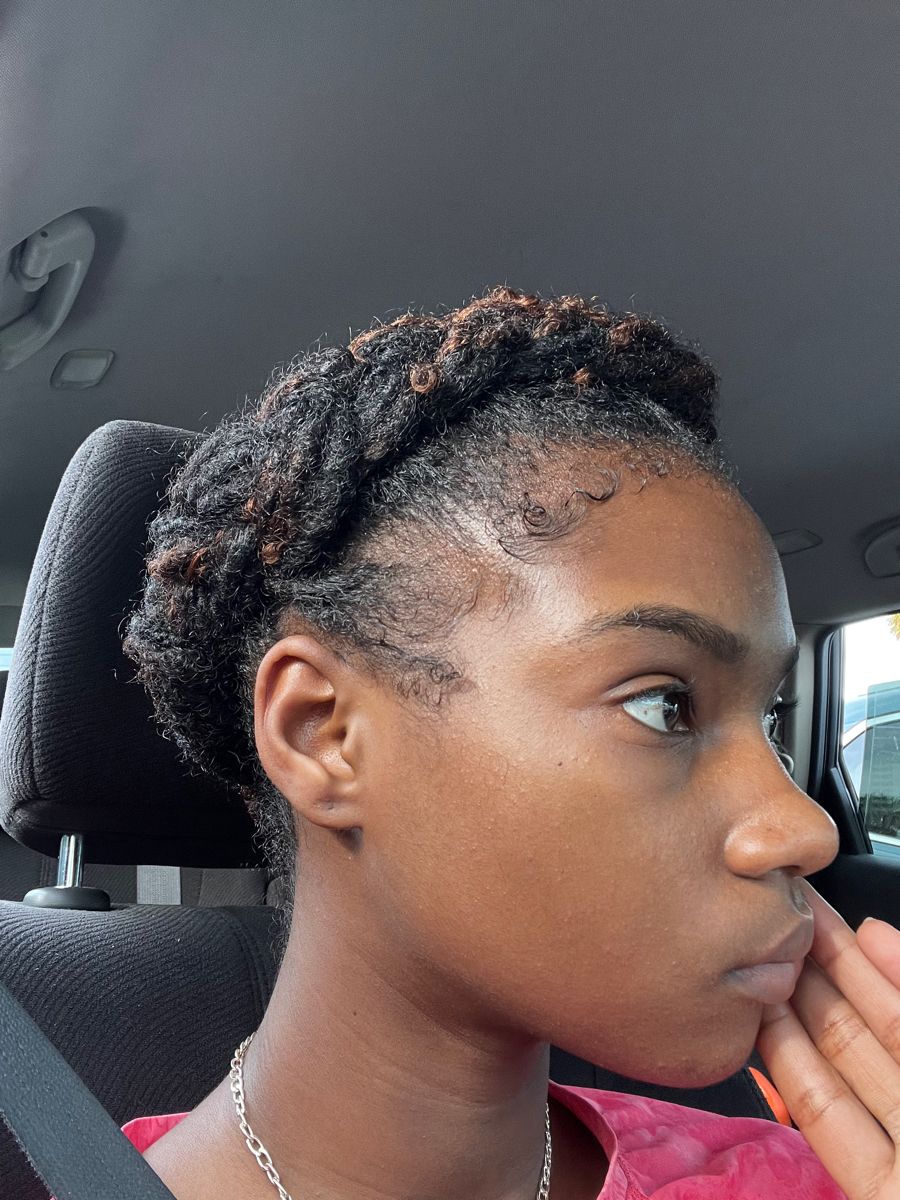
Works best from: Six months in and beyond with enough length to wrap around
Of all the styles on this list, the loc crown braid is honestly one of the most stunning. The idea is simple but the result is breathtaking. You take a section of locs and braid or twist them in a band that goes around the perimeter of your head like a crown. Meanwhile the remaining locs hang down freely below the crown.
How to Do It
To begin, start at one side of your head just above your ear. From there, take a section of locs and begin flat twisting or braiding them along the hairline toward the back of your head. As you go, continue bringing the section around the back of your head and up the other side. Finally, when you reach the starting point, pin the end securely with a loc pin to complete the crown.
Once it is done, the twist or braid sits beautifully around your head like a natural crown while the rest of your locs hang down freely beneath it. The overall effect is incredibly elegant. And what makes it even better is that despite how polished it looks, it is absolutely achievable with a little practice even if you are a complete beginner. So do not let it intimidate you. Give it a try and you might just surprise yourself.
15. Locs Down With Defined Parting
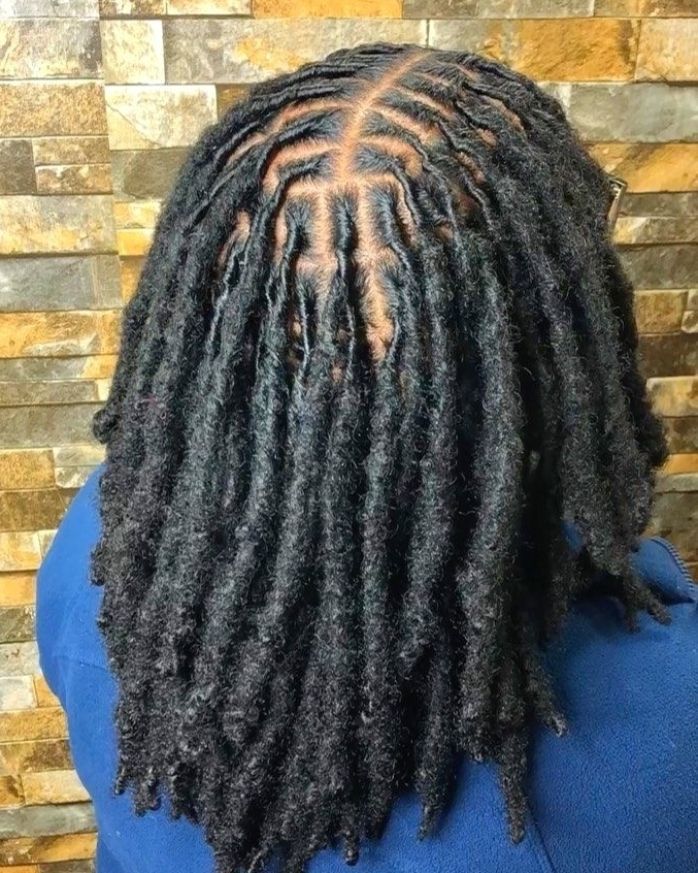
Works best from: Week one and beyond
Sometimes the most powerful style is simply wearing your locs down. And honestly, the thing that elevates wearing your locs down from casual to intentional is one small detail. A clean, defined part.
How to Do It
To get started, use the end of a rat tail comb to create a clean part in your locs. It can be a centre part, a side part, a deep side part, or even a zigzag part depending on the mood you are going for. Once you have your part, let your locs fall naturally on either side.
What happens next is almost magical. A clean part immediately makes wearing your locs down look deliberately styled rather than unstyled. On top of that, it draws attention to the shape and movement of your locs in a way that a messy, undefined part simply does not. And it is genuinely one of the simplest things you can do to instantly upgrade a wear-down day.
To take it even further, combine a clean part with a headband or a few pinned back front locs. The result is a style that looks polished and intentional with about three minutes of effort total.
A Few Things to Remember About Styling Beginner Locs
Before I let you go I want to leave you with a few important points about styling your locs in the early stages.
First and most importantly, do not style too tightly. Tension is your enemy during the early stages of your loc journey. Every style you do should feel comfortable. If it feels tight at your roots it is too tight. Loosen it immediately.
On top of that, do not use rubber bands or regular hair ties. I have said this throughout this post but I will keep saying it. The elastic in regular hair ties grips your locs too tightly and causes breakage and thinning over time. Instead, always use satin scrunchies, loc bands, or loc pins. Your roots will thank you for it.
Another thing to be mindful of is styling wet locs. Always allow your locs to fully dry before putting them in an updo or any gathered style. This is because bunning or pinning up damp locs traps moisture inside which leads to the musty smell and potential loc rot we talked about in the buildup post. When in doubt, wait a little longer before styling.
Finally, and perhaps most importantly, experiment and have fun. Your locs are yours. These fifteen styles are just a starting point. As you get more comfortable with your locs you will start to discover your own favourite ways to wear them. So trust your instincts. Play around. Take pictures. And above all, enjoy every single stage of the journey.
Leave a Reply