So you have decided to start your loc journey. Or maybe you are already on it and wondering what stage you are in right now. Either way, welcome you are in exactly the right place.
I want to be honest with you before we even start. This journey is not linear. It does not look the same on everyone, and it definitely does not follow a strict calendar. However, understanding the stages helps enormously. It helps you know what is normal, what needs attention, and what is simply part of the process.
If you have been reading along on Crowned in Locs lately, you might have just finished my post on how to add color to locs without major damage. In that post, I mentioned timing as a key factor in coloring safely. Well, understanding your loc stages is a huge part of understanding that timing. So this post connects directly to that one in more ways than you might expect.
Let us get into every single stage, one by one.
Stage One: The Starter Stage (Baby Locs)
This is where it all begins. Your locs are brand new, fresh, and honestly looking a little uncertain about their future. That is completely okay. Every mature, gorgeous set of locs you have ever admired started right here at the very beginning.
Starter locs are typically installed by a loctician using one of several methods. The most common methods include two-strand twists, coils, braids, and interlocking. Each method affects how your locs eventually look and how they behave in the early weeks.
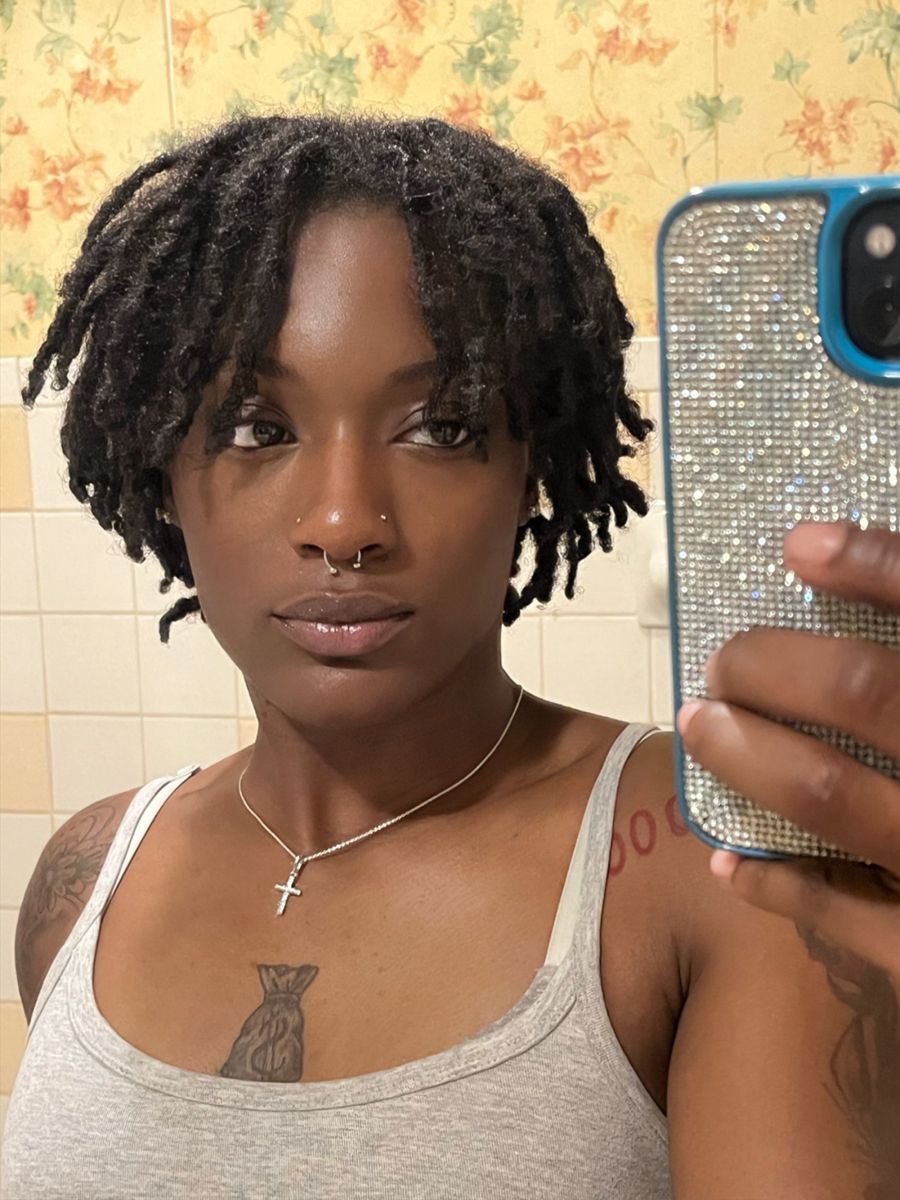
What Your Hair Looks Like at This Stage
At the starter stage, your locs look neat and defined right after installation. However, within days or weeks, they begin to loosen and sometimes look undone. This is completely normal and does not mean your locs are failing at all.
Your hair is simply beginning the process of tangling from the inside out. Furthermore, the pattern of your natural hair largely determines how quickly things start to lock together at this stage.
How Long the Starter Stage Lasts
The starter stage generally lasts anywhere from three to six months. However, some people move through it faster depending on their hair texture. Coarser, tighter curl patterns tend to loc more quickly than looser textures do.
If you are going into this stage completely fresh, my post on what no one tells you about getting starter locs for the first time is genuinely one of the most practical reads you will find. It covers the real expectations that most stylists forget to set.
What to Focus on During the Starter Stage
Keep your scalp clean and moisturised consistently during this period. Avoid manipulating your locs too much, because excessive touching slows the locking process significantly. Additionally, resist the urge to retwist too frequently over-manipulation at this stage causes more harm than good.
Protect your locs at night with a satin bonnet or satin pillowcase every single evening. Also, be patient. Your locs are working hard underneath the surface even when they do not look like much is happening above it.
Stage Two: The Budding Stage
The budding stage is when things start to get genuinely exciting. This is the point where you can actually feel and see your locs beginning to form real structure. Small bumps or buds begin to appear along the length of each loc. That is exactly where the stage gets its name.
What Is Actually Happening to Your Hair
Underneath the surface, your hair strands are beginning to tangle and intertwine more deliberately. The hair that shed naturally is not falling away the way it would with loose natural hair. Instead, it is becoming part of the loc structure itself.
My post on what really happens to your hair when it starts to loc goes deep into this fascinating process. If you are a science-minded person who wants to understand the biology of what is happening, that post is absolutely worth your time right now.
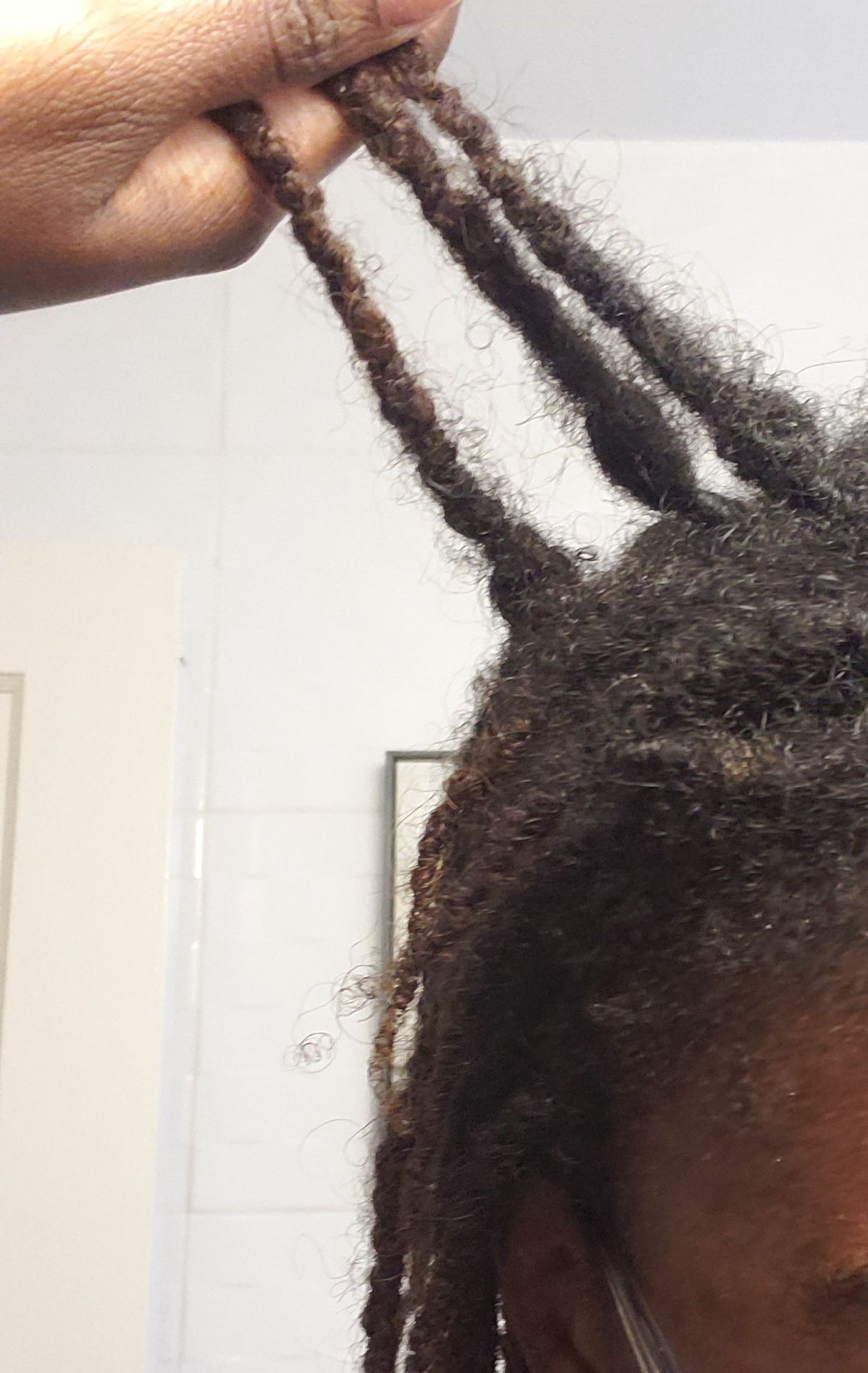
What Your Locs Look Like During Budding
Your locs may look slightly fuzzy, uneven, or lumpy during this stage. Some sections may bud faster than others. Therefore, do not panic if your locs look inconsistent at this point that is completely expected and entirely normal.
The buds you see forming are genuinely a sign that your locs are progressing. Consequently, this stage is actually a reason to celebrate even when it feels uncomfortable to look at.
How Long the Budding Stage Lasts
The budding stage typically lasts between three and nine months. Again, your hair texture plays a significant role here. Furthermore, how consistently you maintain your locs during the starter stage affects how quickly budding progresses.
Stage Three: The Teenage Stage
Oh, the teenage stage. If there is one stage that makes people want to quit their entire loc journey, it is this one. I say that with all the love in the world and also from very personal experience.
The teenage stage is widely considered the most challenging and the most frustrating part of the entire journey. Your locs are no longer neat little twists, but they are also not fully formed locs yet. They exist in this awkward in-between space that can feel impossible to style and difficult to love.
I have sat across from clients during this stage who were absolutely convinced they had made a terrible mistake. One client I will call her Temi came in at around month seven completely defeated. Her locs were fuzzy, they would not hold any style, and she was seriously considering combing them out entirely. We talked for a long time before she agreed to keep going. Two years later, she has one of the most beautiful mature loc sets I have ever installed. She sends me pictures regularly, and I keep every single one.
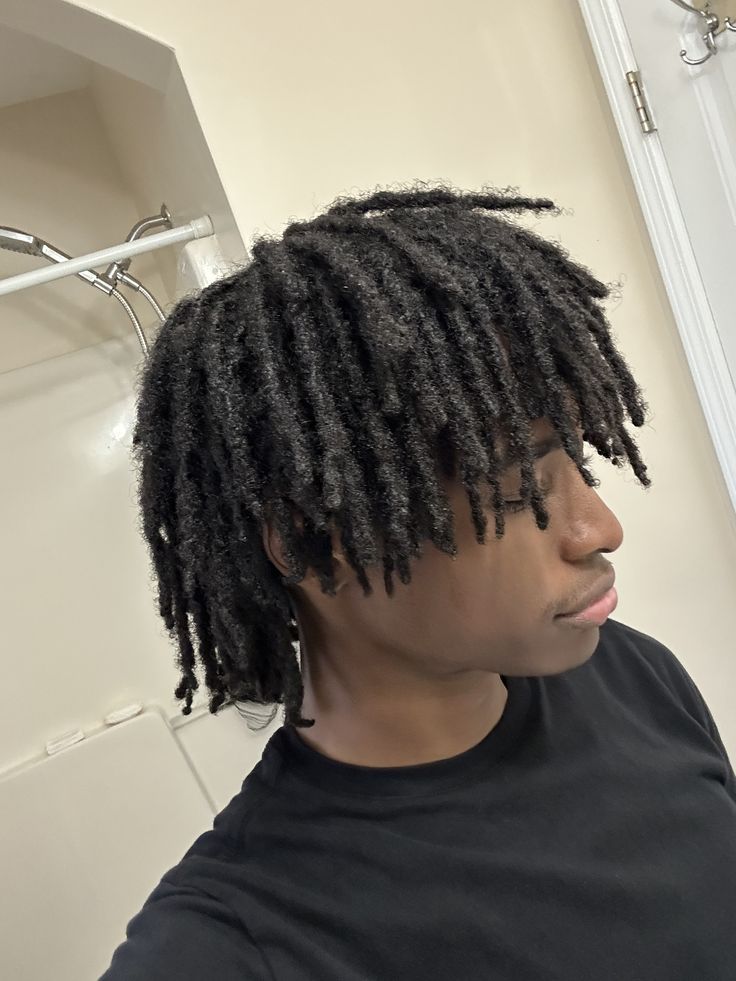
Why This Stage Feels So Hard
During the teenage stage, your locs are in a genuine identity crisis. They are too locked to behave like loose hair, but not locked enough to behave like mature locs. Consequently, they can feel unruly, look messy, and resist most styling attempts.
Additionally, many people experience increased frizz and swelling during this stage. The locs take on a thicker, puffier appearance that can feel overwhelming, especially if you started with neat, slender sections.
What to Do During the Teenage Stage
This is the stage where your maintenance routine matters most. Keep up with regular retwisting or interlocking appointments to help the roots stay neat and defined. However, avoid over-tightening at the root in an attempt to tame frizz that causes more damage than it solves.
If you have been going back and forth on whether to retwist or interlock, my post on retwist vs interlocking, which method is actually better for your locs will help you make the most informed decision for your specific hair type and lifestyle during this critical stage.
How Long the Teenage Stage Lasts
The teenage stage can last anywhere from six months to a full year. I know that feels like a long time when you are in the thick of it. Nevertheless, it is important to remember that every single person who has ever had mature locs sat right where you are now and pushed through this exact same stage.
My post on the honest truth about the loc ugly stage and how to push through was written specifically for this moment in your journey. Read it whenever you feel like giving up and bookmark it, because you may need it more than once.
Stage Four: The Mature Stage
Here it is. The stage everyone is working toward. The mature stage is when your locs finally feel and look like the vision you had in your head when you first started. They are fully locked from root to tip. They hold styles beautifully. They feel strong, defined, and genuinely yours.
There is something deeply emotional about reaching this stage that I do not think anyone can fully prepare you for. I have seen grown adults cry in my chair the day their locs officially matured. Not from sadness from pride.
From the realisation that they stayed committed to something through every difficult moment, and here is the result staring back at them in the mirror.
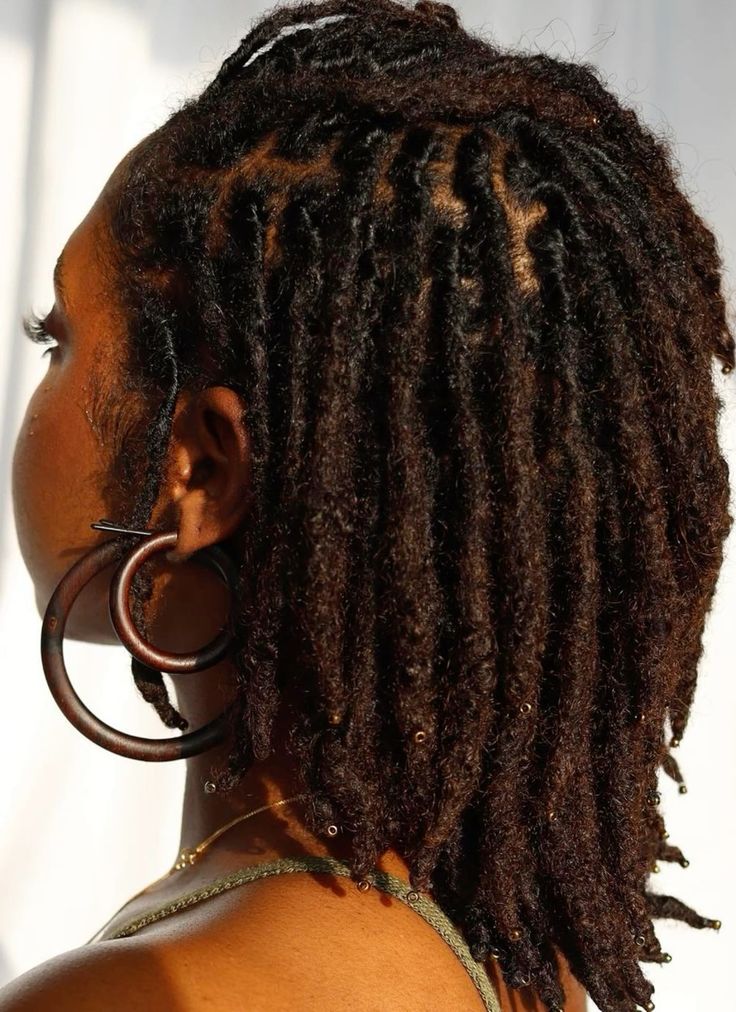
What Mature Locs Actually Feel Like
Mature locs feel cylindrical and firm throughout the entire length. There is no soft, unformed section anywhere along the loc. Furthermore, the locs have a natural shine and movement that the earlier stages simply cannot replicate.
You will also notice that mature locs are significantly easier to style. They hold updos, buns, and wrapped styles far more reliably than younger locs do.
Additionally, they respond beautifully to color at this stage, which is exactly why I always recommend waiting for full maturity before any major color work.
How to Know Your Locs Are Truly Mature
Squeeze a section of your loc gently between your fingers. If it feels solid and firm throughout with no soft or spongy areas, your locs are mature. Furthermore, mature locs do not unravel when submerged in water and dried properly afterward.
If you are not sure whether your locs have fully matured yet, my post on how long it actually takes to get fully mature locs gives you a detailed timeline and all the physical signs to look for at every point of the journey.
How Long It Takes to Reach the Mature Stage
Most people reach the mature stage somewhere between eighteen months and three years. However, some people get there faster and some take longer.
The variables include your hair texture, your maintenance consistency, and how your locs were originally started.
Therefore, try not to compare your timeline to anyone else’s. Your journey is moving at exactly the pace your hair needs it to.
Taking Care of Mature Locs
Just because your locs are mature does not mean they stop needing care. If anything, mature locs need a different kind of intentional attention than younger locs do.
Buildup becomes a more significant concern at the mature stage because the locs are fully sealed and product residue accumulates inside them over time. My post on the truth about loc buildup, what it is and how to get rid of it is essential reading for anyone with mature locs who wants to keep their hair clean, fresh, and healthy for the long term.
Stage Five: The Rooted Stage
Not everyone talks about the rooted stage separately, but I genuinely believe it deserves its own conversation.
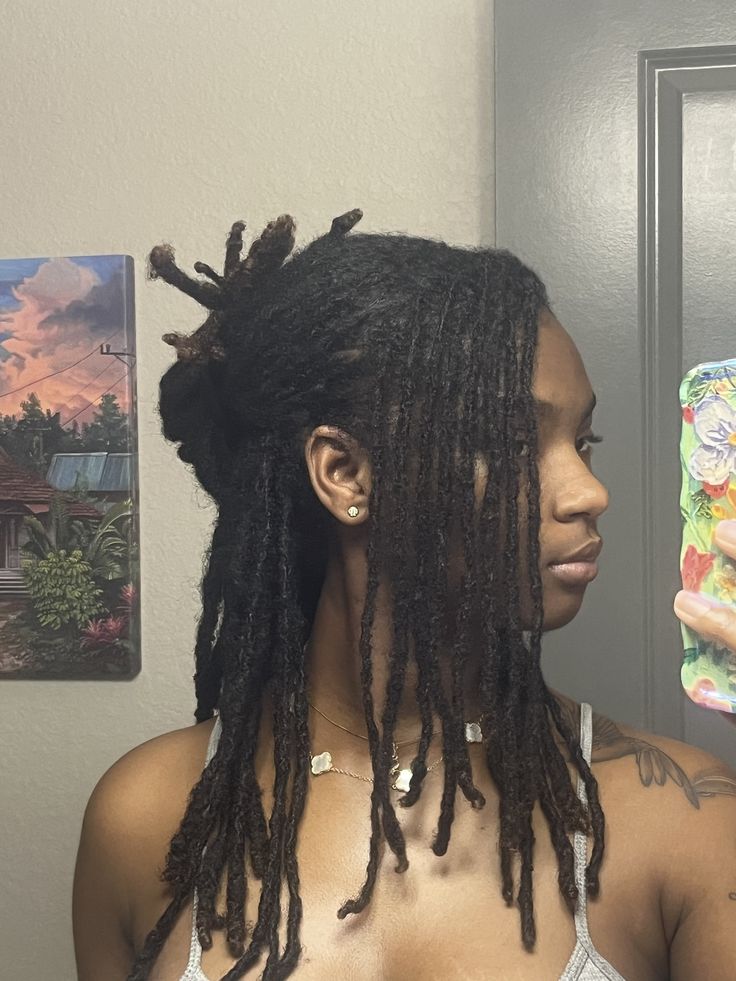
The rooted stage is what happens when your mature locs continue to grow and develop over several more years.
They become longer, denser, and carry a visual weight and presence that feels profoundly different from even the early mature stage.
What Changes During the Rooted Stage
At this stage, your locs have truly become part of you. They have absorbed years of your hair’s natural oils, your hair care practices, and your personal loc maintenance style.
Furthermore, the locs themselves often develop a unique texture and sheen that is entirely their own shaped by time and consistency.
Many people at this stage begin experimenting more boldly with color, length, and styling. They have a deep enough understanding of their locs to know exactly what their hair can and cannot handle.
Consequently, the rooted stage is often the most creatively expressive and joyful phase of the entire journey.
Maintaining Locs in the Rooted Stage
At this point, your maintenance routine is well established and likely very personal to you.
However, scalp care remains a non-negotiable priority regardless of how long your locs have been growing. My post on how to keep your scalp healthy and moisturised with locs covers the scalp habits that matter across every single stage of the loc journey, but they become especially important as your locs grow longer and heavier over time.
Additionally, longer locs place more weight on the root, which can cause thinning if the scalp is not properly nourished and if the locs are not handled with appropriate care during styling and sleeping.
The Variables That Affect How Fast You Progress
No two loc journeys look exactly the same, and there are specific reasons for that. Understanding these variables helps you manage your expectations realistically and prevents unnecessary frustration along the way.
Hair Texture
This is the single biggest factor in loc progression speed. Tighter, coarser curl patterns naturally tangle and lock faster than looser textures do.
Therefore, someone with 4C hair may move through the starter and budding stages considerably faster than someone with 3B hair starting the same journey at the same time.
Neither texture is better or worse for locing. They simply move at different speeds and require slightly different approaches to care and maintenance along the way.
Maintenance Consistency
How consistently and how well you maintain your locs has a direct impact on how smoothly and quickly you move through each stage.
Skipping maintenance appointments too frequently allows the roots to become overly fuzzy and can actually slow the locking process rather than allowing it to progress naturally.
If you have been wondering whether it is realistic to maintain locs properly with a very full schedule, my post on How to Maintain Your Locs When You Have a Genuinely Busy Schedule is an honest look at what that actually requires on a day-to-day basis.
How the Locs Were Started
The method used to start your locs affects everything from your initial appearance to how your locs ultimately mature over time. Two-strand twists, coils, braids, interlocking, and freeform all produce different starting points that evolve differently over time.
If you are curious about what the freeform approach looks like in practice as a starting method, my post on Everything You Need to Know About the Freeform Loc Method Before You Start is a personal, honest account of exactly what that journey involved from start to finish.
Washing Frequency
Washing your locs regularly actually supports the locking process. Clean hair loc faster than hair weighed down with product buildup and excess oil.
Therefore, establishing a consistent washing schedule early in your journey genuinely speeds up your overall progression through the stages.
Many people are afraid to wash their locs, especially in the earlier stages. My post on how to wash locs without unravelling them breaks down the exact technique for washing safely at every single stage, including when your locs are still very young and fragile.
A Note About Micro Locs and Their Stages
If you started your journey with micro locs rather than traditional locs, the stages are essentially the same. However, they progress slightly differently in terms of timeline and appearance because the individual locs are so much smaller and finer.
Micro locs can sometimes feel like they are taking longer to mature simply because the smaller diameter means less visible bulk at each stage.
However, they are progressing just as steadily as traditional locs sometimes even faster because of the smaller section size.
If you are trying to decide whether micro locs or traditional locs are the right fit for your hair and lifestyle, my post on micro locs vs traditional locs, which is right for you breaks down everything you need to consider before making that decision.
What Nobody Warns You About the In-Between Stages
Here is something I wish someone had told me clearly right at the beginning. The transitions between stages are often harder than the stages themselves. Moving from starter to budding, or from budding to teenage those transitional periods can feel confusing and discouraging because your hair is changing but not yet settled into its next form.
During those in-between moments, your most powerful tool is knowledge. When you understand that the confusion you are seeing is actually progress in motion, it genuinely changes how you feel about what is happening on your head. Therefore, keep coming back to resources like this one whenever you need a reminder of where you are and where you are headed.
Your locs are telling a story. Every stage, every awkward phase, every moment of doubt it is all part of that story. And based on every client I have ever watched move through this journey, the ending is always worth every single chapter that came before it.
Keep going. Your locs are exactly where they need to be.
Leave a Reply