If you have been sitting with your locs for months and they still look like they are not doing anything, you are not alone. So many people start their loc journey full of excitement and hope. Then a few months in, the frustration sets in. You are looking at your hair and wondering why it still looks loose, fluffy, and very much unlocked.
Before you spiral into panic mode, I want you to take a deep breath because there is almost always a reason your locs are not locking. Moreover, once you know the reason, fixing it becomes so much easier.
I have talked to so many people in this community about their loc struggles, and the locking issue comes up more than almost anything else. If you are also dealing with slow progress in general, you might want to check out my post on 7 reasons your locs are not progressing and how to fix each one because that covers the bigger picture really well.
But today we are zooming in specifically on the locking process. We are going to talk about why it happens, what it looks like, and most importantly what you need to do about it.

First, Let Us Talk About What “Locking” Actually Means
Before we dive into the problems, we need to make sure we are on the same page about what locking actually is.
A lot of people think locking means their hair is neat and tight at all times.
That is not quite right. Locking is the process where your hair strands start to permanently coil and mesh together inside each loc.
The hair essentially tangles with itself in a way that cannot be easily undone.
This process takes time. It is not something that happens overnight or even in a few weeks. In fact, if you want to understand the full journey, my post on the 5 stages of locs and what to expect at each one breaks it all down in a way that will really help you set realistic expectations.
Knowing what stage you are in helps you understand whether your hair is actually stuck or whether you are just being impatient with a completely normal process.
The Most Common Reasons Your Locs Are Not Locking
Now let us get into the real stuff. There are several reasons your locs might be refusing to lock up, and most of them are things you can control.
Your Hair Type Is Working Against the Timeline You Expected
This is probably the most misunderstood reason of all. Not all hair types lock at the same speed. If you have looser curl patterns like 3c or even some 4a textures, your hair naturally takes longer to lock than coarser textures like 4c.
Looser curls tend to slip out of themselves more easily. Therefore, the locking process is slower because the hair strands are not gripping each other as aggressively.
This does not mean your hair will never lock. It just means you need to adjust your expectations and your method. Speaking of methods, have you read my post on 10 starter loc methods and which one is right for your hair type?
It is a really important read because the method you start with can either speed up or slow down your locking process depending on your curl pattern.

You Are Washing Your Locs Too Often or Not Enough
Yes, both extremes can be a problem. Let us talk about overwashing first. When you wash your hair too frequently in the early stages, you are constantly resetting the hair. Every time water hits your locs heavily, the strands swell and the hair shifts.
If you are washing every three days during the first few months, your hair barely has time to start settling before you are disrupting it again.
On the other hand, not washing enough comes with its own set of problems.
Product buildup, lint, and residue can actually coat the hair shaft and prevent the strands from gripping each other properly.
The hair needs to be clean to lock effectively. Additionally, a dirty scalp can slow down healthy hair growth altogether. If you suspect buildup might be an issue, go read my post on 10 signs you need a loc detox right now because a detox might be exactly what your hair needs to reset and start progressing.
You Are Using the Wrong Products
This one is huge and I cannot stress it enough. Heavy, creamy, waxy products are the enemy of locking hair. I know they feel moisturizing and they might make your locs look beautiful in the moment.
However, they leave residue on the hair shaft that literally prevents the strands from meshing together.
Think of it like trying to glue two surfaces together but one of them is coated in oil. It is just not going to stick the way it should.
Furthermore, some products contain ingredients that actually loosen the curl pattern over time.
If you are using something that is making your hair softer and more pliable, that might sound like a good thing.
But during the locking stage, you actually want your hair to hold its shape and coil tightly. Check out my post on 8 products to completely avoid putting on your locs and then also look at 10 best products for soft, moisturized locs that actually work so you know exactly what to swap in and what to throw out.
You Are Retwisting Too Frequently
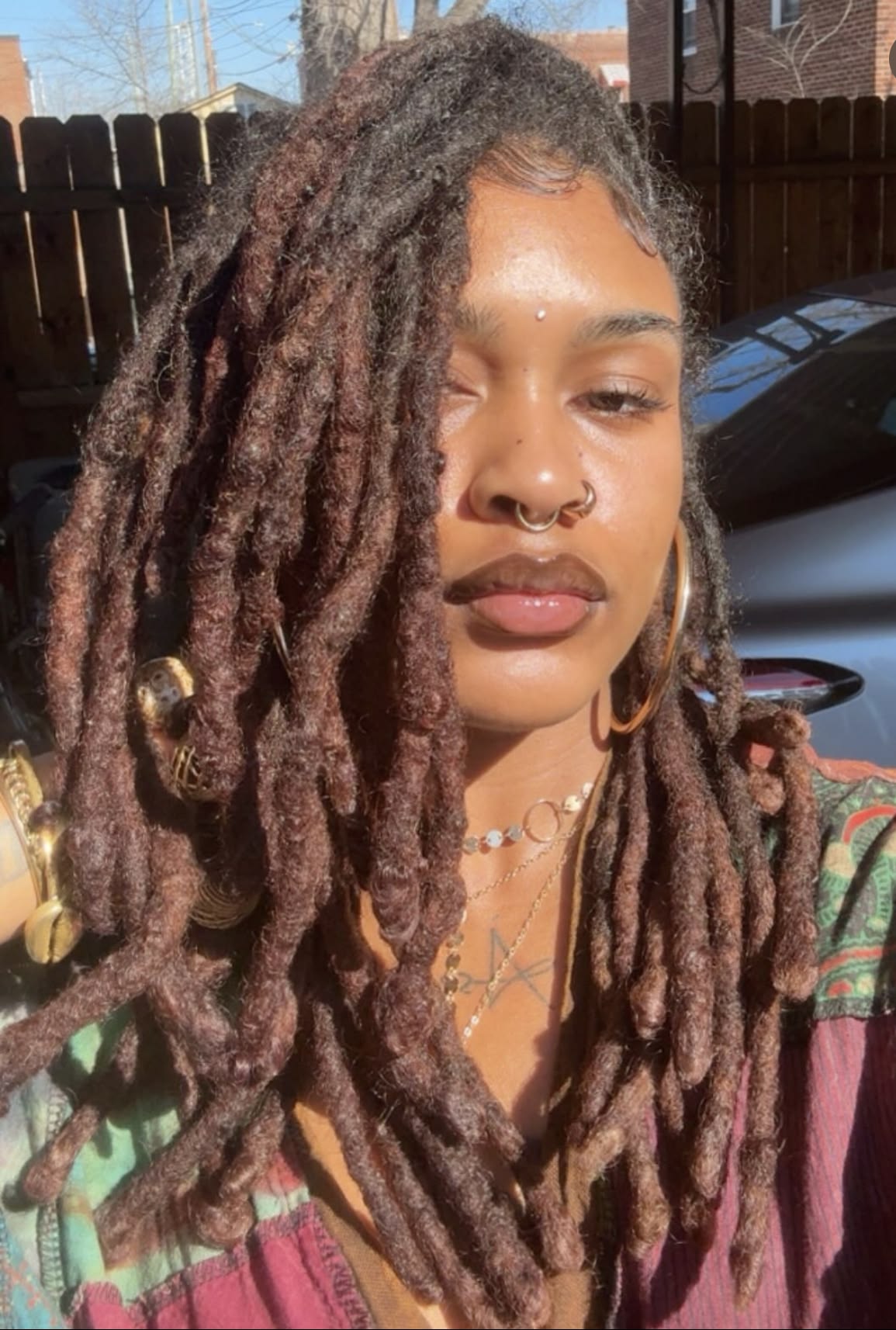
I know this feels counterintuitive. You retwist to keep things neat and tidy, so surely more retwisting means better locs, right? Actually, no.
When you retwist too often, you are repeatedly smoothing the hair back into a coil from the outside.
However, locking happens from the inside out. The hair needs time to sit, move slightly, and begin tangling with itself internally.
If you are retwisting every week or two weeks, you are constantly interrupting that internal process. The hair never gets a chance to knit itself together because you keep unwinding and redoing it.
Moreover, frequent retwisting can lead to thinning at the roots over time. For a really detailed breakdown of your maintenance options, my post on 6 differences between retwisting and interlocking you need to know will help you figure out which method is actually better for your specific hair and lifestyle.
Environmental and Lifestyle Factors That Slow Down Locking
Your Water Might Be the Problem
Hard water is something nobody talks about enough in the loc community. Hard water contains high levels of minerals like calcium and magnesium.
When you wash your hair with hard water repeatedly, those minerals build up on the hair shaft. Over time they create a coating that prevents the hair from locking properly.
Your locs might feel stiff or rough but still look loose and unlocked, and hard water buildup is often the culprit.
What to Do About Hard Water Buildup
If you suspect this is an issue in your home, you have a few options. You can install a shower filter, which is probably the most convenient long term solution.
You can also do an apple cider vinegar rinse periodically to help strip mineral buildup from the hair.
Additionally, using a clarifying wash specifically designed to remove mineral deposits can make a significant difference over time.
Protective Styling Too Early Can Actually Backfire
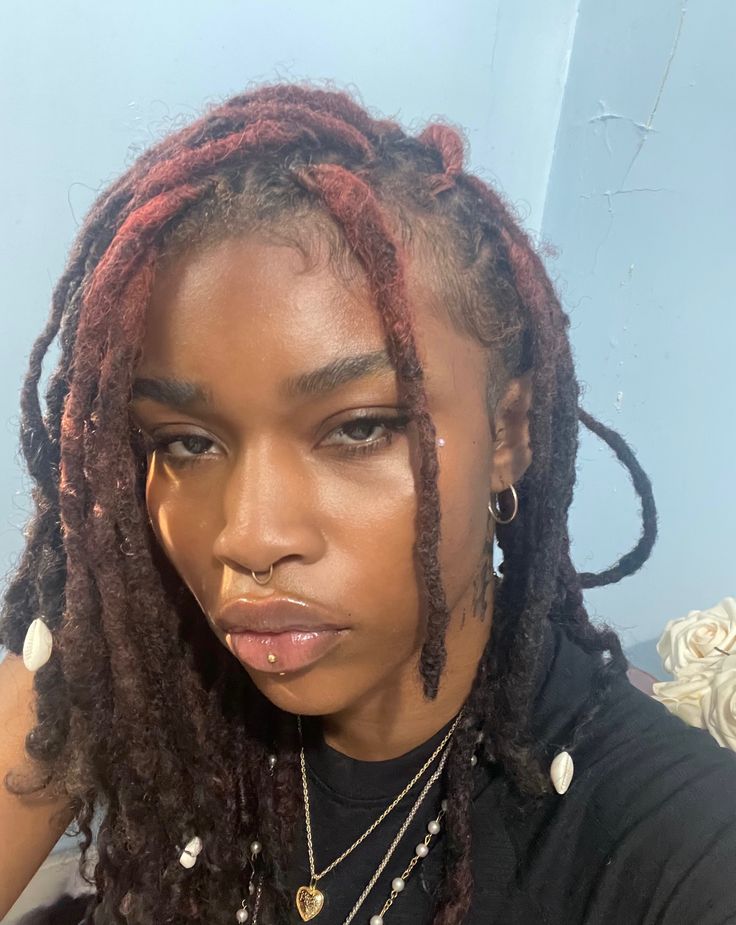
I know we all love a good style, and honestly there are so many beautiful options.
I have a whole post full of 15 stunning loc styles for beginners that are easy to recreate and another one with 20 beautiful short loc styles for women in 2026 that are absolutely gorgeous.
However, if you are constantly pulling your locs into tight updos or braiding them up before they have had a chance to settle, you are working against the locking process.
Tight styles pull the hair in directions it has not yet settled into. They can also cause tension at the roots which weakens the loc over time.
During the early stages especially, try to keep styles loose and low manipulation. Let your hair just exist for stretches of time without being constantly restyled or manipulated.
Stress and Health Can Show Up in Your Hair
This is one people really do not expect to hear but it is absolutely true. Your hair health is deeply connected to your overall health.
High stress levels, poor nutrition, lack of sleep, and hormonal imbalances can all slow down hair growth and even affect the locking process.
When your body is stressed, it prioritizes other functions and hair health drops on the list.
If your locs are not locking and you have also been going through a really stressful season of life, these two things might be connected.
Nourishing your scalp from the inside out matters. Also, using the right oils on your scalp can support a healthier environment for growth and locking.
My post on 7 natural oils that are amazing for loc growth and scalp health is a really good resource here and worth bookmarking.
Mistakes That Are Silently Sabotaging Your Locking Process
Starting with the Wrong Method for Your Hair
Not every loc method works equally well for every hair type. Some methods create very tight, well defined sections that lock relatively quickly.
Others create looser, fluffier locs that take much longer to settle. If you started your locs with a method that does not suit your hair texture, you might spend months wondering why nothing is happening.
For example, two strand twists on very fine or loosely coiled hair can take what feels like forever to lock because the twist pattern keeps unraveling.
Interlocking or comb coils might have been a better starting point for that particular texture. I want you to go back and read 10 starter loc methods and which one is right for your hair type if you have not already because it could completely change your approach.

Wearing Locs in Styles That Cause Unraveling
There are some styles that are really not great for locs that are still in the early stages.
Styles that require manipulating individual locs too much, pulling them apart, or stretching them out can cause unraveling at the tips.
Once a loc unravels at the tip, it essentially has to restart the locking process from that point. Therefore, you lose whatever progress had been made.
If you are looking for styles that are safe and appropriate for your stage, check out 10 loc hairstyles perfect for a 9 to 5 job for everyday low manipulation options.
For those of you who are further along, 20 medium loc styles that are trending right now has some really stunning ideas that work well with more mature locs.
Using Too Much Product During the Retwist
When you sit down to retwist, it can be tempting to load up on product to make everything look smooth and polished.
However, the more product you use, the more residue gets left behind. And as I mentioned earlier, residue prevents the hair from locking.
A little goes a very long way when it comes to loc products. Your goal during a retwist is to hold the coil in place, not to coat every strand in product.
This is also why choosing the right products is so critical. The wrong products in the wrong amounts can set your locking timeline back significantly.
Make sure you have also read 12 things to buy before you start your loc journey so you know from the very beginning what products and tools are actually worth investing in.
What You Should Actually Do to Help Your Locs Lock Faster
Be Consistent with Your Washing Schedule
Settle into a wash schedule that works for your lifestyle and stick to it.
For most people in the early stages, washing every one to two weeks is a good rhythm.
It keeps the scalp clean and removes buildup without constantly disrupting the hair’s settling process.
Use a residue free shampoo and make sure you rinse very thoroughly so nothing is left behind.

Let Your Hair Air Dry Completely
This is one of the simplest things you can do and it makes a massive difference.
After washing, allow your locs to air dry completely before you cover them, style them, or go to sleep.
Locs that are put under a scarf or bonnet while still damp tend to develop mildew and buildup on the inside.
That internal buildup can slow down locking and also lead to unpleasant odors over time.
Try Interlocking if Retwisting Is Not Working for You
If you have been retwisting for months and not seeing locking progress, it might be time to switch methods.
Interlocking works by pulling the root of the loc through itself to create a knot.
This method tends to lock the root faster and hold up better between maintenance sessions.
It is especially helpful for people with finer or looser hair textures.
My post on 6 differences between retwisting and interlocking you need to know goes into much more detail about when and why to make this switch.
Stop Comparing Your Timeline to Someone Else’s
I genuinely cannot tell you how many times I have seen people in forums or comment sections saying their locs should look like someone else’s at the same age.
Comparison is one of the biggest sources of unnecessary anxiety in the loc community.
Your hair is not their hair. Your texture, your method, your products, your water, your health history, and your maintenance routine are all different. Therefore, your timeline will be different too.
Focus on your own hair and your own progress. Document your journey with photos so you can look back and actually see how far you have come.
Progress often happens so gradually that you miss it without documentation.
A Quick Note on Patience and the Bigger Picture
Here is something I really want you to sit with. Locking is not a destination you arrive at quickly.
It is a process that unfolds slowly, often in ways you cannot see from week to week. Some weeks your hair will look like it is going backwards.
Other weeks you will wake up and suddenly notice things are tighter and more defined. That is just how the process works.
If you are in the very early stages, you might also want to read 8 worst mistakes people make when starting locs to make sure you are not unknowingly doing things that are setting you back.
And if you ever get to a point where your hair feels really stuck and dull, exploring 15 freeform loc inspo photos that will make you ditch the retwist might actually give you a new perspective on what your hair is capable of when you let it breathe.
Also, do not neglect the fun parts of this journey. Styling your locs with accessories is genuinely one of the best parts of having them.
My post on 12 cute ways to style locs with accessories and jewelry is full of ideas that will make you fall in love with your hair all over again even during the frustrating stages.

When to Be Concerned vs. When to Just Wait
There is a difference between hair that is taking its time and hair that has a real problem.
If your locs are unraveling constantly, breaking off, or thinning at the roots, that goes beyond just slow locking.
Thinning especially needs to be addressed quickly. Check out 7 things that cause loc thinning and how to stop them because thinning is one of those issues that gets harder to fix the longer you wait on it.
However, if your hair is simply taking longer to lock than you expected, and everything else is healthy, the answer is almost always patience combined with a few small adjustments to your routine.
You do not need to overhaul everything. Sometimes swapping one product, adjusting your wash schedule, or giving up the weekly retwist is all it takes to see things start moving in the right direction.
Final Thoughts
Your locs are going to lock. I really want you to believe that. The journey is frustrating at times and the slow progress can feel discouraging, especially when you see someone else’s mature, full, beautiful locs and you want to be there already.
But every single person with gorgeous mature locs went through exactly the stage you are in right now.
Stay consistent, be gentle with your hair and with yourself, and make sure you are using the right products for your texture and stage.
If you want to also think ahead about color and styling for when your locs do mature, my post on 10 stunning loc color ideas from honey blonde to burgundy is a really fun read that will give you so much to look forward to.
You started this journey for a reason. Keep going.
Leave a Reply