If you have been in the loc community for any amount of time, you have probably heard both of these terms thrown around. Retwisting. Interlocking. Two different maintenance methods. Two very different outcomes. And yet so many loc wearers go through their entire journey without fully understanding what sets them apart or which one is actually right for their hair.
As a loc technician, this is one of the conversations I have most often with clients. Someone sits in my chair and tells me they have been getting retwisted for two years. Then they ask why their edges are thinning or why their roots keep slipping between appointments. And nine times out of ten the answer comes back to the maintenance method. Getting this decision right changes everything about your loc journey.
Before we get into the differences, go and check out our last post on 20 medium loc styles that are trending right now. It is a great read especially if you are at a stage where styling is becoming more of a priority. Now let’s break down the six most important differences between retwisting and interlocking that every loc wearer needs to understand.
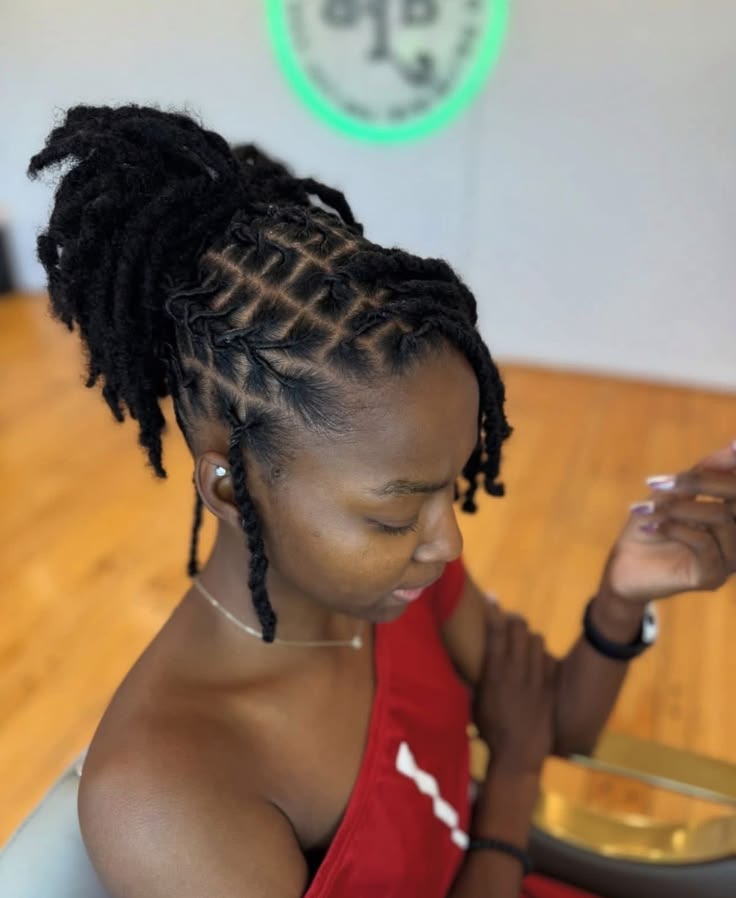
First, a Quick Overview of Both Methods
Before we get into the differences, let’s make sure we are on the same page about what each method actually involves.
Retwisting is the process of taking the new growth at the root of each loc and twisting it in the same direction as the loc itself. It creates a neat, uniform appearance at the root and encourages the new growth to continue locking in line with the existing loc. It is the most widely known and most widely used loc maintenance method.
Interlocking, on the other hand, involves pulling the loc through its own root using a tool or the fingers in a specific pattern. Instead of twisting the new growth, the loc is essentially woven through its own base. This locks the new growth in place in a way that is significantly more secure than a retwist.
Both methods achieve the same basic goal. They keep the roots neat and encourage continued locking. However, the way they achieve that goal is very different. And those differences have significant implications for the health, appearance, and longevity of your locs. Let’s get into them.
1. Hold and Durability
This is arguably the most immediately noticeable difference between the two methods. And it is the difference that matters most to a lot of loc wearers in their day to day lives.
A retwist, no matter how well executed, can be undone by moisture. When a retwisted root gets wet, whether from washing, sweating, rain, or swimming, the twist loosens and the root can begin to unravel. For people who wash frequently or lead active lifestyles, this means their freshly retwisted roots can look undone within days of their appointment. Furthermore, it means constantly feeling like they need to get back in the salon chair sooner than their budget or schedule allows.
Interlocking, on the other hand, creates a root that holds regardless of moisture exposure. An interlocked root stays in place through washing, sweating, swimming, and everything in between. The reason for this is structural. Because the loc is pulled through its own base rather than just twisted around itself, the root is mechanically locked rather than simply held in position by tension. Water does not undo a mechanical lock the way it can undo a twist.
What This Means in Practice
For active people, frequent washers, and those who live in humid climates, this difference is genuinely life changing. It means freedom. Freedom to wash without worrying. Freedom to work out without dreading what your roots will look like afterward. Freedom to swim, to dance in the rain, to live your life without your loc maintenance constantly at the back of your mind. That freedom is one of the most compelling reasons so many of my clients make the switch to interlocking.
Bookmark this for later: What to Expect Financially When You Start and Maintain Locs Professionally
2. Tension and Root Health
This is the difference I feel most strongly about as a loc technician. And it is the one that has the biggest impact on the long term health of your locs.
Retwisting concentrates tension at the same point on the root every single time it is done. Each retwist appointment puts torsional stress on the same section of the hair shaft. Over months and years of repeated retwisting at the same point, that area of the hair weakens. The root becomes a stress point. And stress points in hair, applied consistently over time, lead to thinning and eventually to breakage.
This is not a theoretical concern. It is something I see regularly in my practice. Clients who have been retwisting for years with no other maintenance issues start to notice thinning along the crown, the temples, or the nape. When we look at the pattern of the thinning and compare it to their retwisting history, the connection is almost always clear.
Interlocking distributes tension across the root in a pattern rather than concentrating it at a single point. Each time the loc is interlocked, the direction of the pull rotates, which means no single area of the root bears the brunt of the tension repeatedly. As a result, the root stays strong and healthy over time rather than developing a point of weakness.
Who This Matters Most For
This difference matters for everyone but it matters most for people with finer hair textures, those with a history of traction alopecia, and those who have been retwisting for several years and are starting to notice changes in their root thickness. For these clients, switching to interlocking is often one of the most impactful decisions they can make for the long term health of their locs.
Save this guide for when you need it: 5 stages of locs and what to expect at each one
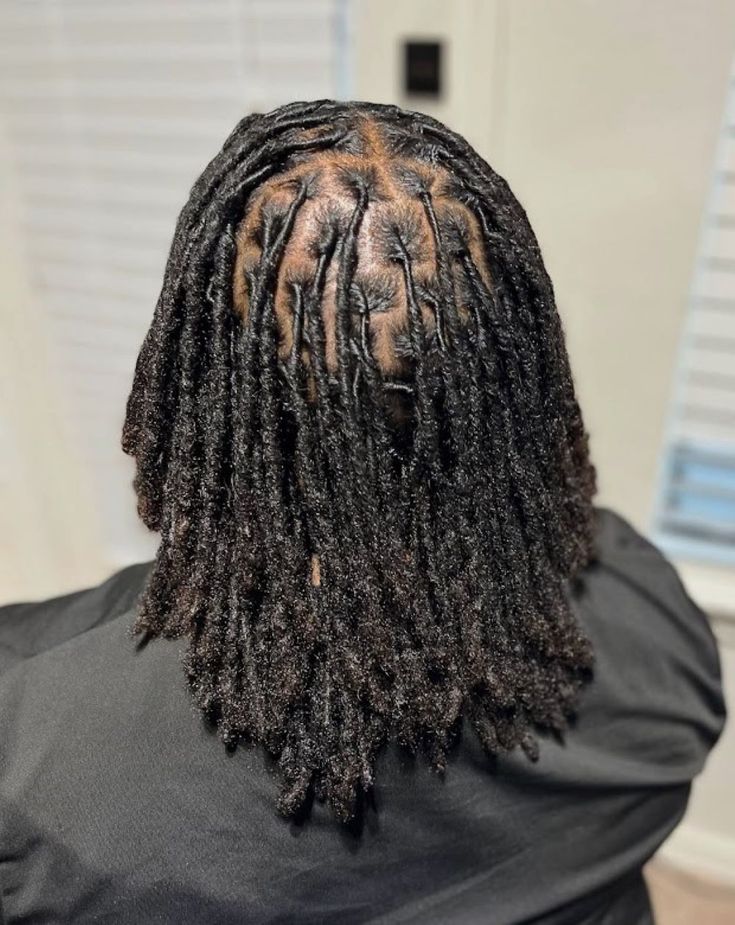
3. Appearance at the Root
Let’s talk about aesthetics because they matter. Both methods produce a neat root appearance but the way that neatness looks is different. And depending on your personal preferences, one will appeal to you more than the other.
A freshly retwisted root has a smooth, spiral appearance. The new growth wraps neatly around itself and the loc looks clean, uniform, and polished. A lot of loc wearers love this look. There is something deeply satisfying about the tidiness of a fresh retwist. The roots look sharp, defined, and intentional. For many people, this aesthetic is a big part of why they love the retwisting process.
An interlocked root looks different. Instead of the smooth spiral of a retwist, an interlocked root has a subtle woven or knotted pattern at the base. It is neat and well maintained but the texture is distinctly different from a retwist. Some people love the way interlocked roots look. Others prefer the smoother aesthetic of a retwist.
Does the Difference Stay Visible?
On shorter locs or locs in the early stages, the difference in root appearance is more noticeable. As locs grow longer and the root represents a smaller proportion of the overall loc length, the difference becomes much less visible in everyday wear. For most people with medium to long locs, the root pattern is not something that is visible at a glance. It only becomes apparent on close inspection.
Keep this for your loc journey: How long does it actually take to get fully mature locs
4. Maintenance Frequency
This difference has a very direct impact on your time and your budget. And it is one that is worth thinking about carefully before you commit to either method.
Because retwisted roots are vulnerable to moisture and can loosen between appointments, most retwist clients need to come in every four to six weeks to keep their roots looking neat and well maintained. For some people with faster growing hair or very active lifestyles, that window narrows to every three to four weeks. That is a significant time and financial commitment over the course of a year.
Interlocked roots hold much longer because they are not affected by moisture or manipulation in the same way. As a result, interlocking clients can often comfortably stretch their appointments to every six to eight weeks. Some clients with slower growing hair go even longer between appointments without their roots looking neglected.
The Financial Implication
Over the course of a year, the difference in appointment frequency adds up to a meaningful financial saving. If a retwist client comes in every five weeks and an interlocking client comes in every seven weeks, the interlocking client has significantly fewer appointments per year. Multiply that by the cost of each appointment and the saving becomes very real. For clients who are budget conscious, this is often one of the most compelling practical reasons to consider making the switch.
Pin this for later: The honest truth about the loc “ugly stage” and how to push through
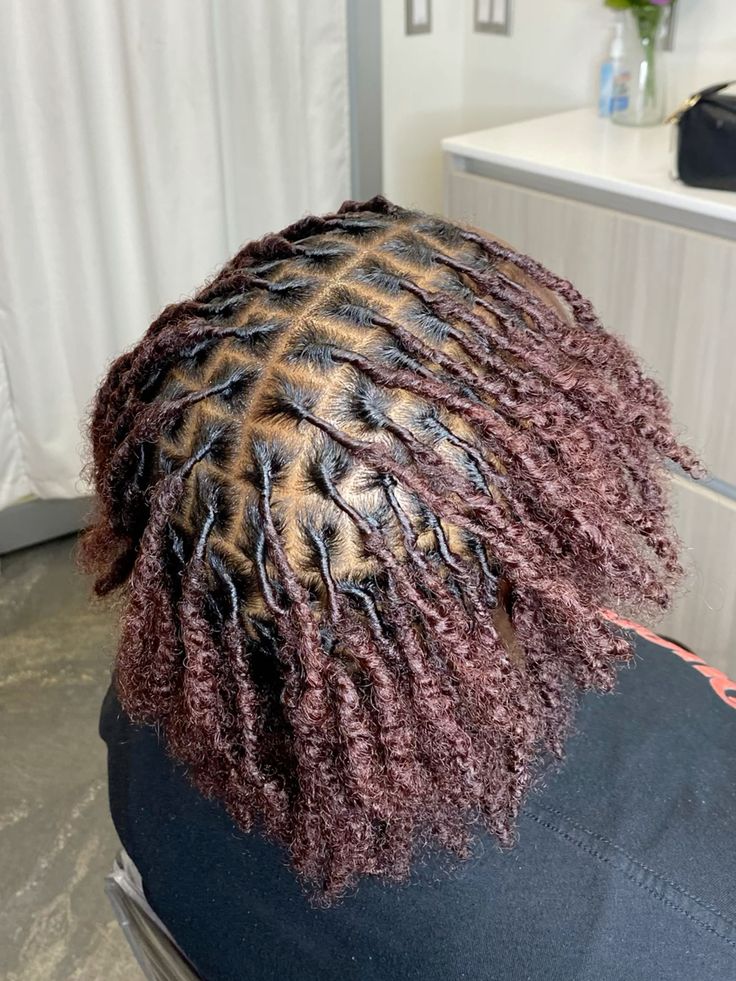
5. Suitability for Different Hair Types
Both methods work across a range of hair types but they do not work equally well for all textures and hair conditions. Understanding which method suits your specific hair is one of the most important factors in making the right choice.
Retwisting works well across most hair types when done correctly. It is particularly effective for tighter curl patterns where the natural coil of the hair supports the twist and helps it hold between appointments. For these hair types, a retwist stays neater for longer and the root is less prone to slipping. Retwisting is also the preferred method for locs in the very early stages because the hair is not yet strong enough to withstand the mechanics of interlocking safely.
Interlocking works especially well for looser curl patterns where the hair does not grip itself as readily. Because interlocking mechanically locks the root rather than relying on the hair’s natural coil to hold the twist, it produces much better results on hair that tends to slip out of a retwist quickly. Interlocking is also the preferred method for very active people and frequent washers regardless of their hair type.
save this guide: Retwist vs interlocking: which method is actually better for your locs
When Neither Method Works Alone
In some cases, a combination approach works best. Some locticians use retwisting as the primary maintenance method but switch to interlocking for clients with specific problem areas, such as thinning roots or edges that are particularly prone to slipping. This kind of tailored approach requires a skilled and experienced loctician who knows when and how to apply each method strategically.
Screenshot this for later: 15 loc styles for men that are stylish and low maintenance
6. Skill Level Required
This final difference is one that does not get talked about enough. And it is one that has very real implications for both the DIY loc community and for people choosing a loctician.
Retwisting is a relatively straightforward technique. The learning curve is manageable and with some practice, many people can retwist their own locs at home with good results. It requires consistency and care but it does not demand the same level of technical precision as interlocking.
Interlocking is a different story. Done correctly, interlocking is an incredibly effective and healthy maintenance technique. Done incorrectly, it can cause significant damage. Improper interlocking can distort the shape of the loc, create uneven tension that weakens the root, or cause the loc to develop an irregular pattern that is difficult to correct later.
What This Means for Your Choice of Loctician
If you are considering switching to interlocking, finding a loctician with genuine, proven experience in the technique is non negotiable. Do not assume that every loctician who offers interlocking has the same level of skill with it. Ask to see examples of their interlocking work. Ask how long they have been doing it. Ask about the specific pattern they use and why. A loctician who can answer these questions confidently and clearly is someone you can trust with your locs.
For DIY loc wearers, interlocking at home is possible but it requires significant research, practice, and patience before attempting it on your full head. Start by practising on a few locs at the back of your head where any mistakes will be less visible. Master the technique there before applying it to your entire set.
This is worth saving: 9 things to know before you get butterfly locs
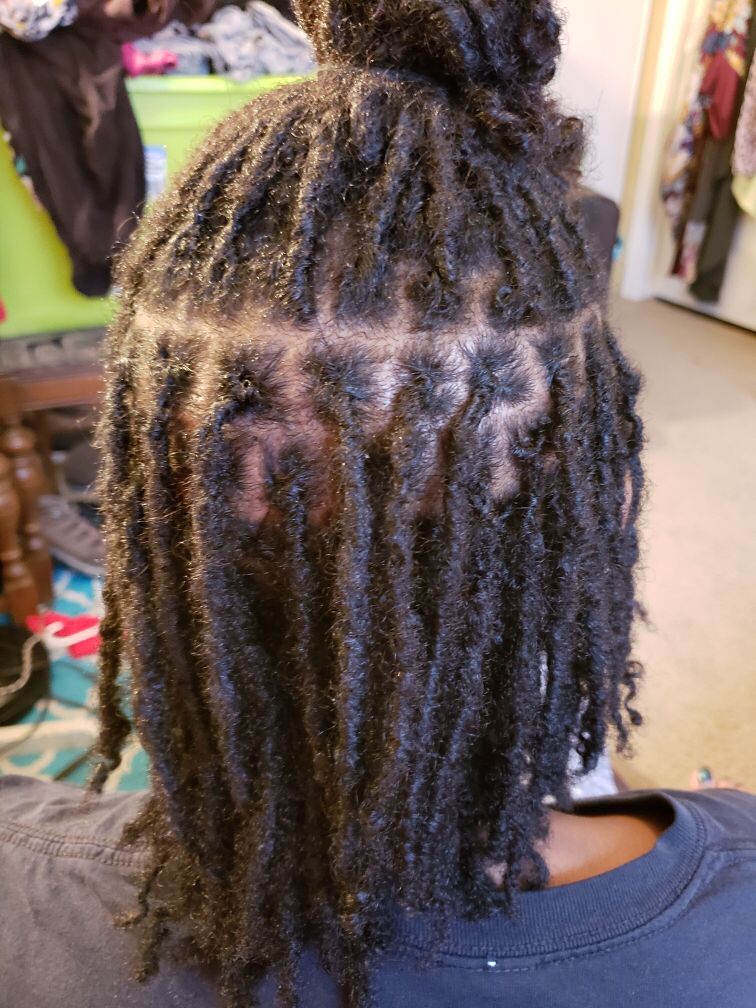
So Which Method Should You Choose?
After everything we have covered, here is a simple way to think about it.
Choose retwisting if your locs are in the early stages and not yet fully formed. Choose retwisting if you have very tight curl patterns that hold a twist well. Choose retwisting if you prefer the smooth, spiral aesthetic at the root and your root health is strong.
Choose interlocking if you lead an active lifestyle or wash your locs frequently. Choose interlocking if you have been experiencing root thinning or slippage with regular retwisting. Choose interlocking if you have a looser curl pattern that does not hold a retwist well. Furthermore, choose interlocking if you want to stretch the time between maintenance appointments.
And if you are genuinely unsure, book a consultation with a loctician who has experience with both methods. A good loctician will assess your hair, ask about your lifestyle and goals, and give you an honest recommendation based on what they actually see rather than defaulting to the method they are most comfortable with.
Don’t forget to bookmark this: 10 stunning loc color ideas from honey blonde to burgundy
Final Thoughts
Understanding the differences between retwisting and interlocking is one of the most empowering things you can do for your loc journey. The right maintenance method is not the same for everyone. It depends on your hair type, your lifestyle, your budget, and what you want your locs to look and feel like over the long term.
Take the time to understand both options. Have the conversation with your loctician. And make a conscious, informed choice rather than just going along with whatever has always been done. Your locs deserve that level of care and attention.
Leave a Reply