Let’s talk about something that does not get nearly enough attention in the loc community. Sleep. Specifically, what happens to your locs while you are sleeping and what you can do to make sure you wake up every morning with your locs looking and feeling their best.
Here is the thing. You spend around a third of your life asleep. That is a lot of hours for your locs to be exposed to friction, moisture loss, and pressure without any protection. A lot of loc wearers focus heavily on their daytime routine and completely overlook what happens at night. Then they wonder why their locs look frizzy, feel dry, or seem to be unravelling faster than expected.
If you have been thinking about the financial side of your loc journey too, go and read our last post on what to expect financially when you start and maintain locs professionally. It is a really helpful read. But right now let’s focus on one of the simplest and most impactful habits you can build for your locs. A solid nighttime routine.
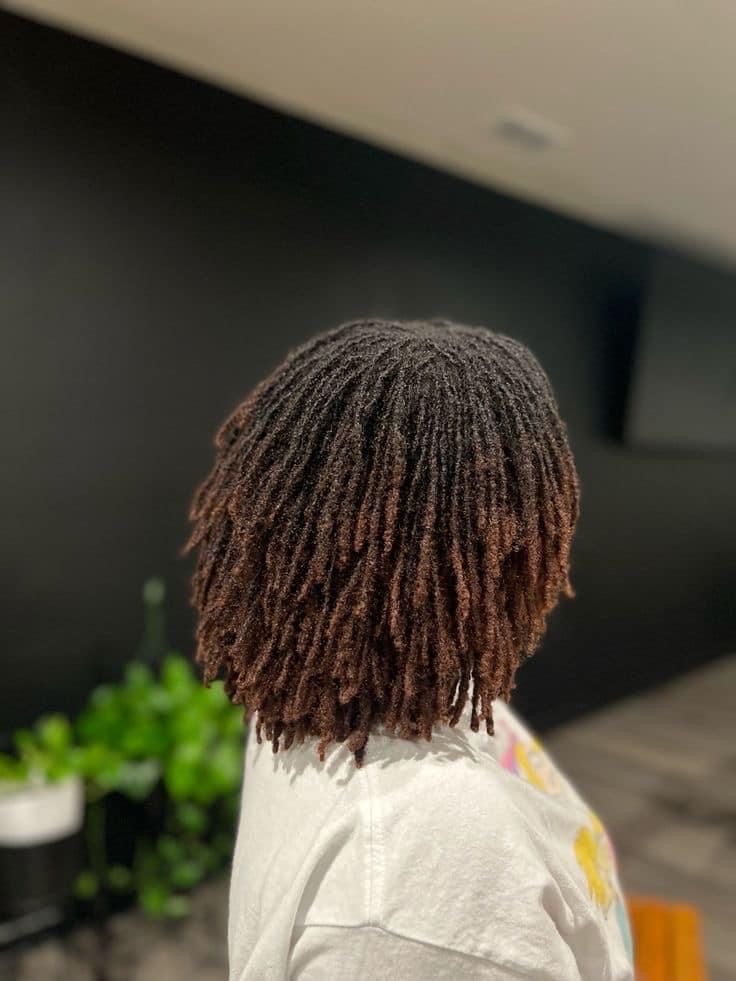
Why Nighttime Protection Matters So Much
Before we get into the how, let’s talk about the why. Understanding what actually happens to your locs while you sleep makes it a lot easier to stay consistent with protecting them.
Bookmark this for later: 6 Differences Between Retwisting and Interlocking You Need to Know
Friction Is the Enemy
When your locs rub against a surface for hours at a time, friction happens. Friction lifts the outer layer of the hair shaft, causes frizz, and over time contributes to thinning and breakage. The rougher the surface, the more damage is done. A standard cotton pillowcase is one of the worst surfaces your locs can spend the night on. Cotton is absorbent and rough at a microscopic level. It grabs at the hair and pulls it as you move in your sleep.
Think about how much you move during the night. You shift positions, roll over, and adjust constantly. Every single one of those movements creates friction between your locs and whatever surface they are resting on. Multiply that by every night over months and years and you start to understand why nighttime protection is so important.
Save this for your loc journey: 7 natural oils that are amazing for loc growth and scalp health
Moisture Loss
Cotton does not just create friction. It also absorbs moisture. Every night that your locs spend on a cotton pillowcase, that pillowcase is pulling moisture out of your hair. Locs that lose moisture consistently become dry and brittle over time. Dry locs are more prone to breakage, thinning at the roots, and unravelling at the ends. Protecting your moisture at night is just as important as applying oil during the day.
Come back to this when you need it: Retwist vs interlocking: which method is actually better for your locs
Pressure and Flattening
Sleeping on unprotected locs also causes them to flatten and lose their shape under pressure. This is especially noticeable with shorter or newer locs that have not yet fully hardened. Repeated pressure from sleeping on the same side can cause locs to flatten or bend in directions that are hard to correct later.
Keep this guide handy: Soft locs vs permanent locs: everything you need to know before choosing
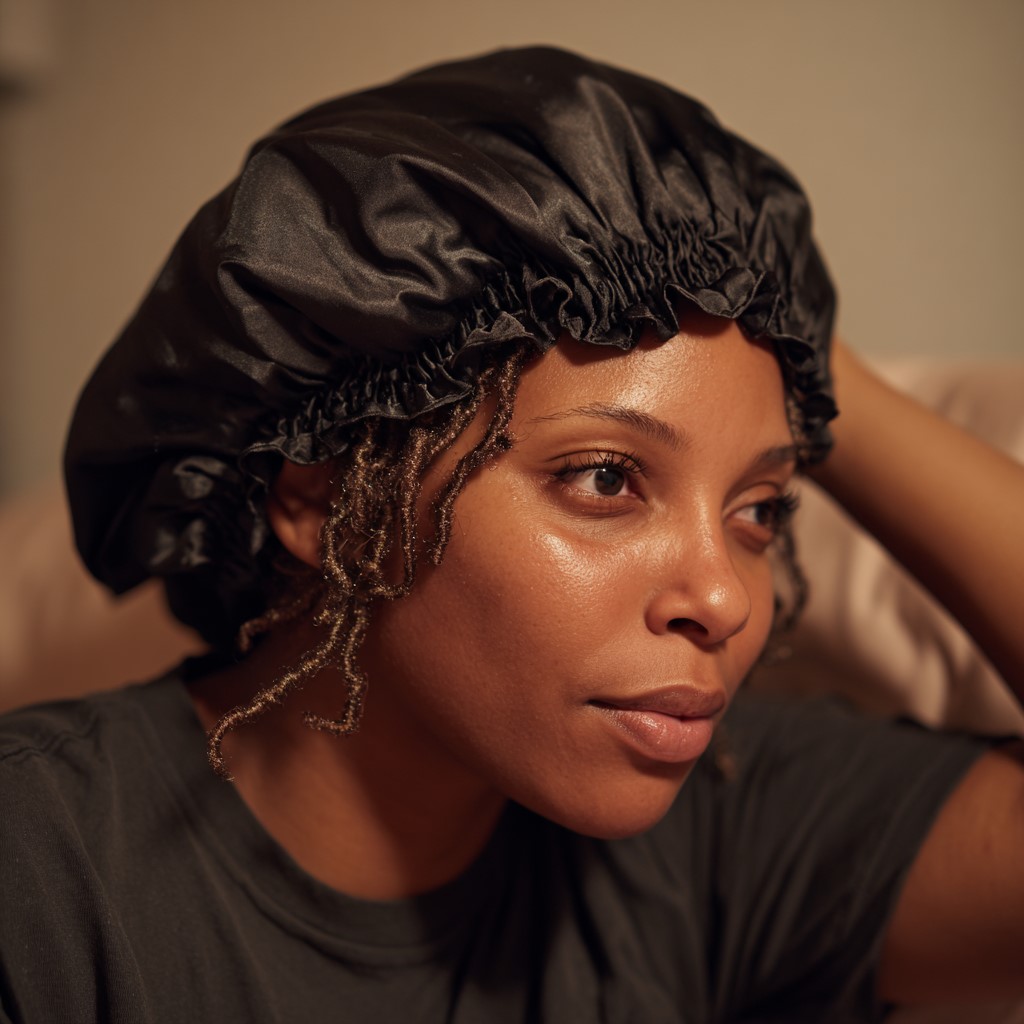
The Satin Bonnet
If you take nothing else from this post, take this. Get a satin bonnet. It is the single most effective and most affordable nighttime protection tool for loc wearers. A good satin bonnet covers your locs completely, eliminates friction, and keeps moisture locked in while you sleep.
You’ll want to revisit this: 12 things to buy before you start your loc journey
Why Satin and Not Silk?
Satin and silk are often mentioned together and the terms are sometimes used interchangeably. They are not the same thing though. Silk is a natural fibre and it is genuinely excellent for locs. Satin is a weave style that can be made from synthetic fibres like polyester, and it mimics a lot of the benefits of silk at a much lower price point. Both satin and silk reduce friction and help retain moisture. The main difference is cost. A good satin bonnet is very affordable and delivers excellent results. Silk is a premium option that works just as well but costs significantly more.
For most loc wearers, satin is the practical and smart choice.
Don’t lose this post: 10 best products for soft, moisturized locs that actually work
Choosing the Right Bonnet Size
This is something a lot of people get wrong. If your bonnet is too small, it will be uncomfortable and will not stay on properly through the night. If your locs have any length to them at all, you need a jumbo or extra large bonnet that can accommodate all of your locs comfortably without squashing them or pulling them to one side.
A bonnet that fits properly sits comfortably on your head, covers all of your locs fully, and stays in place through the night without feeling tight or restrictive. Take your time finding the right size. It makes a huge difference to how effective the protection actually is.
Save this for future reference: 7 things that cause loc thinning and how to stop them

The Satin Pillowcase
Not everyone can sleep comfortably in a bonnet. Some people find them uncomfortable. Others take them off in their sleep without realising it. If a bonnet does not work for you, a satin pillowcase is an excellent alternative.
A satin pillowcase works on the same principle as a bonnet. It replaces the rough, absorbent surface of a cotton pillowcase with a smooth, moisture retaining one. Your locs rest on the satin surface and experience significantly less friction as you move during the night.
Pin this for later: 8 products to completely avoid putting on your locs
The Limitation of a Pillowcase
The one thing worth knowing about a satin pillowcase is that it only protects the locs that are actually in contact with it. If you move around a lot during sleep, your locs will inevitably end up on surfaces other than the pillow at some point during the night. A bonnet travels with you and provides consistent protection regardless of how you sleep. A pillowcase protects you when you are on the pillow and that is it.
For heavy movers and restless sleepers, a bonnet is the more reliable option. For people who tend to sleep in one position and stay relatively still, a satin pillowcase works very well.
Add this to your reading list: The Loc Maintenance Method That Changed Everything For My Clients
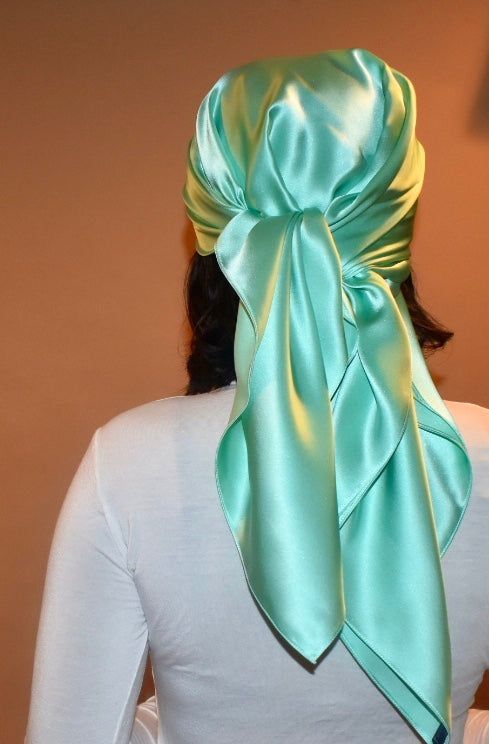
The Satin Scarf
A satin scarf is another popular option and one that gives you more control over how your locs are wrapped and secured. With a scarf, you can gather your locs, position them how you want, and wrap the scarf securely around your head. This is particularly useful for people with longer locs who want to keep everything contained and controlled while they sleep.
Keep this in your loc care toolkit: How to Maintain Your Locs When You Have a Genuinely Busy Schedule
How to Wrap Your Locs with a Scarf
Gather your locs at the top of your head or to one side depending on your preference and your loc length. Lay the scarf flat, fold it into a triangle, and use the long edge to wrap around the hairline. Tie it securely at the back or the front. Make sure the tie is not too tight, especially around the edges, as repeated tight wrapping in the same spot can cause tension and breakage over time.
Some people prefer to loosely pile their locs on top of their head before wrapping, which minimises pressure on any one section of the scalp. This is a great approach for people who experience scalp sensitivity or who are conscious of tension at the roots.
What to Do with Long Locs at Night
As your locs grow longer, nighttime protection becomes both more important and more challenging. Long locs have more surface area exposed to friction and take longer to dry if they get damp. They are also heavier, which means they pull on the roots more during sleep.
Revisit this when your locs need clarity: Why your locs are thinning at the roots and how to fix it
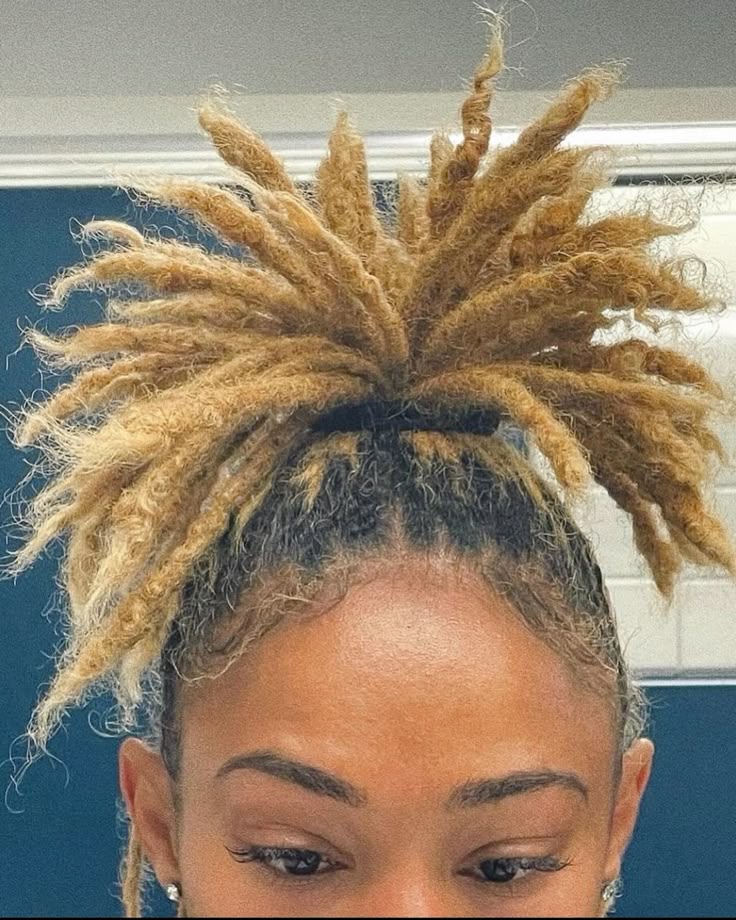
The Pineapple Method
The pineapple method is a technique where you gather all of your locs loosely at the very top of your head and secure them with a soft, loc friendly hair tie before putting on your bonnet or scarf. This keeps your locs off your neck and shoulders, reduces friction along the length of the loc, and helps preserve any styling you had during the day.
The key word here is loosely. Do not pull your locs into a tight high bun or ponytail at night. Tight tension applied repeatedly in the same spot causes thinning and breakage at the root over time. Gather them gently, secure with a soft tie, and then cover with your bonnet or scarf.
Braiding or Twisting Long Locs at Night
Some people with very long locs prefer to loosely braid or twist their locs together before bed. This keeps them contained, reduces tangling, and can even add some wave or texture definition by morning. If you try this, keep the braids or twists very loose. The goal is containment, not styling tension.
Hold onto this for your next wash day: How to wash locs without unraveling them (the right way)
Drying Your Locs Before Bed
This deserves its own section because it is one of the most important and most overlooked aspects of nighttime loc care. Never go to bed with damp locs. This cannot be stressed enough.
Locs that stay damp for extended periods develop mildew inside. Mildew causes a persistent musty smell that is incredibly difficult to eliminate once it develops. It also creates an unhealthy environment inside the loc that affects the hair from the inside out. No bonnet, scarf, or pillowcase can protect your locs from the damage caused by sleeping with them damp.
How to Make Sure Your Locs Are Dry
If you wash your locs in the evening, give yourself enough time to dry them fully before going to sleep. Use a hooded dryer or a diffuser on a low heat setting to speed up the process. If you are air drying, start early enough in the day that your locs have several hours to dry completely before bedtime.
Press gently along the length of each loc with a clean microfibre towel after washing to remove excess water before you begin the drying process. Do not rub. Just press and squeeze. This removes a significant amount of water and cuts your drying time considerably.
If you are ever unsure whether your locs are fully dry, they are probably not. Thicker and longer locs hold water deep inside the loc where it is not immediately obvious. Give them more time than you think they need. It is always better to be sure.

Moisturising Your Locs Before Bed
Adding a light moisture step to your nighttime routine makes a real difference to how your locs feel and behave over time. Apply a few drops of a light oil to your scalp and gently work it in with your fingertips before putting on your bonnet. This feeds the scalp overnight and supports healthy growth while you sleep.
You do not need to apply oil to the locs themselves every night. Focus on the scalp and the ends, which are the two areas most prone to dryness. Keep the application light. Heavy product application at night contributes to build up and can make your locs feel heavy and gunky over time.
Building a Nighttime Routine That Actually Sticks
The best nighttime loc routine is one that is simple enough that you actually do it every single night. An elaborate routine that you follow sometimes is less effective than a simple one you follow consistently. Here is a straightforward routine that works well for most loc wearers.
Make sure your locs are completely dry before bed. Apply a few drops of light oil to your scalp and ends. Gather your locs gently if they are long. Put on your satin bonnet or wrap your satin scarf. That is genuinely all you need. Simple, quick, and effective.
The consistency is what creates the results. Do this every night and the difference in the health, moisture, and appearance of your locs over time will speak for itself.
Final Thoughts
Nighttime loc care is one of those things that feels small in the moment but makes an enormous difference over time. Every night that your locs are protected is a night that your moisture is retained, your frizz is reduced, and your roots are kept safe from unnecessary tension and friction.
Get a good satin bonnet. Dry your locs before bed. Keep your nighttime routine simple and consistent. Your locs will thank you for it every single morning.
Leave a Reply