You know that moment when you are looking at your locs in the mirror and something just feels off?
Uneven, too thin, or too thick locs are fixable in most cases. The key is understanding what caused the problem in the first place so that you can address the root issue rather than just the surface appearance.

Why Locs End Up Uneven in the First Place
Before we talk about fixes, we need to talk about causes. Locs become uneven, too thin, or too thick for several different reasons and the solution depends entirely on which reason applies to your specific situation.
Inconsistent Parting at Installation
The most common cause of uneven locs is inconsistent sectioning during the installation process.
If the sections of hair used to create each loc were not uniform in size, the locs will develop at different thicknesses from the very beginning.
This is especially common when locs are installed at home without professional guidance or when a loctician rushes through the installation process without taking care to create consistent sections throughout the entire head.
This is one of the reasons why the installation stage is so critically important. My post on 10 starter loc methods and which one is right for your hair type emphasizes how foundational those early decisions are.
Getting the parting pattern right from the start prevents a lot of the unevenness issues that people spend years trying to correct later in their journey.
Hair Density Variations Across the Scalp
Not all areas of your scalp grow hair at the same density.
Most people have areas of higher density, typically at the crown and the back of the head, and areas of lower density, often around the hairline and the temples.
If locs were installed using uniform section sizes across all areas without accounting for these natural density differences, some locs will naturally be thicker and some will naturally be thinner simply because the amount of hair in each section varies across the scalp.
Locs Joining Together Over Time
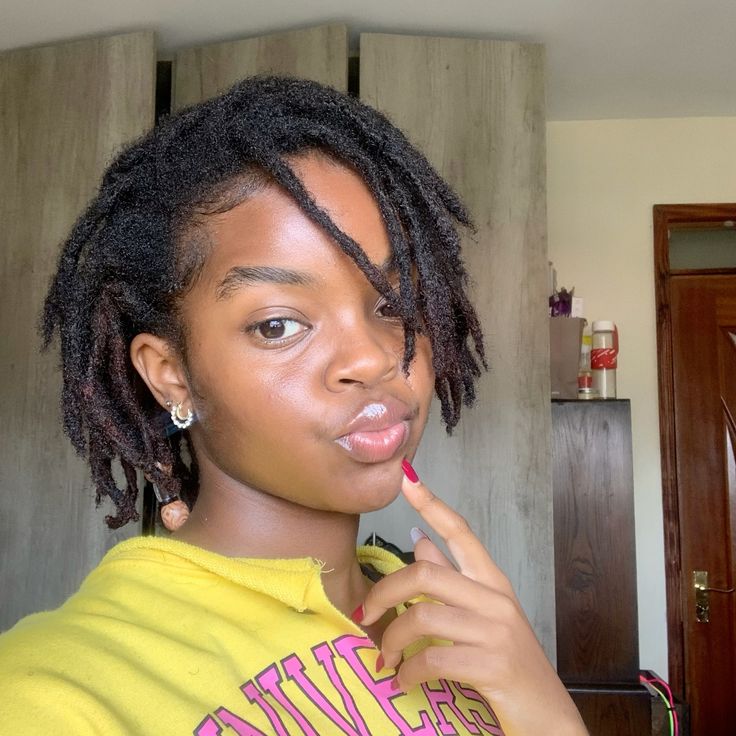
As locs mature and the hair grows, neighboring locs sometimes begin to grow into each other at the roots.
If this joining goes unaddressed over time, two or more locs can fuse together and create one significantly thicker loc in an area surrounded by much thinner ones.
This creates a very noticeable unevenness that becomes harder to address the longer it is left alone.
Thinning From Tension or Damage
Some locs become thin not because they started that way but because damage or tension has caused them to thin out over time.
Locs that are retwisted too tightly, loc styles that put repeated stress on specific locs, or locs that have experienced breakage at the root can all develop a thin, fragile appearance that stands out dramatically against healthier, fuller locs nearby.
If thinning is your primary concern, my post on 7 things that cause loc thinning and how to stop them goes into this in much more detail and is essential reading alongside this post.
How to Fix Locs That Are Too Thin
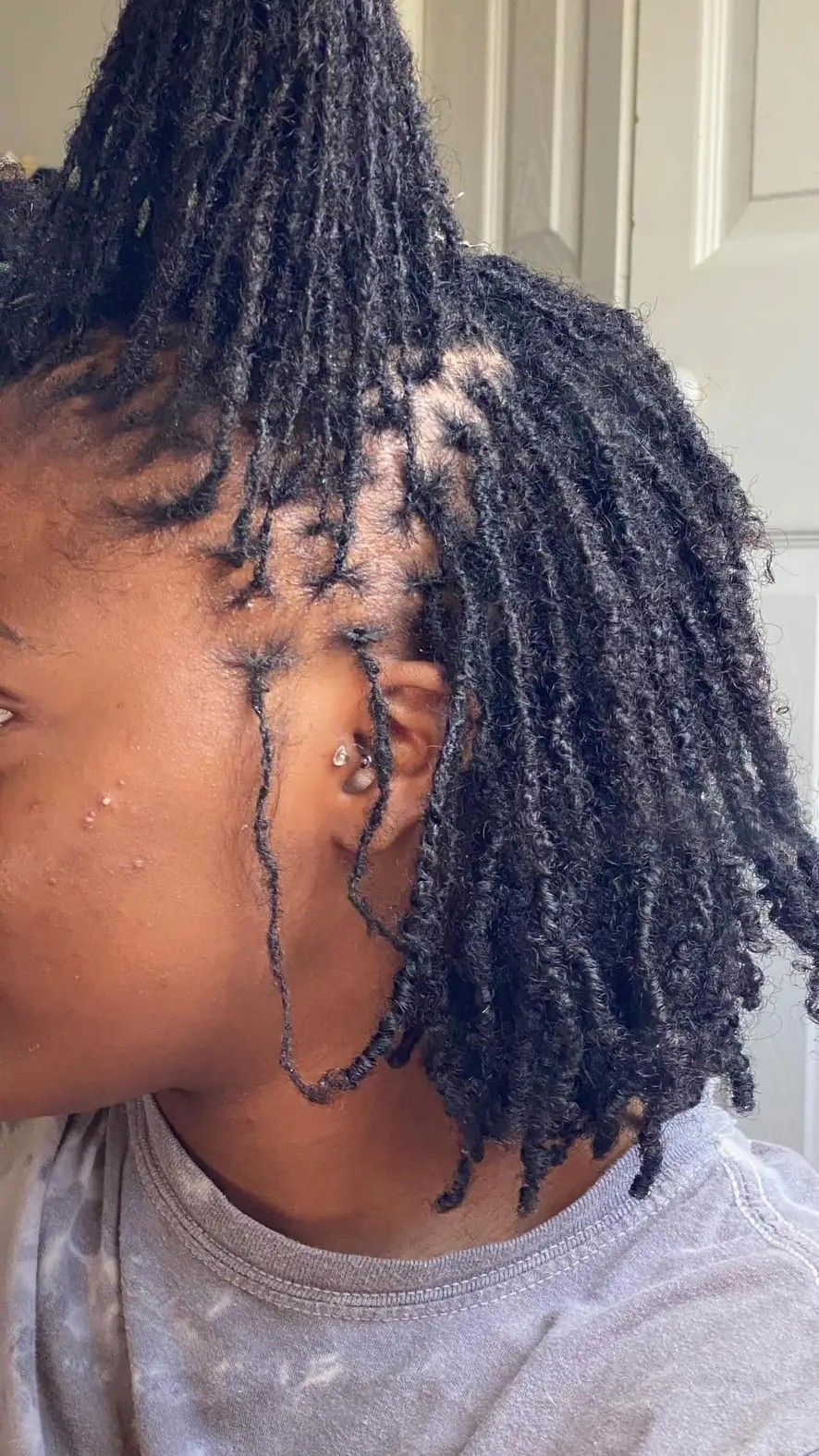
Thin locs are probably the most concerning of the three problems because thin locs are genuinely fragile.
They are at risk of breaking, unraveling, or developing weak points that compromise the entire loc over time.
However, there are several effective approaches to addressing them.
The Combining Method
The most straightforward solution for locs that are too thin is to combine two or more thin locs into a single, fuller loc.
This involves carefully joining the roots of the thin locs together and maintaining them as a single unit going forward.
Over time, the two locs will naturally fuse together and grow as one.
The combining process requires patience and care. You cannot simply press two locs together and expect them to fuse overnight.
The roots need to be trained to grow together through consistent maintenance. During retwisting or interlocking sessions, the roots of the two locs are treated as a single unit until they naturally merge.
This process can take several months but the results are a fuller, stronger loc that is much less vulnerable to breakage.
Wrapping and Building Up Thin Sections
For thin locs where combining is not desired or practical, wrapping is another effective option.
This involves wrapping thread, yarn, or loc extension hair around the thinner sections of the loc to add visual bulk and also to provide structural support to fragile areas.
This is especially useful for thin spots in the middle or at the ends of locs rather than at the root.
Wrapping does not permanently fix the underlying thinness but it does protect fragile locs from further damage while you work on improving the overall health of your hair.
It is also a genuinely beautiful styling technique that can look very intentional and decorative. My post on 12 cute ways to style locs with accessories and jewelry has some ideas that pair really beautifully with wrapped locs for an elevated overall look.
Prioritizing Protein and Moisture for Thin Locs
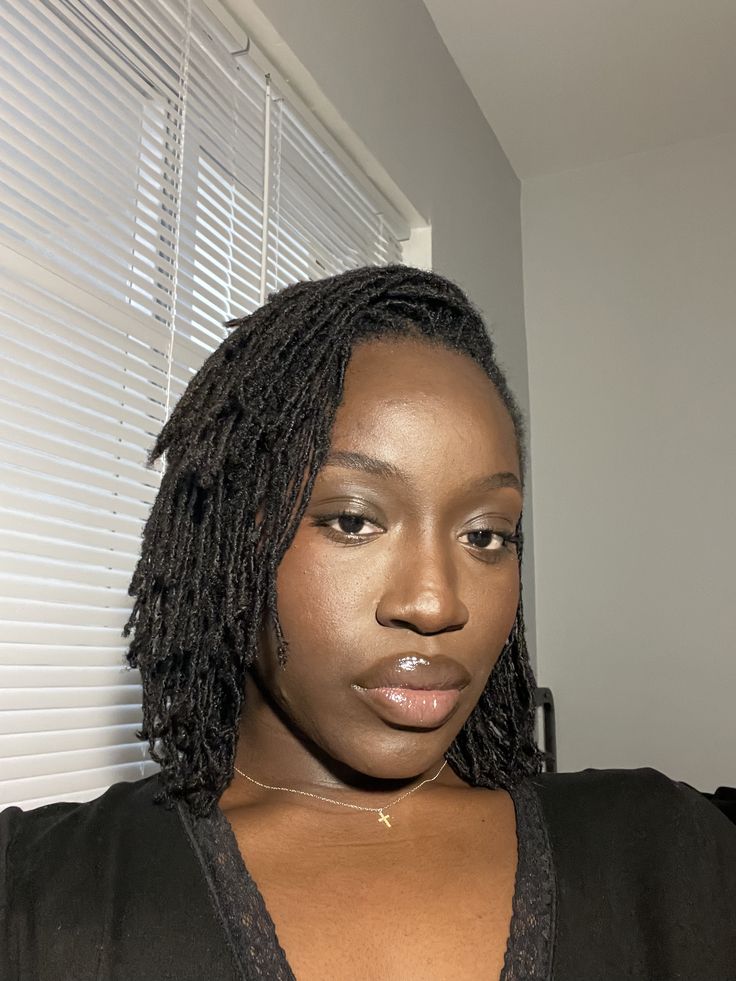
Thin locs often need a targeted approach to both protein and moisture to rebuild their strength. Protein treatments help reinforce the hair shaft and reduce breakage in fragile locs.
Moisture treatments keep the hair supple and prevent the brittleness that makes thin locs even more vulnerable.
The key is balancing these two things because too much protein without enough moisture leads to stiff, brittle hair and too much moisture without enough protein leads to weak, limp hair.
Additionally, focusing on scalp health in the areas where your thinnest locs grow supports healthier, stronger new growth over time.
My post on 7 natural oils that are amazing for loc growth and scalp health has specific recommendations that are really helpful for targeted scalp care around thin locs.
How to Fix Locs That Are Too Thick
Thick locs present a different set of challenges. While they are generally not as fragile as thin locs, overly thick locs can be heavy, take much longer to dry after washing, and are more prone to developing mildew or buildup on the inside if they do not dry completely between wash days.
Splitting Thick Locs
The most direct solution for locs that are too thick is to split them into two or more separate locs.
This process involves carefully separating the hair within a thick loc from the root downward and then maintaining the two new sections as individual locs going forward.
Splitting is a delicate process that requires patience and a very gentle touch to avoid causing breakage or damage to the hair during the separation.
It is worth noting that splitting works best on locs that are not yet fully mature. The more locked and fused the interior of a loc is, the more difficult and potentially damaging the splitting process becomes.
Therefore, if you have thick locs that you want to split, addressing this sooner rather than later in your journey gives you the best chance of a clean and undamaging separation.
When to Seek Professional Help for Splitting
Splitting thick locs is genuinely one of those procedures where professional help is worth considering.
A skilled loctician can assess whether your locs are good candidates for splitting and can perform the separation in a way that minimizes damage.
Attempting to force apart a fully mature, tightly locked loc at home without experience can result in significant breakage and loss of length.
My post on what is a loctician and do you actually need one covers what to look for in a skilled professional who can handle more complex procedures like this.
Managing the Weight and Dryness of Thick Locs
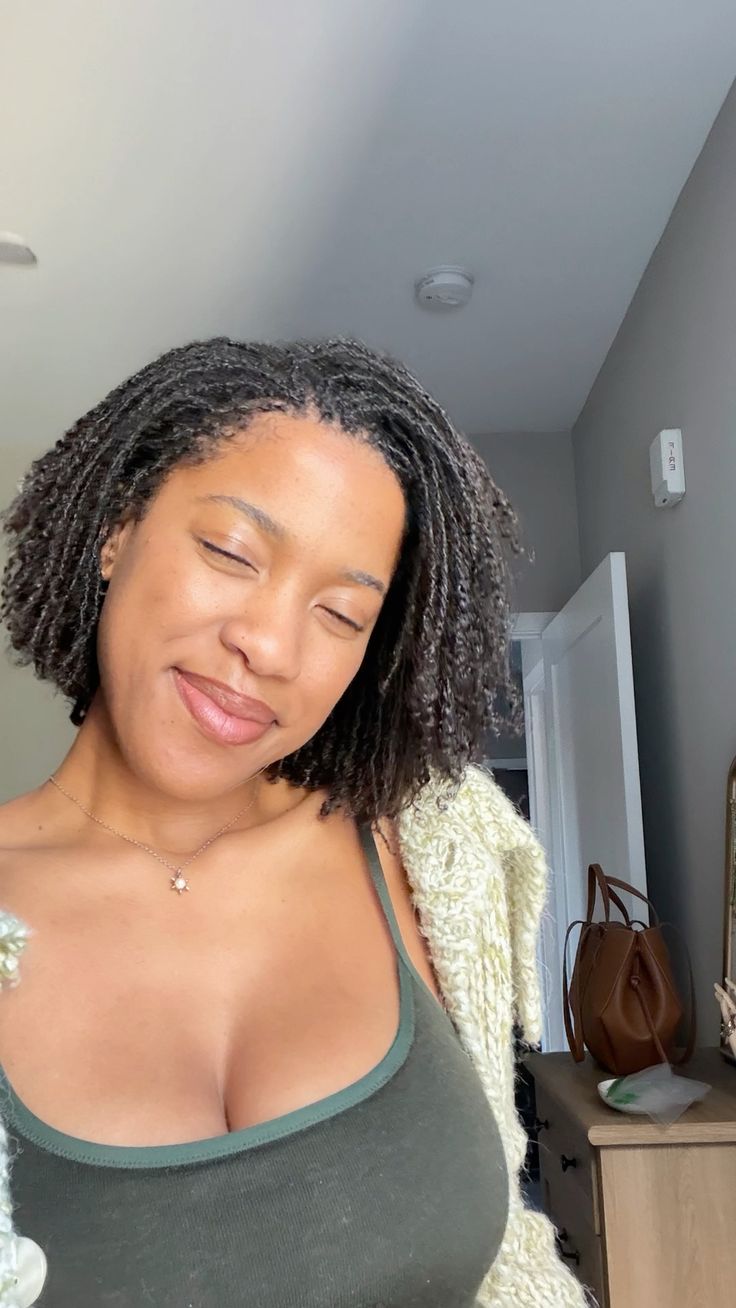
If splitting is not something you want to pursue, managing the practical challenges of thick locs becomes your primary focus.
Thick locs need extra attention on wash day to ensure they dry completely all the way through. Sitting under a hooded dryer after washing helps significantly.
Additionally, applying moisture more frequently to thick locs is important because the interior of a thick loc is much harder to reach with products than the interior of a thinner one.
My post on how to keep locs moisturized in dry or cold weather has moisture techniques that are particularly useful for thick locs because the same principle applies year round.
Getting moisture deep into a dense loc requires more intentional effort than moisturizing thinner locs does.
How to Fix Locs That Are Uneven in Length
Uneven length is a slightly different issue from uneven thickness but it is just as visually noticeable and just as worth addressing.
Locs can become uneven in length for several reasons including breakage at the ends, differences in shrinkage across different areas of the head, and varying rates of growth in different zones of the scalp.
Trimming to Create a More Even Appearance
The most straightforward approach to uneven length is to trim the longer locs to create a more uniform overall length.
This sounds simple but it requires some thought about how much length you are willing to sacrifice and whether the unevenness is severe enough to warrant trimming.
For most people, a slight unevenness in length is not worth significant trimming. However, if the length difference between your longest and shortest locs is dramatic, a careful trim can dramatically improve the overall appearance of your locs.
Allowing Shorter Locs to Catch Up
If you are not ready to trim, the alternative is simply allowing your shorter locs to catch up to your longer ones over time.
This requires patience but it is a perfectly valid approach, particularly if the length difference is not too dramatic.
During this catching up period, focusing on scalp health and growth supporting practices in the areas where your shorter locs grow can help speed the process along somewhat.
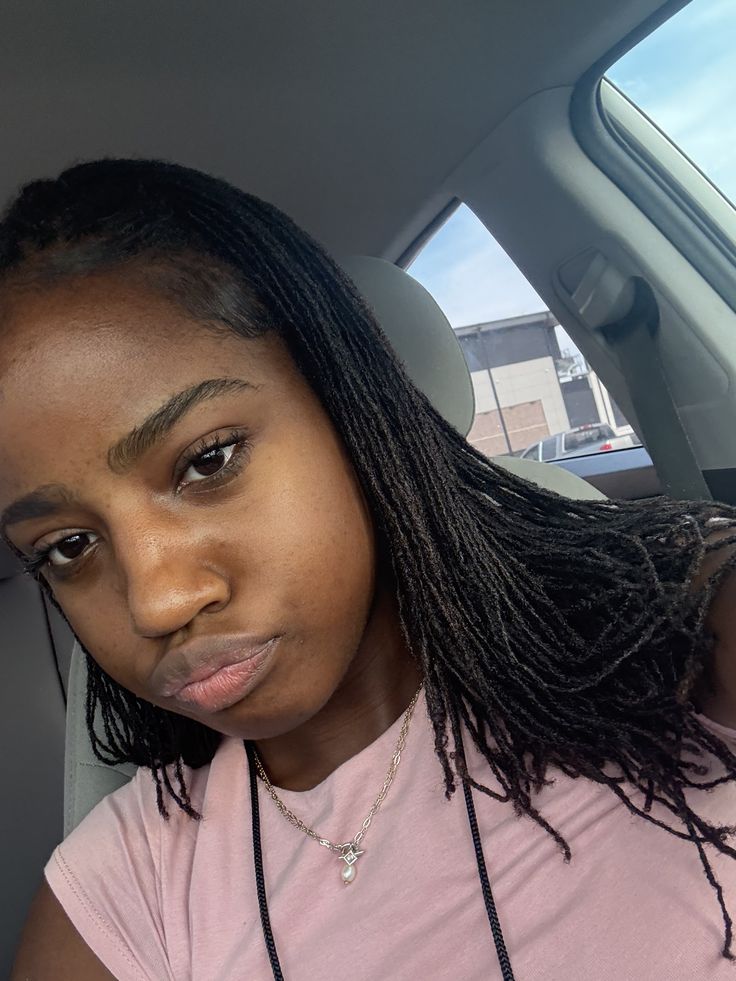
Styles That Work With Uneven Lengths
In the meantime, certain styles work beautifully with uneven loc lengths and can make the unevenness look intentional rather than problematic.
Layered updos, styles that gather locs of varying lengths together, and accessorized styles can all disguise length unevenness very effectively
while you work on the underlying issue. My posts on 15 stunning loc styles for beginners that are easy to recreate and 20 beautiful short loc styles for women have options across different length ranges that translate really well to uneven sets.
Preventing Unevenness Going Forward
Fixing existing unevenness is important but preventing new unevenness from developing is equally important.
Once you have addressed the current issues, putting habits in place that keep your locs developing as evenly as possible going forward protects all the work you have done.
Consistent Parting During Maintenance
Every time you or your loctician performs maintenance on your locs, the parting pattern should be checked and maintained carefully.
Locs that are allowed to grow into neighboring locs at the root without intervention will gradually fuse and create uneven thickness over time.
Checking your roots regularly and separating any locs that are beginning to join keeps your parting pattern clean and your locs developing at consistent sizes.
Rotating Your Maintenance Approach
If you consistently start your maintenance sessions at the same area of your head, the locs in that area receive the most attention and are maintained the most carefully.
The locs you get to at the end of a session, when you are tired and rushing, may receive less careful treatment.
Rotating where you start your maintenance sessions ensures that every area of your head receives equal attention over time.

Monitoring Problem Areas Closely
If you have areas of your scalp that are naturally lower in density or areas where your locs have historically been thinner or weaker, give those areas extra monitoring and care going forward.
Check them at every maintenance session. Apply targeted scalp care products to those areas specifically.
Address any new joining or separation issues in those areas as soon as you notice them rather than waiting until the next scheduled maintenance appointment.
The Role of Products in Maintaining Even Locs
What you put on your locs affects not just their health but also their appearance and their structural integrity over time.
Using the right products helps maintain even development across all your locs while using the wrong products can contribute to unevenness in ways that are easy to miss until the problem has already become significant.
Avoiding Heavy Products That Cause Uneven Buildup
Heavy waxes, thick creams, and petroleum based products tend to accumulate more in some locs than others, particularly thicker locs that are harder to rinse thoroughly.
This uneven buildup creates uneven texture and appearance across your loc set over time. Switching to lighter, water soluble products that rinse out cleanly on wash day prevents this kind of buildup related unevenness from developing.
My post on 8 products to completely avoid putting on your locs covers the specific products most likely to cause this kind of buildup problem.
And my post on 10 best products for soft, moisturized locs that actually work gives you excellent alternatives that support even, healthy loc development without the buildup risk.
Regular Detoxing to Reset Your Locs
If product buildup has already contributed to unevenness in your locs, a thorough detox can help reset things by removing accumulated residue from inside your locs and allowing them to develop more freely and evenly going forward.
My post on 10 signs you need a loc detox right now will help you assess whether buildup is a contributing factor to the unevenness you are experiencing and what to do about it.
When Unevenness Is Actually Part of Your Loc’s Personality
Here is something worth saying clearly. Not all unevenness is a problem that needs to be fixed. Locs are living, organic things and a certain amount of natural variation in size, shape, and length is part of what makes a loc set look human and authentic rather than manufactured.
Some of the most beautiful and characterful loc sets in the world have natural variation that gives them personality and depth.
The question to ask yourself is whether the unevenness you are seeing is affecting the health of your locs or simply the aesthetic uniformity.
If your locs are healthy, strong, and thriving but simply not perfectly matched in size, that is worth sitting with before you start aggressively intervening.
Freeform locs in particular embrace this natural variation as a feature rather than a flaw. My post on 15 freeform loc inspo photos that will make you ditch the retwist is a really beautiful reminder of how stunning natural loc variation can actually look when you allow yourself to see it that way.
Building a Long Term Plan for Your Locs
Fixing the immediate issues with thin, thick, or uneven locs is only part of the picture. Building a long term plan for your loc health and development ensures that you are continuously moving toward the loc set you truly want rather than constantly putting out fires as they arise.
Setting Realistic Expectations for the Fix Timeline
Whether you are combining thin locs, splitting thick ones, or waiting for shorter locs to catch up in length, these processes take time.
Months, not weeks. Setting realistic expectations for your fix timeline prevents the frustration of expecting quick results from processes that are inherently gradual.
Document your progress with regular photos so you can see the changes that are happening even when they feel invisible from day to day.
Investing in the Right Tools and Products
Having the right tools at home makes self monitoring and minor maintenance much more manageable between professional appointments.
A good rat tail comb for checking partings, a quality dropper bottle for targeted oil application, and a reliable steamer for deep moisture treatments are all investments that pay off significantly over the long term.
My post on 12 things to buy before you start your loc journey covers the essential toolkit in detail even if you are past the starting stage because many of those tools remain relevant throughout the entire journey.
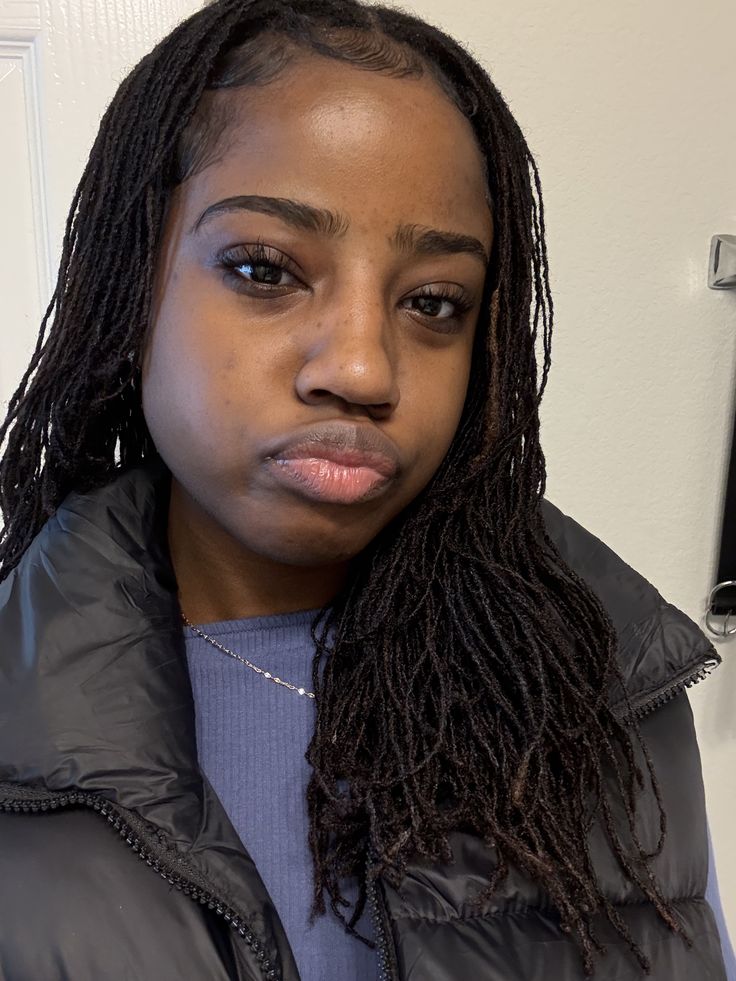
Celebrating Progress at Every Stage
Finally, and genuinely, celebrate your progress. Fixing loc problems takes real effort and real patience.
Every thin loc that gains some strength, every thick loc that splits successfully, every uneven set that gradually becomes more balanced is a real achievement.
Your locs are a living record of your commitment to your hair and to yourself. Honor that commitment by acknowledging the progress you make, even when it feels slow.
If you want to keep finding fresh inspiration for your locs as they develop and improve, my posts on 20 medium loc styles that are trending right now and 15 loc styles for men that are stylish and low maintenance are great places to find looks that will make you excited about where your locs are heading.
Final Thoughts
Thin locs, thick locs, and uneven locs are some of the most common challenges in the loc community and they are also some of the most fixable.
The key is approaching them with accurate information, the right techniques, and realistic expectations about the timeline involved.
Every loc set is different and the solution that works beautifully for someone else may need to be adapted for your specific hair, your specific texture, and your specific situation.
Be patient with your hair. Be consistent with your care. And remember that the imperfections in your loc set are not signs of failure. They are simply the starting points for the next phase of your journey.
Your locs are worth the effort. Keep going.
Leave a Reply