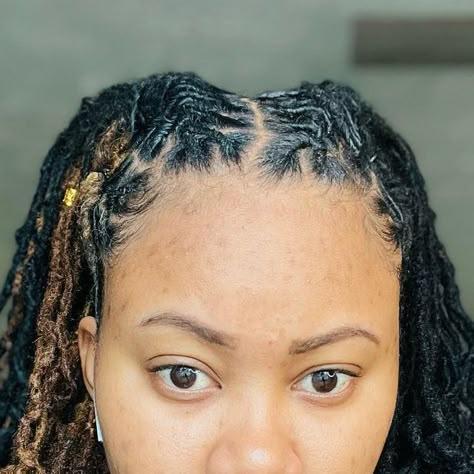
There is a moment that happens to almost every loc wearer eventually. You are scrolling through social media and you see a photo that stops you completely. Someone has their locs braided together with extensions or with loose hair in a way that looks absolutely stunning.
Half locs, half braids. Locs twisted into a braid pattern. Braided sections flowing alongside free hanging locs. Your first thought is how do they do that. Your second thought is can I do that with my locs. The answer to both questions is yes and that is exactly what this post is for.
Before we get into it, if you are still deciding between two strand twist locs and traditional locs for your base style, go read my post on traditional locs vs two strand twist locs what’s the difference because knowing what type of locs you have affects which combined styles work best for your specific hair. Now let us get into everything you need to know about combining locs and braids in one beautiful protective style.
Why This Combination Works So Well
Before we get into specific styles, it helps to understand why locs and braids work so beautifully together as a combination. They are not as different as they might seem at first glance.
Bookmark this for later: The Best Protective Styles to Do While Your Locs Are Maturing
The Structural Compatibility of Locs and Braids
Locs and braids are structurally compatible in a really important way. Both are rope like sections of hair that hang in a similar direction and have a similar visual weight.
When locs and braids are placed alongside each other in a style, they create a cohesive look rather than a jarring contrast.
The key is choosing braided elements that complement the size and texture of your locs rather than competing with them visually.
Save this for your loc journey: How to Style Locs for a Job Interview (and Still Look Like Yourself)
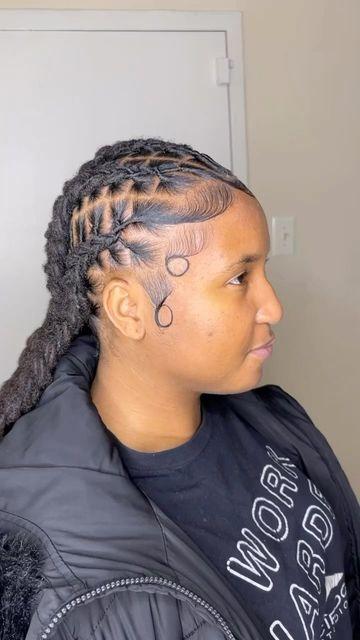
The Versatility This Combination Offers
Combining locs and braids dramatically expands your styling options beyond what either element can offer alone.
Your locs provide length, texture, and the beautiful organic quality of naturally locked hair.
Braided elements add definition, pattern, color possibilities, and the ability to create shapes and structures that your locs cannot achieve on their own.
Together they create a styling language that is more expressive and more versatile than either element separately.
Come back to this when you need it: How to Choose the Right Loc Size for Your Face Shape
Before you attempt any combined loc and braid style, you need to have a clear understanding of the current state of your locs. Not all locs are equally ready for the manipulation that combined styles require.
Keep this guide handy: Butterfly Locs vs Boho Locs: A Detailed Comparison
Loc Stage and Readiness for Combined Styles
If your locs are still in the starter or early maturing stage, you need to approach combined styles with significant caution.
Starter locs that are not yet locked are vulnerable to unraveling when manipulated into braided patterns.
The tension of braiding can pull at unlocked roots and disrupt the locking process. Generally speaking, waiting until your locs are at least twelve to eighteen months old before attempting combined styles is a sensible guideline for most hair types.
If you are in the maturing stage and want to try combined styles, keep the manipulation minimal and the tension as low as possible.
My post on the best protective styles to do while your locs are maturing covers how to protect your locs during this vulnerable stage in ways that apply directly to combined styling as well.
Loc Length Requirements for Different Styles
Different combined styles require different minimum loc lengths.
Styles that involve braiding your locs directly require enough length to work with comfortably. Locs that are too short to braid will not hold the style and will slip out of any braid pattern quickly.
Generally, locs need to be at least three to four inches long for simpler combined styles. More complex styles that require your locs to travel longer distances across your head need six inches or more to execute properly.
There are several distinct categories of combined loc and braid styles. Each category uses locs and braids differently and creates a different overall aesthetic.
Understanding these categories helps you identify which type of style you are looking for before you start.
You’ll want to revisit this: 15 loc styles for men that are stylish and low maintenance
One: Braided Loc Updos
Braided loc updos involve braiding your locs together into updo formations using your actual locs as the braiding strands.
Instead of braiding individual hair strands, you use individual locs as the strands of a larger braid. The result is a chunky, textured braided updo that showcases the beautiful texture of your locs while creating a structured, polished look.
These styles are particularly popular because they are genuinely protective. Your loc lengths are gathered up and away from your collar and from environmental exposure.
They also look incredibly elegant and work beautifully for both casual and formal occasions. My post on how to style locs for a job interview and still look like yourself has some variations on braided loc updos that translate beautifully into professional settings.
Two: Locs Mixed With Loose Braided Extensions
This category involves adding braided extension hair alongside your existing locs to create a mixed style. Your natural locs hang freely while extension hair is braided from the roots of the scalp in the sections between your locs. The extensions add volume, length, color, and texture variation that creates a dramatically different look from your locs alone.
This category is one of the most popular because it is incredibly versatile. You can choose extension hair that closely matches your locs for a seamless integrated look. Alternatively you can choose contrasting colors or textures for a bold, intentional mixed aesthetic. The styling possibilities within this category are genuinely endless.
Three: Braided Sections Within a Loc Style
This category involves creating braided sections within an otherwise free hanging loc style.
For example, you might braid the front sections of your locs back toward the crown while leaving the rest of your locs hanging freely.
Or you might create two braided sections on each side of your head that meet at the back while the rest of your locs cascade freely around them.
These partial braid elements add structure and definition to a free hanging loc style without requiring full updo commitment.
Four: Fully Integrated Loc and Braid Patterns
This is the most complex category. It involves creating styles where locs and braids are fully integrated into a single cohesive pattern across the entire head.
Examples include styles where alternating sections are braided and loc’d, creating a checkerboard or striped pattern effect.
Another example is styles where locs and braids are worked together into large cornrow like formations across the scalp. These styles require the most skill and the most time but they produce the most visually dramatic results.
Style One: The Classic Braided Loc Bun
The braided loc bun is one of the most accessible combined styles for beginners. It requires minimal skill and produces a consistently polished result.
Don’t lose this post: 15 freeform loc inspo photos that will make you ditch the retwist
How to Create a Braided Loc Bun
Start by gathering all of your locs at the back of your head as if you were creating a simple bun.
Instead of twisting them into a bun immediately, divide your gathered locs into three equal sections. Braid these three sections together in a simple three strand braid.
The individual locs serve as the strands of the braid. Continue braiding until you reach the ends of your locs.
Then coil the completed braid around itself into a bun shape at the back of your head. Secure with loc friendly hair ties and pins as needed.
The result is a bun with a beautiful braided texture that looks significantly more intentional and styled than a simple gathered bun. The braided structure also holds the bun more securely than a simple twist would.
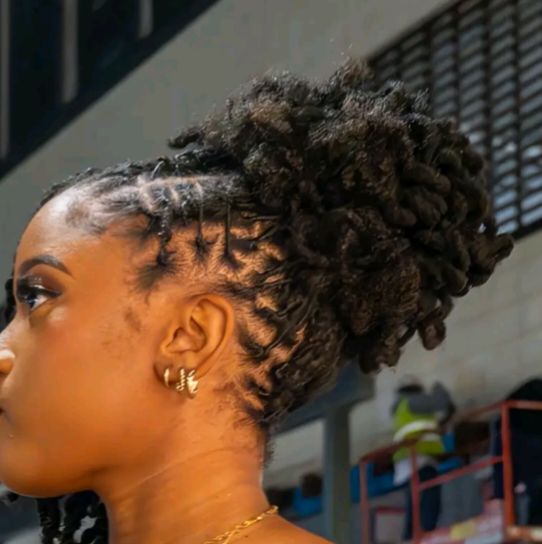
Variations on the Braided Loc Bun
Once you are comfortable with the basic braided loc bun, there are several beautiful variations to explore.
A high braided bun at the crown looks regal and dramatic. A low braided bun at the nape looks sleek and professional. A side braided bun creates an asymmetrical look that is playful and artistic.
You can also create multiple smaller braided buns rather than one large one for a different aesthetic entirely.
Save this for future reference: 10 stunning loc color ideas from honey blonde to burgundy
The half up braided crown is one of the most universally flattering combined loc and braid styles. It works on almost every face shape and loc length.
Pin this for later: 9 things to know before you get butterfly locs
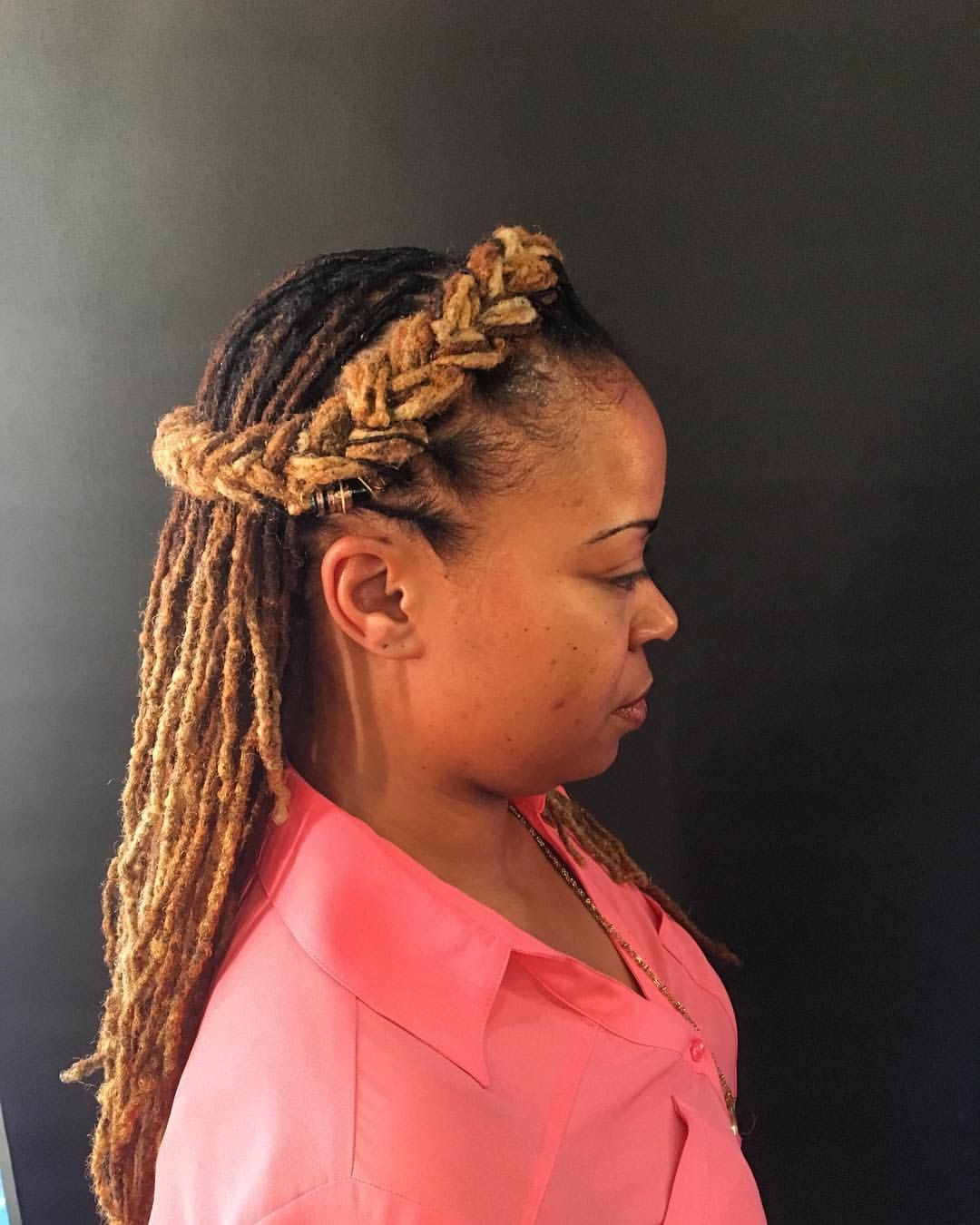
How to Create a Half Up Braided Crown
Part your locs horizontally across the middle of your head. Gather the top half of your locs toward the front of your head.
Divide this top section into two equal parts. Take the left section and create a three strand braid using individual locs as your braiding strands.
Bring this braid across the top of your head toward the right side. Secure it temporarily. Take the right section and create a matching braid.
Bring it across the top of your head toward the left side. Cross the two braids over each other at the center crown and pin them securely into a crown formation. Allow the bottom half of your locs to hang freely.
The result is a beautifully structured crown of braided locs across the top of your head with your remaining locs flowing freely below. It looks both polished and effortless simultaneously.
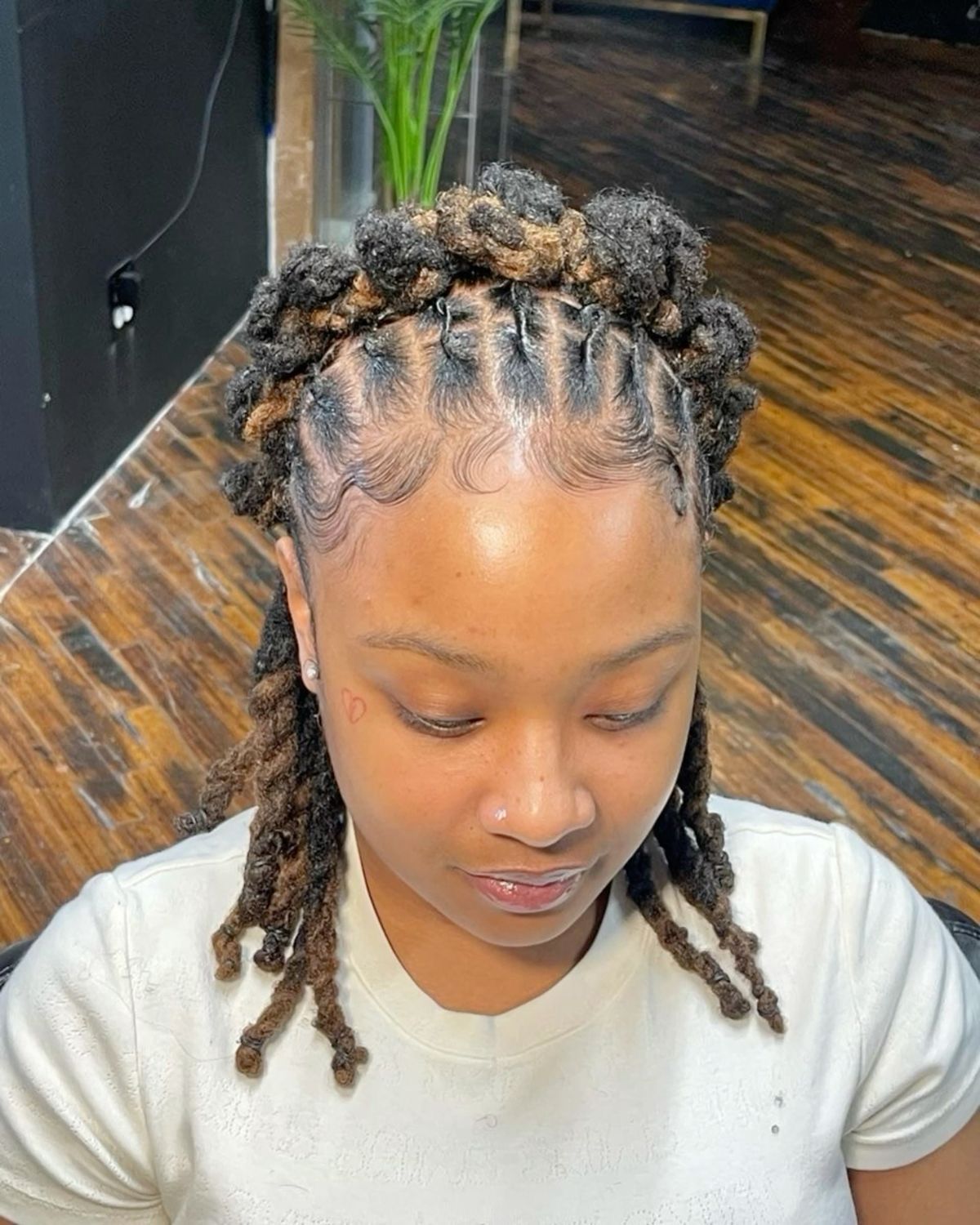
Making Your Braided Crown Last Longer
The braided crown tends to loosen over time especially if your locs are heavy. Secure each braid at multiple points along its length using small, clear hair ties hidden underneath the braid.
This internal support keeps the braids from drooping or losing their shape throughout the day. Additionally, applying a very small amount of a light holding product to each loc before braiding gives the braids slightly more grip and staying power.
Style Three: Locs Mixed With Box Braid Extensions
This is one of the most visually striking combined styles available to loc wearers. The contrast between the organic texture of natural locs and the neat uniformity of box braid extensions creates a genuinely beautiful effect.
Choosing the Right Extension Hair
Choosing the right extension hair for this style is critically important. The extension hair needs to match or deliberately contrast with the size of your locs.
Extensions that are too thick look bulky and out of proportion alongside most loc sizes. Extensions that are too thin can look stringy.
Generally, choosing extension braids that are similar in diameter to your own locs creates the most cohesive look. My post on what type of hair is used for soft locs and how to choose has detailed guidance on assessing extension hair quality that applies equally well to choosing hair for this combined style.
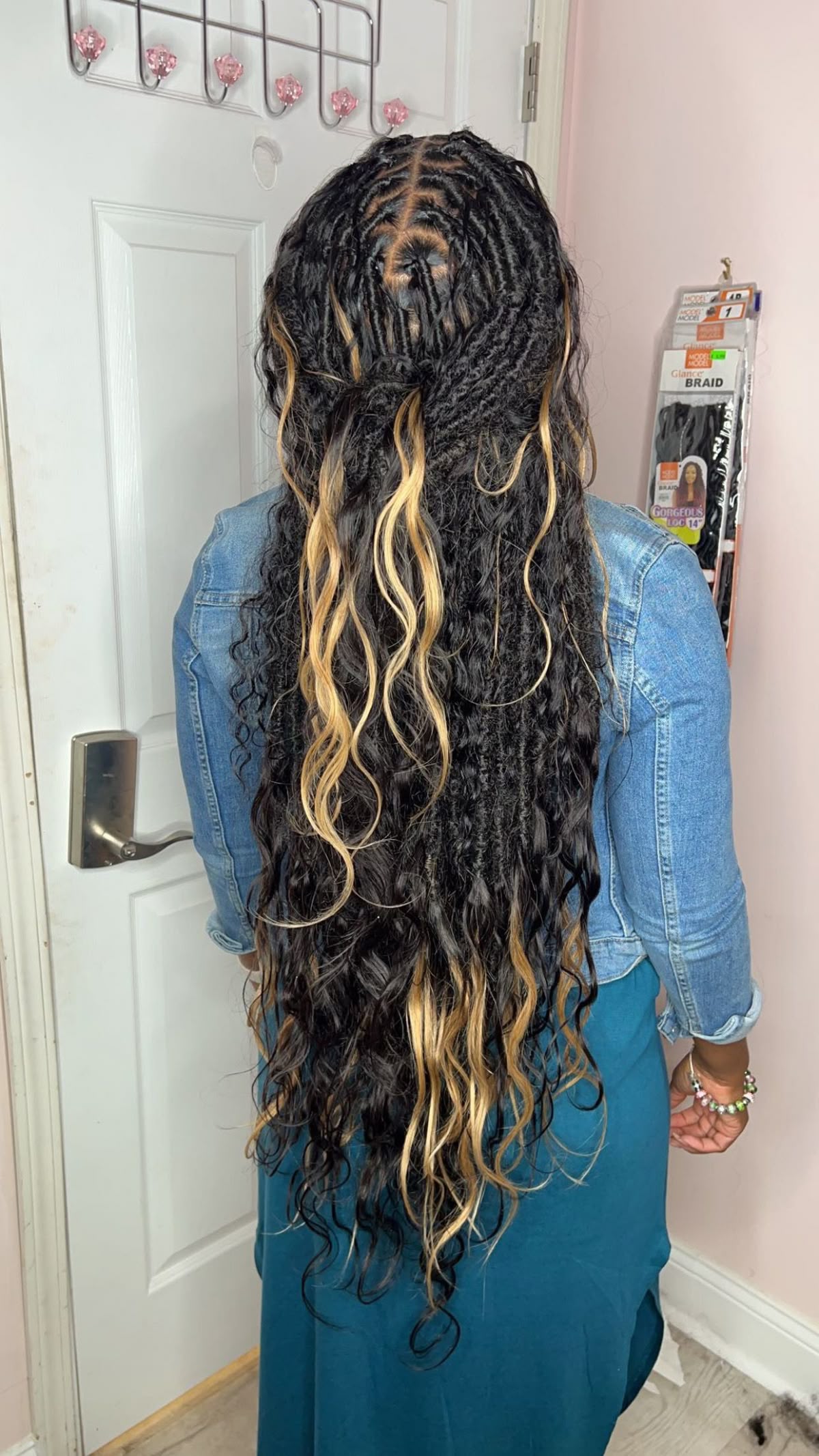
How to Install Mixed Loc and Extension Box Braids
Section your scalp carefully before beginning the installation. Decide in advance which sections will remain as your natural free hanging locs and which sections will have extension box braids added.
A common approach is alternating sections. Every other section becomes an extension braid while the intervening sections remain as natural locs. This creates an even distribution of both elements across the head.
For the extension braid sections, part a clean section of new growth and braid the extension hair in using the standard box braid installation technique.
The extension braid roots should align neatly with the roots of your neighboring natural locs for a cohesive appearance at the scalp. Work through the entire head systematically before assessing the overall balance of the style.
Color Choices for the Mixed Style
Color is where this style becomes genuinely exciting. You can choose extension hair that exactly matches your natural loc color for a subtle, seamless effect.
Alternatively, you can choose a contrasting color for the extension braids to create a striking two tone effect. Honey blonde extensions alongside dark natural locs is a popular and beautiful combination. Burgundy extensions alongside black locs creates a rich, dramatic effect.
My post on how to add color to locs without major damage is a great companion read for thinking through your color approach for this style.
This style involves creating cornrow braided sections across parts of the scalp while leaving other locs free hanging.
It creates a beautiful combination of tight, sculpted braided sections and loose, flowing loc length.
How to Plan Your Cornrow and Loc Layout
Planning is the most important step for this style. Decide in advance which sections of your head will be cornrowed and which sections will remain as free hanging locs.
Common layouts include cornrowed sides with free hanging locs on top. Another popular layout is cornrowed front sections with free hanging locs at the back.
A more dramatic version has cornrowed sections radiating from the crown with free hanging locs filling in the spaces between them.
Sketch your layout or find a reference photo before you start. Having a clear plan prevents the frustration of getting halfway through the style and realizing the layout is not working the way you imagined it would.
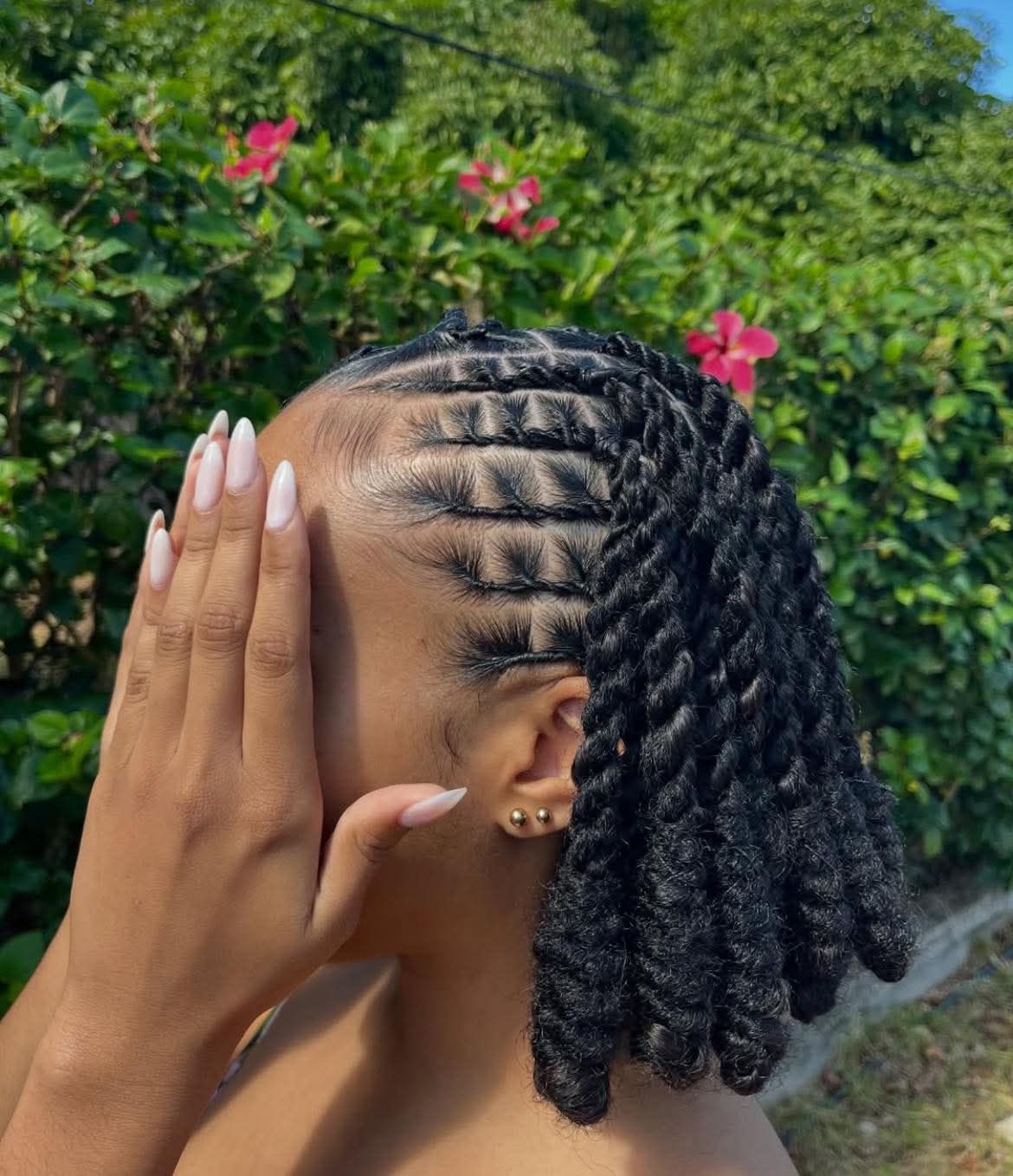
Creating the Cornrow Sections With Locs
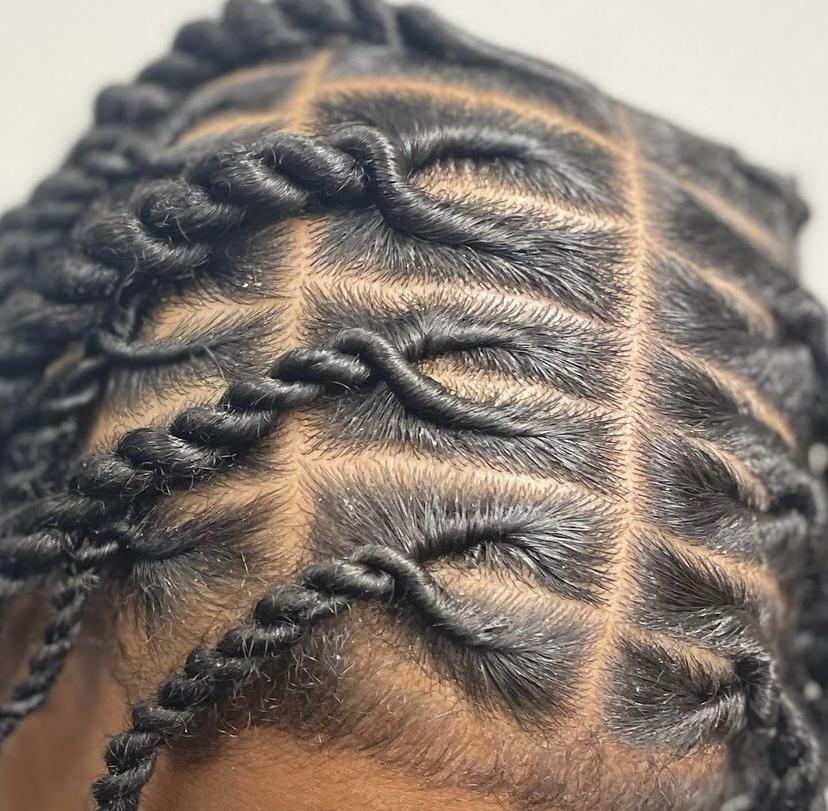
To create cornrow sections using your actual locs, gather a row of locs at the scalp and braid them flat against the head using the standard cornrow technique.
Individual locs serve as the strands rather than loose hair. The result is a cornrow that has the beautiful, bumpy texture of natural locs rather than the smooth, tight appearance of a traditional cornrow.
This textured cornrow quality is part of what makes this style so uniquely beautiful on loc wearers.
Keep the tension in your cornrow sections very gentle. Tight cornrows on locs put significant stress on the roots of the locs being incorporated into the braid. This can cause thinning at those roots over time if the style is worn repeatedly with too much tension.
Style Five: The Fulani Inspired Loc and Braid Style
The Fulani braid style, which originates from the Fulani people of West Africa, has become one of the most beloved protective styles in the natural hair community. Adapting it for loc wearers creates a stunning combination of cultural heritage and contemporary styling.
The Traditional Elements of the Fulani Style
Traditional Fulani braids typically feature a center cornrow running from front to back or from side to side. They also include side braids or locs that fall alongside the face.
Accessories including beads, cowrie shells, and cuffs are traditionally incorporated into the style. These elements translate beautifully to a loc and braid combination.
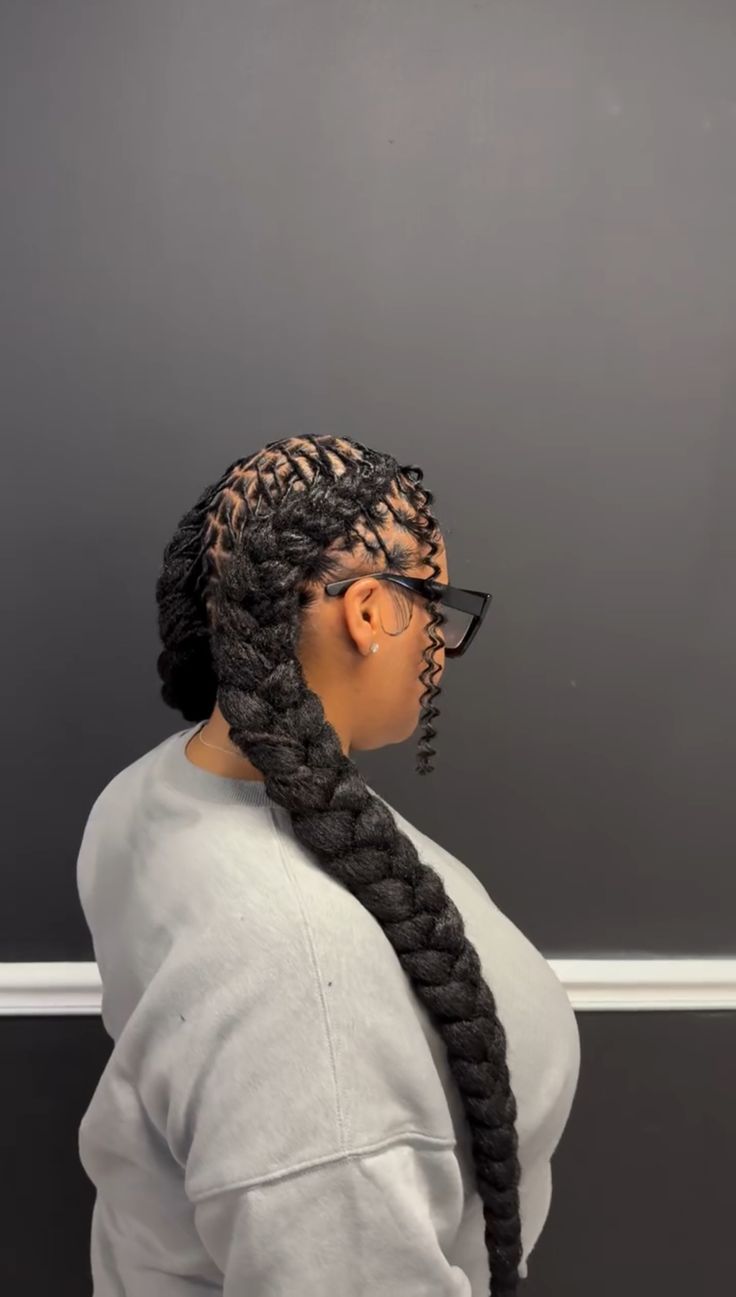
How to Create a Fulani Inspired Loc Style
Create a center part from your hairline to the nape of your neck. Take the locs on either side of this center part and braid them into flat sections along the parting line.
These braided sections running along the center part form the signature cornrow element of the Fulani inspired style. Leave the remaining locs on each side of your head to hang freely or to be styled in loose sections alongside your face.
Add accessories along the braided center sections and along the free hanging locs for the signature Fulani aesthetic. Beads, cuffs, and cowrie shells all work beautifully with this style.
My post on 12 cute ways to style locs with accessories and jewelry has detailed guidance on incorporating accessories into your loc styles in ways that enhance rather than damage your locs.
Style Six: The Feed In Braid With Loc Ponytail
This style combines a sleek, sculpted feed in braid at the front of the head with a gathered loc ponytail at the back. It is one of the most polished and professional looking combined styles available.
Creating the Feed In Braid Section
The feed in braid section for this style runs along the hairline from one side of the head to the other. Start at one temple and create a cornrow braid that follows the hairline around the front of the head.
As you braid, feed in additional locs from behind the hairline to keep the braid growing and the tension distributed evenly. Continue until the braid reaches the other temple. Secure the end of the braid neatly.
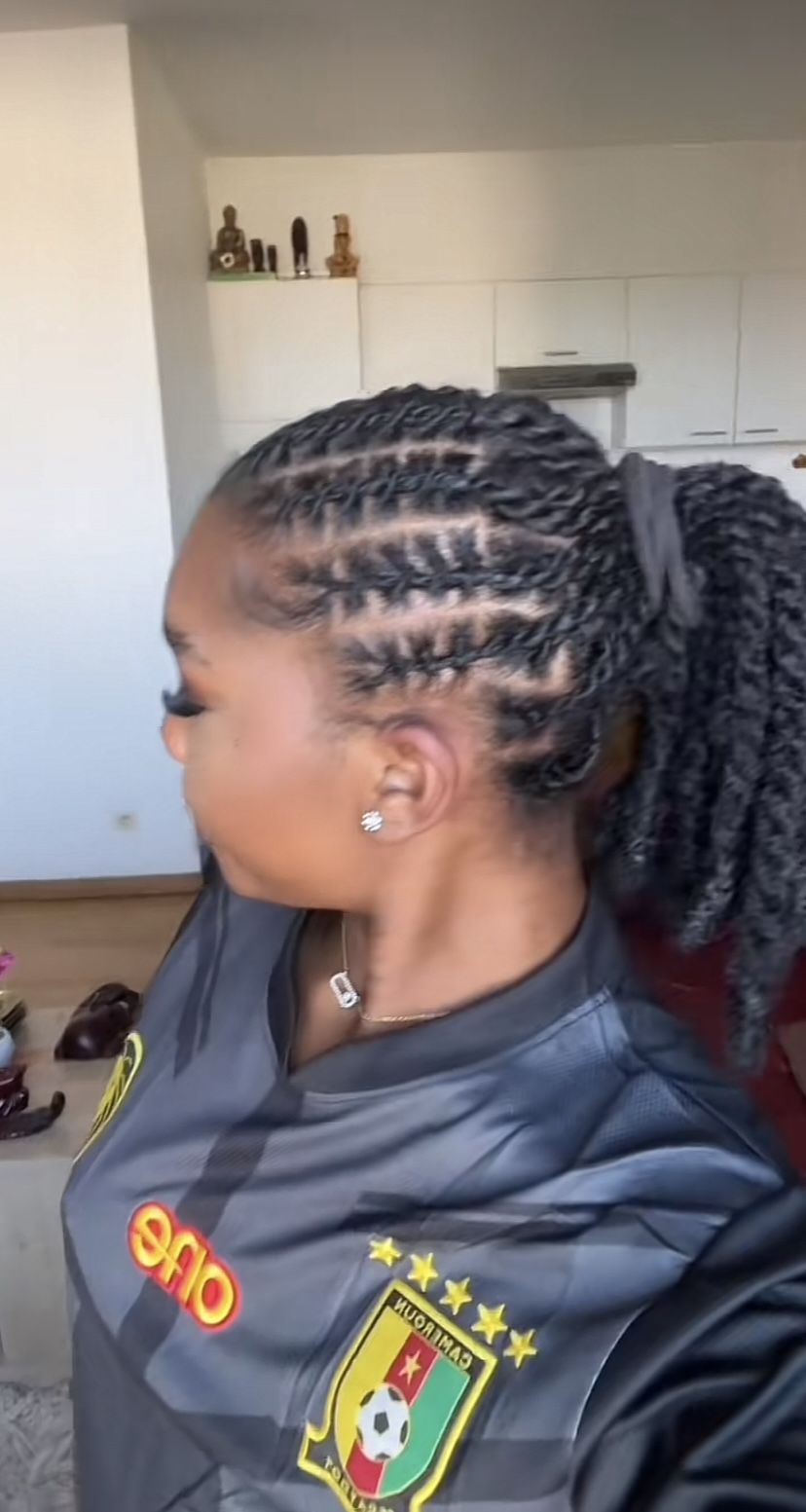
Gathering Your Remaining Locs Into the Ponytail
Once your feed in braid is complete, gather all of your remaining free locs into a ponytail at the back or crown of your head.
The ponytail can be neat and smooth or loosely gathered depending on your preference. The contrast between the sleek braided hairline section and the textured loc ponytail creates a really beautiful and sophisticated overall effect.
This style works particularly well for professional settings and special occasions. It keeps your locs neatly contained while showcasing both the braided technique and the beautiful texture of your natural locs at the same time.
The care you give your locs while they are in a combined style affects both how long the style lasts and how healthy your locs remain throughout the wear period.
Keeping Your Scalp Clean Between Washes
Combined styles that incorporate extension braids or tight braided sections make direct scalp access more challenging than it is with free hanging locs.
Use a diluted cleanser in a spray or dropper bottle to apply directly to your scalp between full wash sessions. Work the cleanser gently into your scalp with your fingertips and then rinse carefully with warm water.
This keeps your scalp clean and comfortable without requiring you to fully take down the style for every cleanse.
Moisturizing Your Locs Within the Style
Your locs still need moisture even when they are incorporated into a braided combined style. Use a lightweight water based spray to mist your locs lightly every few days.
Follow with a small amount of your regular sealing oil applied along the length of any visible loc sections. Pay particular attention to the exposed ends of your locs which are often the driest part of the hair.
My post on how to keep locs moisturized in dry or cold weather has moisture techniques that apply directly to caring for locs within protective styles throughout the year.
How Long to Keep a Combined Style In
The appropriate length of time to keep a combined loc and braid style in depends on the specific style and how well your locs are maintaining their health within it.
As a general guideline, styles that incorporate extension braids can be kept in for four to six weeks comfortably. Styles that use only your natural locs without extensions can often be kept in for two to four weeks before the roots need attention.
Remove any combined style gently and carefully and do a thorough cleanse immediately after removal.
Even experienced loc wearers make mistakes when attempting combined styles for the first time. Knowing the most common errors prevents you from learning them the hard way.
Using Too Much Tension in the Braided Sections
Tight braided sections look neat immediately after installation. However, the tension they create on your loc roots causes damage over time. Always prioritize gentle tension over a perfectly tight appearance.
A style that is slightly less tight but preserves your loc health is always better than a flawlessly tight style that thins your roots.
My post on how to repair a broken or thinning loc naturally covers what happens when tension damage is left unaddressed and how to fix it when it does occur.
Adding Too Much Extension Weight
When incorporating extension braids into a combined style, it can be tempting to add a lot of extension hair for maximum volume and drama. However, heavy extensions add significant weight to the roots of your locs and the new growth at your scalp.
This weight creates downward tension that is just as damaging as lateral tension from tight braiding.
Keep extension additions moderate in weight and always listen to what your scalp is telling you about comfort and tension levels.
Skipping the Protective Nighttime Routine
Even within a combined style, your overnight protection routine matters enormously.
Combined styles that are not protected at night experience significantly faster frizzing, loosening, and general deterioration than styles that are properly covered.
Always wear your satin bonnet or wrap your style in a satin scarf before sleeping regardless of how intricate or time consuming the style was to create.
Finding Inspiration for Your Combined Style
One of the best things about combined loc and braid styles is the enormous wealth of inspiration available from the natural hair community.
Using Social Media for Style Research
Social media platforms are genuinely excellent resources for finding combined loc and braid style inspiration.
Searching hashtags related to locs and protective styles surfaces thousands of real examples created by real people with real hair. Pay attention to styles on people whose loc size, length, and texture are similar to yours.
Styles that look stunning on very long, thick locs may not translate as beautifully to shorter or thinner locs.
Bringing Reference Photos to Your Loctician
If you plan to have a combined style created by a professional, always bring multiple reference photos to your appointment.
Photos communicate style intentions far more accurately than verbal descriptions do. Bring photos that show the style from multiple angles.
Also bring photos that show variations on the style in case your loctician needs to adapt the look to suit your specific loc length, thickness, and texture.
My post on what is a loctician and do you actually need one covers how to communicate effectively with your loctician to get the results you actually want from every appointment.
Final Thoughts
Combining locs and braids in a single protective style is one of the most creative and expressive things you can do with your hair.
It celebrates the organic beauty of your natural locs while adding the structured artistry of braiding in a way that is genuinely greater than the sum of its parts.
The styles available within this combination are as varied and as individual as the people who wear them.
Start with simpler styles and build your confidence and skill progressively. Protect your locs from excessive tension throughout every combined style you wear. Keep your moisture and cleansing routine consistent even within complex styles.
And allow yourself to experiment and have fun with a combination that truly offers something for everyone.
If you want to keep exploring your styling options, my posts on 15 stunning loc styles for beginners that are easy to recreate and 20 medium loc styles that are trending right now are both full of beautiful inspiration that will keep your creativity flowing well beyond this post.
Your locs are your canvas. Braids are one of the most beautiful brushes you have available to paint with. Use them boldly and enjoy every single style you create.
Leave a Reply