Let me paint a picture for you.
You started your locs several months ago. You were excited. You were committed. You watched all the videos, read all the posts, saved all the Pinterest pictures. You knew what you were getting into and you were ready for it.
But now you are a few months in and something feels off. Your locs do not look like they are moving forward. The budding you were expecting has not really shown up. Your locs still feel soft and loose. Some of them look exactly the same as they did on day one. And you are starting to wonder if something is genuinely wrong.
First of all take a breath. Slow progress is not the same as no progress. And in most cases when locs feel stuck there is a very specific reason why. A reason that can be identified and fixed.
We have covered a lot of ground on this blog already. In the last post about 15 Stunning Loc Styles for Beginners That Are Easy to Recreate I talked about how different stages of the journey affect what styles work for you. Well the same principle applies here. Different stages have different needs. And when those needs are not met progress slows down or stops entirely.
So today I am giving you seven of the most common reasons locs stall. And more importantly I am giving you the specific fix for each one.
One Thing Before We Start
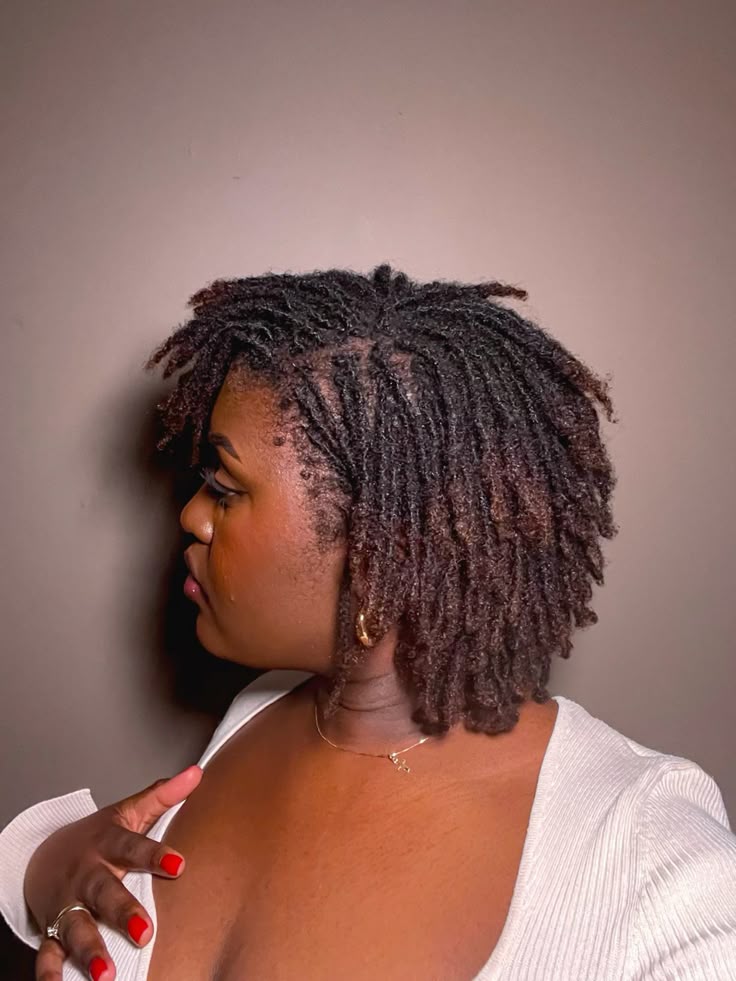
Some locs just take longer than others. Hair texture, loc size, starting method, and individual biology all play a role in your timeline. If your locs are progressing slowly that is not the same as not progressing at all.
What we are talking about today is when something is actively working against your locs. A specific habit, product, or practice that is preventing your hair from doing what it naturally wants to do. That is what we are here to fix.
Bookmark this for later: 6 Differences Between Retwisting and Interlocking You Need to Know
1: You Are Using the Wrong Products
This is the number one reason I see locs stalling in the early stages. And it is also one of the most common because so much bad product advice still circulates in the loc community.
Here is what you need to understand about locs. For your hair to lock, the individual strands inside each section need to grip each other and interlock. That process happens best when the strands are clean and free from heavy coating.
When you apply heavy products to your locs you are essentially putting a layer between the strands. That layer reduces their ability to grip each other. The locking process slows down significantly. In some cases it stops almost entirely.
The Products That Cause the Most Problems
Wax is the biggest offender. It does not dissolve in water. It builds up inside your locs with every application. And it coats your strands so thoroughly that the locking process can barely happen underneath it.
Heavy butters and thick creams are also problematic. Shea butter, mango butter, and thick leave in conditioners all leave residue that accumulates over time. Every application adds another layer. And the locking process suffers for it.
Save this for your loc journey: 7 natural oils that are amazing for loc growth and scalp health
The Fix
Simplify your product routine immediately. Switch to a light water based loc spray for moisture. Use a residue free shampoo on wash days. And stop using wax completely. Once you remove the heavy products from your routine your hair will be able to do what it has been trying to do all along.
If you have been using heavy products for a while you may also need a loc detox to remove existing buildup before things can really start moving. Check out the post on The Truth About Loc Buildup for a full breakdown of how to do that.
Come back to this when you need it: Retwist vs interlocking: which method is actually better for your locs
2: You Are Not Washing Your Locs Enough
This one surprises people every time. But it is real and it is important.
There is still a widespread belief in some circles that you should not wash your locs. Especially in the early stages. That washing causes unraveling and sets back the locking process.
This is simply not true. Clean hair locks better than dirty hair. Full stop.
When your scalp is not washed regularly, oil, dead skin cells, and sweat accumulate at the base of your locs. That buildup coats the hair strands right at the root where the locking process needs to start. It is like trying to stick two greasy surfaces together. They just will not grip.
What Happens When You Under Wash
Your scalp gets congested and itchy. Your roots feel heavy and look dull. The new growth that should be locking into your existing locs cannot do so properly because it is coated in residue. Progress slows down or stalls completely.
And in more serious cases under washing leads to the kind of deep buildup that requires a full detox to reverse. That sets your journey back further than any amount of washing ever would.
Keep this guide handy: 10 best products for soft, moisturized locs that actually work
The Fix
Wash your locs at least once a week. Use a residue free shampoo applied directly to your scalp with an applicator bottle. Rinse thoroughly.
And dry completely before going to sleep. Consistent washing is one of the simplest and most effective things you can do to support your loc progression.
You’ll want to revisit this: 12 things to buy before you start your loc journey

3: You Are Retwisting Too Often
If your locs look neat but are not actually locking, this might be exactly why.
Retwisting re-sets the pattern of your hair. That sounds like a good thing. But in the early stages of your loc journey your hair needs time between retwists to actually start the locking process. When you retwist too frequently you keep interrupting that process before it can get started.
Think of it this way. Your hair strands are trying to find each other and tangle together permanently. Every time you retwist you are smoothing them back into a neat pattern and essentially telling them to start over. If that happens every two weeks the locking process never really gets traction.
Don’t lose this post: Soft locs vs permanent locs: everything you need to know before choosing
The Fix
Space out your retwist appointments. Every four to six weeks is the right range for most people. Some people can go even longer between retwists once their locs are established.
Give your hair the time it needs between appointments to actually do the work of locking. The in-between fuzziness is not failure. It is the process happening.
Save this for future reference: The honest truth about the loc “ugly stage” and how to push through
4: You Are Over Manipulating Your Locs at Home
This is closely related to retwisting too often but it goes beyond salon appointments. It is about what you are doing to your locs between appointments at home.
Touching your locs constantly, re-doing them yourself between appointments, separating and re-separating sections, twisting individual locs with your fingers out of habit, all of these things count as manipulation. And too much manipulation is one of the most common reasons locs stall.
Pin this for later: How long does it actually take to get fully mature locs
Why Manipulation Is Such a Problem
Every time you manipulate a loc you are disrupting the interlocking work that the strands inside it are trying to do. The strands need to be left alone to grip each other and form permanent bonds. Constant touching and twisting prevents those bonds from forming properly.
Add this to your reading list: 5 stages of locs and what to expect at each one
The Fix
Develop a hands off approach to your locs between appointments. Style them in the morning and then leave them alone. Resist the urge to touch, twist, or re-do them throughout the day.
The less you manipulate your locs the faster they will progress. This is genuinely one of the hardest habits to break for new loc wearers but it makes a massive difference.
Keep this close on your journey:
What to Expect Financially When You Start and Maintain Locs Professionally
5: Your Hair Is Too Moisturised
I know this sounds strange. We talk so much about keeping locs moisturised that the idea of being too moisturised feels counterintuitive. But there is such a thing as too much of a good thing when it comes to locs in the early stages.
Here is why. Moisture softens the hair shaft. Soft, pliable hair does not grip and lock as easily as hair that has a little more texture and tension to it. When your locs are constantly saturated with moisture the strands stay soft and smooth. And smooth strands slide past each other rather than gripping and interlocking.
Finding the Right Balance
This does not mean you should let your locs become dry and brittle. Dry hair breaks and that is its own problem. The goal is balance. Light, consistent moisture rather than heavy, frequent moisture application.
The Fix
Reduce the frequency of your moisture application if you are doing it daily. Switch to every two to three days instead. Use a very light water based spray rather than heavy creams or oils.
And focus your moisture application on your scalp rather than saturating the length of your locs. Your scalp needs hydration. Your locs in the early stages need space to lock.

6: You Are Not Protecting Your Locs at Night
This one is so simple and so commonly overlooked. What happens to your locs while you sleep has a direct impact on how they progress.
Cotton pillowcases absorb moisture from your locs as you sleep. They also create friction. That friction roughens the surface of your locs, causes frizz, and can actually work against the locking pattern that is trying to form. If you are sleeping on cotton every night without protection you are undoing some of the progress your hair makes during the day.
What Happens Without Protection
Your locs lose moisture overnight. The surface becomes rougher and frizzier than it needs to be. The locking pattern gets disrupted at the roots from the friction of tossing and turning. Over time this adds up to slower progression and locs that never quite look settled.
The Fix
Put on a satin or silk bonnet every single night before bed. No exceptions. It takes two seconds. It protects your locs from friction and moisture loss. And it makes a genuine difference to both how your locs look and how quickly they progress. If you hate bonnets a satin pillowcase is a reasonable alternative. But a bonnet that stays on your head through the night is better.
7: You Are Comparing Your Journey to Someone Else’s
I saved this one for last because it is different from the others. It is not a product issue or a maintenance issue. It is a mindset issue. But it is just as real and just as capable of derailing your journey.
Here is what happens. You are on month four of your loc journey. Things are progressing but slowly. You are in the thick of the budding stage and some days your hair looks great and other days it looks like it is doing absolutely nothing.
Then you go on Pinterest or Instagram and you see someone whose locs look incredible at month four. Full, defined, clearly locking beautifully.
And something shifts. You start to feel like something is wrong with yours. Like you are behind. Like maybe your hair just does not loc properly.
Why This Comparison Is Never Fair
That person has different hair from you. A different texture, a different starting method, a different maintenance routine, a different loctician. They might also be showing you their best angle on their best day. Social media is a highlight reel. You are comparing your everyday reality to someone else’s carefully curated moment.
Beyond that, slower progression is not failed progression. Some of the most beautiful mature locs I have ever seen belonged to people whose early journey looked completely unremarkable. The locs that take their time often turn out to be the most solid and most beautiful in the end.
The Fix
Stop measuring your progress against anyone else’s. Your only reference point should be your own hair from one month to the next. This is exactly why taking monthly progress pictures matters so much.
When you compare your month one to your month four using your own photos you will see the progress that daily observation makes invisible.
Trust your process. Trust your loctician. And give your hair the time it needs to become what it is working towards.

Putting It All Together
If your locs feel stuck right now go back through these seven reasons and be really honest with yourself. Are you using heavy products? Are you washing consistently? Are you retwisting too often or touching your locs too much at home? Are you over moisturising or skipping the bonnet at night? And are you spending too much time comparing your journey to someone else’s?
In most cases the answer is not one of these things. It is a combination of two or three happening at the same time. And when you address them together the difference in your loc progression can be dramatic.
The loc journey requires patience. But it also requires the right conditions. Give your hair those conditions and it will do the rest.
Leave a Reply