Let us talk about something that does not get nearly enough attention in the loc community. What you do with your locs before you go to sleep matters just as much as what you do with them during the day. Maybe more.
Think about it. You spend roughly six to eight hours in bed every night. That is six to eight hours of your locs rubbing against a surface, absorbing or losing moisture, being compressed under your head, or tangling with whatever fabric your pillowcase is made of. Night after night. Week after week. Year after year.
The damage that happens during sleep is slow and quiet. It does not announce itself the way a bad wash day does. It creeps in gradually. Frizz that seems to appear from nowhere. Locs that feel dry no matter how much you moisturise during the day. Thinning at the back where your head rests against the pillow. Lint embedded so deep inside your locs that no amount of washing removes it.
All of that is largely preventable. The solution is simpler than most people expect. It comes down to what you do in the five to ten minutes before you get into bed.
We spent time planning beautiful styles for the biggest day of your life in our last post on 12 bridal loc styles for your wedding day. Tonight, let us talk about the six nights a week that are not your wedding day. The ordinary nights. Because how you sleep on those ordinary nights determines the health and beauty of your locs for the long term.
Here are the six best ways to sleep with your locs without frizz or damage.
1. Sleep on a Satin or Silk Pillowcase
The Single Biggest Upgrade You Can Make
If you do nothing else on this list, do this one. Switch your cotton pillowcase to a satin or silk one tonight.
This single change will make a noticeable difference to your locs faster than almost any other adjustment in your routine.
Here is why it matters so much. Cotton is an absorbent, textured fabric. Every time your locs move against a cotton pillowcase during the night, two things happen simultaneously.
The cotton absorbs moisture directly from your locs, leaving them drier than they were when you went to sleep. And the texture of the cotton creates friction against your locs, which causes frizz, disrupts the loc pattern at the surface, and over time contributes to thinning and breakage.
Bookmark this for later: 10 best products for soft, moisturized locs that actually work

What Satin and Silk Do Differently
Satin and silk have a smooth surface that your locs glide across rather than gripping. There is no friction to create frizz. There is no absorption to strip your locs of moisture. Your hair simply rests on the surface and moves freely as you shift positions during the night.
The difference in how your locs feel in the morning after sleeping on satin versus cotton is genuinely remarkable the first time you experience it. Loc wearers who make this switch often describe it as one of the best hair decisions they have ever made.
Satin pillowcases are widely available and very affordable. You do not need to invest in a luxury silk option to see results, although genuine silk does offer additional benefits if it is within your budget. A good quality satin pillowcase does the job beautifully at a fraction of the cost.
What to Look For
Look for a satin pillowcase with a tight weave. Loosely woven satin can still catch on loc texture and create some friction.
A tight, smooth weave gives you the full protective benefit. Also ensure your pillowcase is large enough for your locs to move freely across it during the night without hanging off the edge onto a cotton surface.
Save this for your loc journey: 12 things to buy before you start your loc journey
2. Wear a Satin Bonnet
Protection That Moves With You
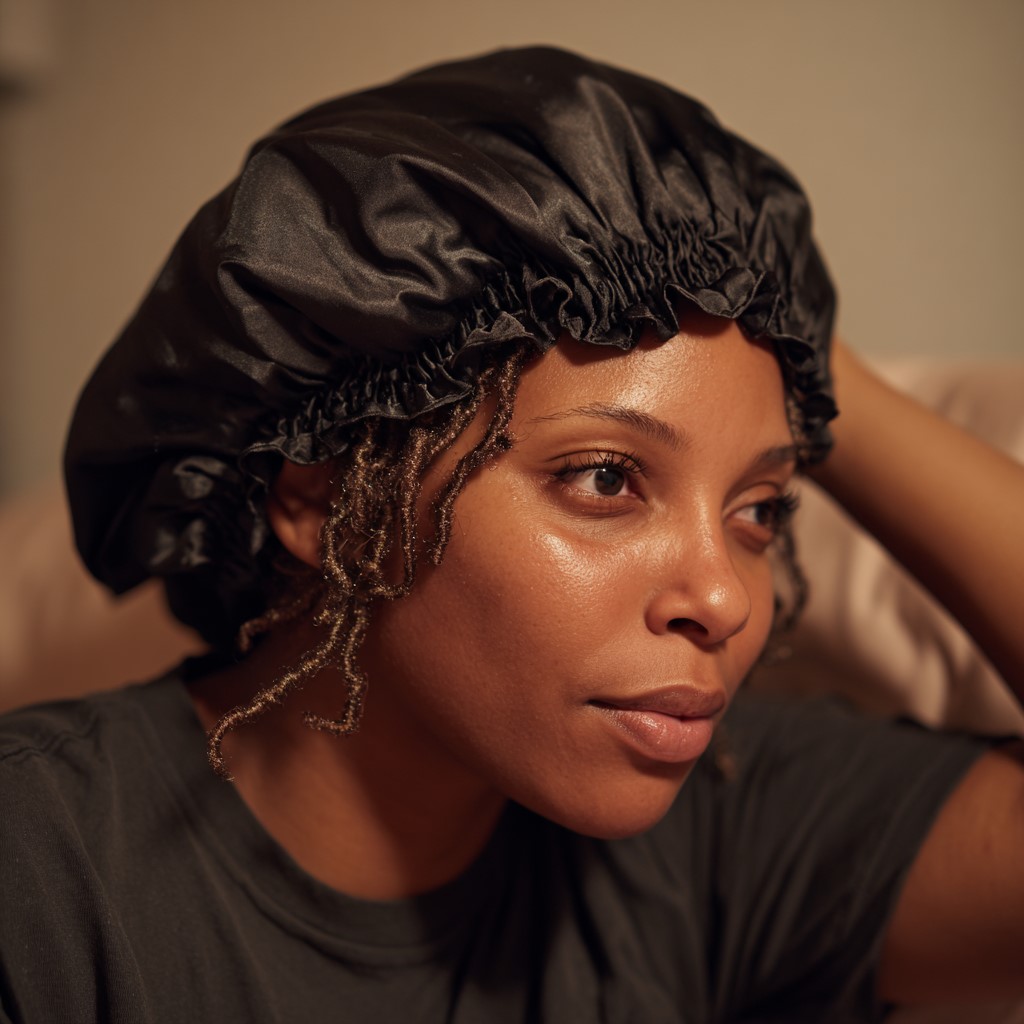
A satin pillowcase is excellent. A satin bonnet is even more comprehensive in its protection.
The bonnet completely encloses your locs, which means no matter how much you move during the night, your hair never comes into contact with any external fabric surface.
This is especially important for people who move a lot in their sleep. If you toss and turn, change positions frequently, or sleep on your side or stomach, a pillowcase alone may not fully protect your locs throughout the night. A bonnet stays with you regardless of how you sleep.
Keep this guide handy: 7 natural oils that are amazing for loc growth and scalp health
Choosing the Right Bonnet
Not all bonnets are created equal. The most important factor is size. Your bonnet needs to be large enough to contain all of your locs comfortably without compressing them tightly against your head.
Locs that are crammed into a bonnet that is too small will be compressed and reshaped during the night, which can affect how they look in the morning and put unnecessary pressure on your roots.
For medium to long locs, look for a jumbo or extra large bonnet. These are widely available online and in beauty supply stores.
The bonnet should feel comfortable and secure on your head without pulling at your edges or sitting so loose that it slips off during the night.
The Elastic Band Issue
Pay attention to the elastic band on your bonnet. A band that is too tight puts consistent pressure on your edges every single night.
Over time, that pressure contributes to thinning and edge loss. Choose a bonnet with a soft, wide elastic band that is snug enough to stay on but gentle enough that you cannot feel it pressing against your hairline as you sleep.
You’ll want to revisit this: 8 Best Loc Friendly Shampoos Ranked From Affordable to Luxury
3. Try a Satin Loc Sock or Wrap
An Alternative for Long Locs
For loc wearers with very long locs, a standard bonnet may not fully contain everything. Long locs bundled into a small bonnet can experience compression at the point where the bonnet ends, which creates a crease or bend in the locs that takes time to relax after waking.
The satin loc sock is the solution. It is essentially a long tube of satin fabric that your locs are gathered into loosely. The sock runs the length of your locs rather than just covering the crown and roots. Every section of your locs is protected from root to tip.
How to Use It
Gather your locs loosely into your hands as if you were going to make a loose ponytail. Slide the loc sock over the gathered locs from the tip end up toward the root. The sock should sit loosely around your locs without squeezing them together. Secure the open end near your scalp with the attached band or tie, keeping it gentle and not too tight.
In the morning, slide the sock off gently from the root end downward. Your locs will fall free, moisturised, defined, and ready for the day.
Don’t lose this post: How to Do a Deep Cleanse for Locs Step by Step

An Alternative Wrapping Method
If you cannot find a loc sock, a large satin scarf serves the same purpose. Lay the scarf flat, place your gathered locs in the centre, and fold the scarf loosely around them.
Tie the ends at the nape of your neck or at the crown, whichever feels more comfortable. The key word here is loosely. A tight wrap compresses your locs and defeats the purpose of the protection.
Save this for future reference: How to Use a Crochet Needle to Maintain and Repair Your Locs
4. Pineapple Your Locs Before Bed
The Easiest Nighttime Style
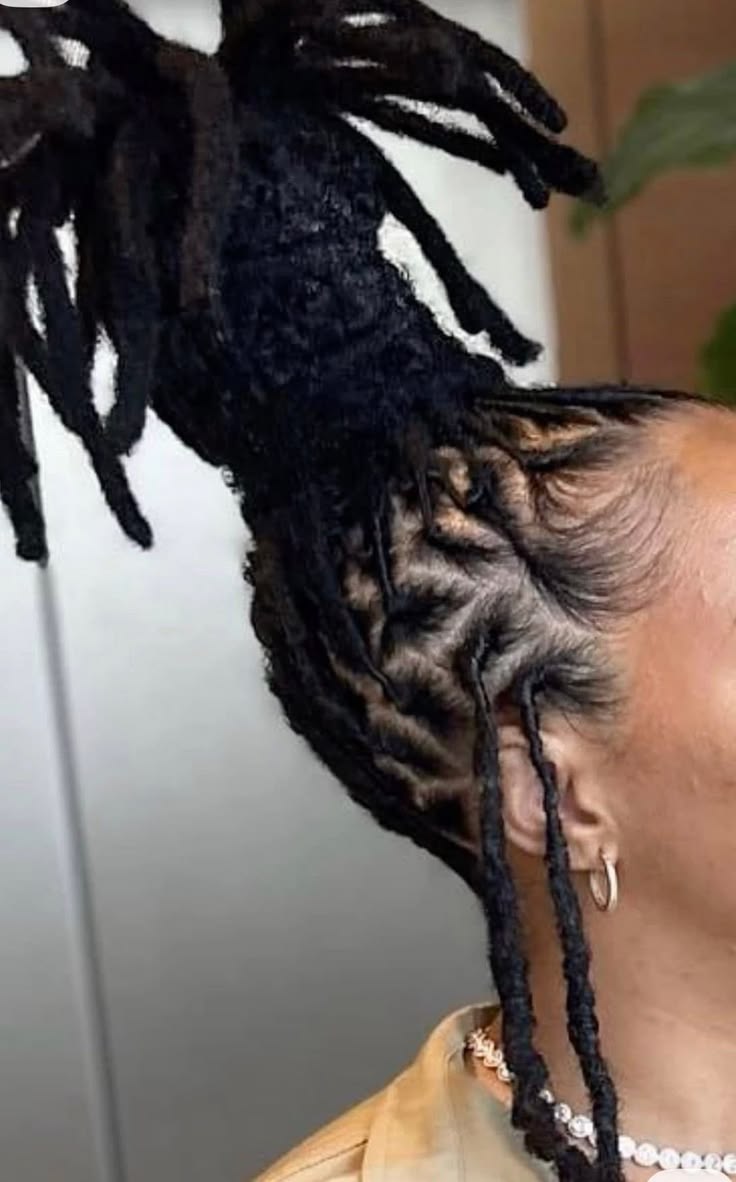
The pineapple is a technique that natural hair wearers have been using for decades and it works just as beautifully on locs.
The concept is simple. Gather all of your locs loosely at the very top of your head, as high as possible, and secure them there with a satin scrunchie.
The locs then drape forward and downward from the top of your head, resembling the leaves of a pineapple.
By gathering your locs at the very crown, you keep them elevated off the nape of your neck and off the surface of your pillow for the most part.
The scrunchie sits at the highest point of your head, which means there is minimal pressure on any one area of your scalp as you sleep.
Why the Height Matters
The higher you place the pineapple, the less contact your locs have with your pillow during the night. Locs that are gathered too low at the back of the head still rest heavily on the pillow surface and can develop frizz and compression at the nape.
Taking the time to gather them genuinely high at the crown makes a real difference.
Combine the pineapple with a satin pillowcase or bonnet for maximum protection. The pineapple organises your locs and keeps them off your neck.
The satin protects any locs that still make contact with the pillow surface. Together, these two methods cover almost every vulnerability your locs have during sleep.
For Shorter Locs
The pineapple works best on medium to long locs that have enough length to gather meaningfully at the crown.
If your locs are shorter and do not quite reach into a full pineapple, do not force it. A tight gathering of short locs puts unnecessary tension on the roots.
For shorter locs, focus on the bonnet and pillowcase methods instead, which offer excellent protection regardless of length.
Pin this for later: How to Sleep with Locs Without Ruining Them
5. Moisturise Your Locs Before Bed
Sleep as a Moisture Treatment
Nighttime is one of the best opportunities in your entire hair care routine to deliver deep, lasting moisture to your locs.
During sleep, your hair is still and undisturbed for several hours. Any moisture you apply before bed has time to absorb slowly and thoroughly into your locs without being disrupted by styling, touching, or environmental exposure.
This is fundamentally different from moisturising in the morning. Morning moisture sits on the surface of your locs and is then immediately exposed to the environment.
Nighttime moisture is applied and then sealed in by your bonnet or pillowcase, giving it hours to penetrate and condition your locs from the inside.

What to Apply
The best pre sleep moisture routine for locs is straightforward. Start with a light water based moisturiser or a diluted aloe vera spray applied along the length of your locs.
Do not saturate them. Your locs should feel lightly damp, not wet. Wet locs sealed inside a bonnet overnight can develop a musty smell and are vulnerable to mildew, especially thicker or longer locs that take a long time to dry.
Follow the water based moisturiser with a light sealing oil. Jojoba oil, sweet almond oil, and argan oil are all excellent choices for locs.
They are lightweight enough to absorb without causing buildup and they seal the moisture you have just applied into the loc effectively. Apply a small amount to your fingertips and work it along the length of your locs gently.
Focus on the Ends
Your loc ends are the oldest part of your hair. They have been on your head the longest, which means they have been exposed to the most environmental stress, the most friction, and the most moisture loss over time. The ends are almost always the driest part of any set of locs.
Give your ends extra attention during your nighttime moisture routine. Apply a slightly more generous amount of oil to the ends specifically.
Over time, this consistent attention to the ends will prevent the brittleness and thinning that affects so many loc wearers as their locs grow longer.
Add this to your reading list: How to Keep Your Scalp Healthy and Moisturised with Locs
6. Separate and Adjust Your Locs Before Lying Down
Two Minutes That Save Hours of Problems
This is the step that most people skip because it feels unnecessary. You are tired. You just want to get into bed. The last thing you want to do is stand at the mirror separating your locs.
But those two minutes before bed can save you significant time and frustration in the morning.
During the day, your locs move, shift, and interact with each other constantly. By the time you go to bed, some of your locs have probably started to buddy up at the roots, especially if your locs are younger and still in the process of establishing themselves.
If you go to sleep with locs that are already beginning to merge, the pressure and warmth of sleep will encourage that merging process further.
How to Do It
Run your fingers gently through your locs before bed, starting at the roots and working downward. Feel for any places where two locs are connecting to each other
. Gently separate them with your fingertips. Do not yank or pull. Work slowly and carefully, especially at the root where the connection is forming.
This gentle separation takes about two minutes once you make it a habit. Over time it becomes as automatic as brushing your teeth before bed. The payoff is locs that develop cleanly and individually rather than merging in ways you did not choose or plan for.
Check Your Parting
While you are doing your pre bed separation, check your parting as well. The parts between your locs can shift during the day, especially at the crown where locs experience the most movement.
Gently realign any parts that have drifted using your fingertip. This keeps your locs growing in their designated sections and maintains the clean, defined look at the root that well maintained locs are known for.
This is one to come back to: 10 signs you need a loc detox right now
Building Your Nighttime Loc Routine
Consistency Is Everything
The six methods on this list work best when they are practised consistently rather than occasionally.
One night on a satin pillowcase will not transform your locs. Fifty nights on a satin pillowcase absolutely will. The results of a good nighttime routine are cumulative.
They build on each other over time and the difference becomes increasingly visible the longer you maintain the habit.
Think of your nighttime routine as the quiet, consistent work that makes your daytime styling possible. Every gorgeous style you wear during the day, whether that is a simple freeform flow or an elaborate updo, looks better when it is built on a foundation of locs that are healthy, moisturised, and well maintained at the root.

What Your Full Routine Can Look Like
A complete nighttime loc routine does not need to take more than ten minutes. Separate and adjust your locs at the roots.
Apply your light water based moisturiser along the length. Seal with a small amount of oil, paying extra attention to the ends.
Gather into a pineapple or place in a loc sock. Put on your bonnet. Lay your head on your satin pillowcase.
That is it. Ten minutes. And those ten minutes compound into the most beautiful, healthy, long lasting locs you have ever had.
You might need this later: How to wash locs without unraveling them (the right way)
The Morning Difference
When you practise consistent nighttime care, mornings with your locs change completely. Instead of waking up to frizz, dryness, and locs that need significant attention before you can face the day, you wake up to locs that are moisturised, defined, and largely ready to go.
The styling time you need in the morning drops significantly. And the overall health and appearance of your locs improves steadily and visibly over time.
Your locs deserve that care. And honestly, so do you. A good night routine is not just about your hair. It is about going to bed with intention and waking up ready. It is about knowing that you took care of something important before you went to sleep.
Leave a Reply