There was a client who came into my chair last year with locs that felt like rope. Not the good, firm kind. The heavy, gunky kind that smells faintly sour and looks dull no matter what you put on it. She had been doing everything right, or so she thought.
Washing regularly, oiling weekly, retwisting on schedule. But nobody had ever told her about detoxing. That one appointment changed everything for her locs.
If your locs feel heavy, look dull, or have a smell that just will not go away no matter how many times you wash, you probably need a detox. And the good news is you can do it right at home. This guide walks you through every single step.
Before you dive in, if you are still building the foundation of your loc care habits, start with how to build a simple loc care routine from scratch. A detox works best when you already have a consistent routine holding things together.
What Is a Loc Detox and Why Does It Matter
A loc detox is a deep cleansing process. It removes buildup that regular shampoo simply cannot reach. Think of it like unclogging a drain. Your regular wash keeps things flowing, but eventually, you need something stronger to clear out what has been sitting deep inside.
Locs trap everything. Product residue, hard water minerals, dead skin cells, lint, and natural scalp oils all build up inside the loc over time. The longer your locs, the more they have collected. Regular shampoo sits on the outside surface. A detox pulls from the inside out.
Most people need a detox every three to six months. If you use heavy products, live in a hard water area, or swim regularly, you may need one more often. Learning how to do a deep cleanse for locs step by step alongside this guide gives you two powerful tools for the same goal.

Signs You Need a Loc Detox Right Now
Your locs will tell you when they need a detox. You just need to know what to look for. Here are the clearest signs.
Your locs feel heavier than usual. Not in a full, healthy way. In a weighed-down, stiff, almost waxy way. That is buildup sitting inside the loc shaft.
Your scalp itches even right after washing. This means something is still sitting on your scalp irritating it. A regular wash is not removing it.
You notice a smell that comes back within a day or two of washing. That odor is usually trapped buildup or mildew that has never fully dried out deep inside your locs. If this is a recurring problem for you, also look into why your locs smell and how to fix it for good. The detox handles the existing buildup, but that guide helps you stop it from coming back.
Your locs look dull and grey even when dry. Healthy locs have a natural sheen. Buildup steals that shine and leaves locs looking lifeless.
You see white or grey flakes stuck inside your locs near the roots. Some people mistake this for dandruff, but it is often product buildup mixed with dead skin. To know the difference, read what really causes dandruff with locs and how to treat it. Treating the wrong problem wastes your time and money.

What You Need Before You Start
Get everything ready before you begin. Running around mid-detox with soaking wet locs is not fun. Here is your full supply list.
You need apple cider vinegar. This is the backbone of most at-home loc detoxes. It breaks down mineral deposits and product residue. It also balances scalp pH and fights bacteria.
You need baking soda. This works with the apple cider vinegar to lift deep buildup. Together they create a powerful but gentle clarifying reaction.
You need a large basin or bucket. Your locs need to soak, not just get spritzed. The basin needs to be big enough for all your locs to sit comfortably in the water.
You need warm water. Not hot. Hot water can loosen freshly retwisted locs and irritate your scalp. Warm water opens the loc shaft enough to let the solution work.
You need a residue-free clarifying shampoo for the final wash. Do not use a moisturizing shampoo here. You want something that strips clean.
You need a few clean towels and a hooded dryer or good air-drying time. Locs must dry completely after a detox. This is not optional.
Optional but helpful: a few drops of tea tree oil for its antibacterial properties, and a spray bottle with water for after.
Step 1: Detangle and Separate Your Locs
Before you put your locs anywhere near water, do a full separation check. Go through every single loc and make sure none of them are merging at the roots.
Wet locs that are partially merged will lock together permanently if you do not separate them first.
This step takes patience. Work from the back of your head forward. Hold the base of each loc between two fingers and gently pull neighboring locs apart. Do not yank just steady, gentle pressure.
Pay extra attention to the nape of the neck and behind the ears. These spots are the most common places locs merge without you noticing. If you find thick, stubborn areas where multiple locs seem to be fusing, do not force them apart right before a detox. See a professional instead.
Step 2: Pre-Rinse Your Locs With Warm Water
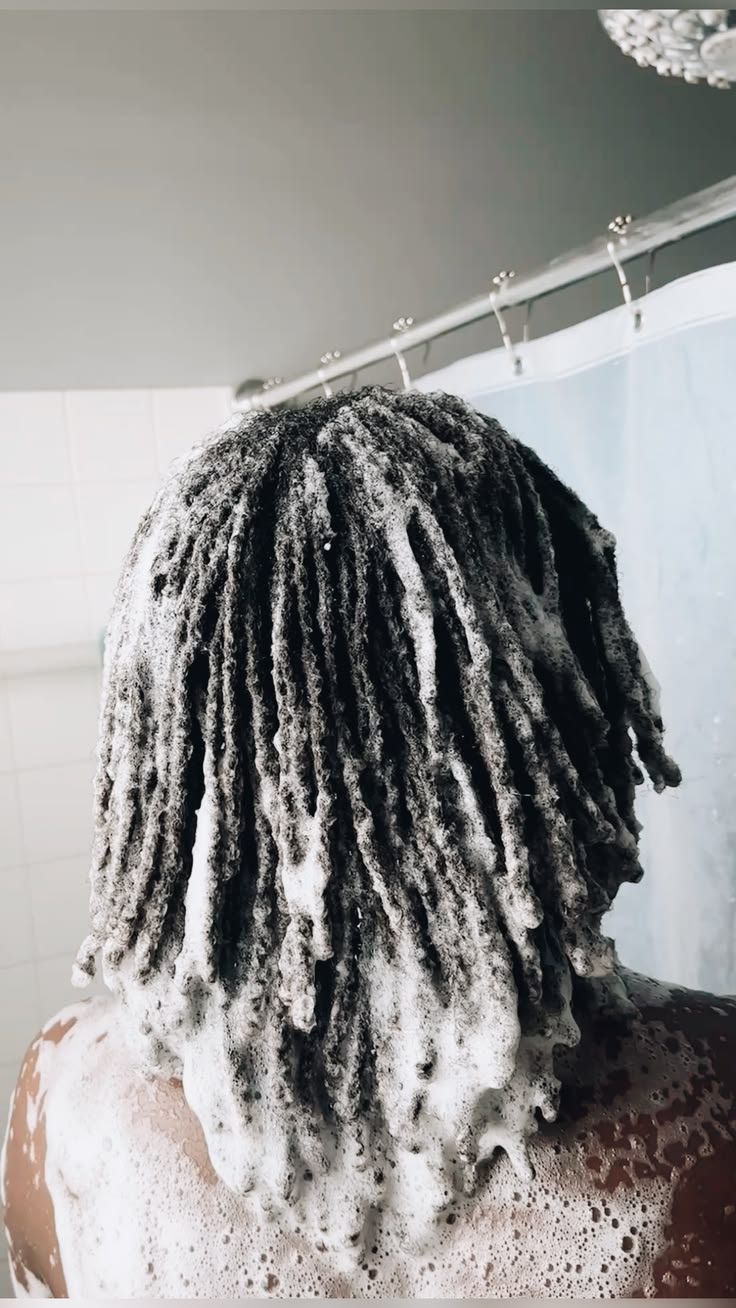
Get into the shower and rinse your locs thoroughly with warm water before the detox soak. This softens the outer surface and removes any loose dirt sitting on top.
Spend at least three to five minutes rinsing. Let the water run from your scalp down through your entire loc length. Squeeze your locs gently as water runs through them. You are not washing yet. You are just wetting and preparing.
This pre-rinse step is one most people skip. Do not skip it. Going straight into the detox soak without pre-rinsing means the soak solution has to fight through surface dirt before it even gets to the deep buildup.
Step 3: Mix Your Detox Solution
Fill your basin with warm water. Use enough water to fully submerge all your locs when you lean over the basin.
Add half a cup of apple cider vinegar for every gallon of water you use. Most people use two to three gallons. So that works out to about one to one and a half cups of apple cider vinegar total.
Add two to three tablespoons of baking soda. Add it slowly because it will fizz when it hits the vinegar water. That reaction is normal and it is part of what makes this combination work.
Stir gently. Add a few drops of tea tree oil now if you are using it. The water will look slightly cloudy and you may see it bubbling a little. That is exactly what you want.
Step 4: Soak Your Locs
Lean over your basin and submerge all your locs in the detox solution. If your locs are very long, you may need to work in sections. Soak the front half, then the back half.
Keep your locs submerged for fifteen to thirty minutes. The soaking time depends on how much buildup you have. If this is your first detox ever, go the full thirty minutes. If you detox regularly, fifteen to twenty minutes is enough.
While your locs are soaking, gently squeeze them every few minutes. You are not scrubbing or rubbing. Just squeeze and release, squeeze and release. This helps the solution move deeper into the loc shaft.
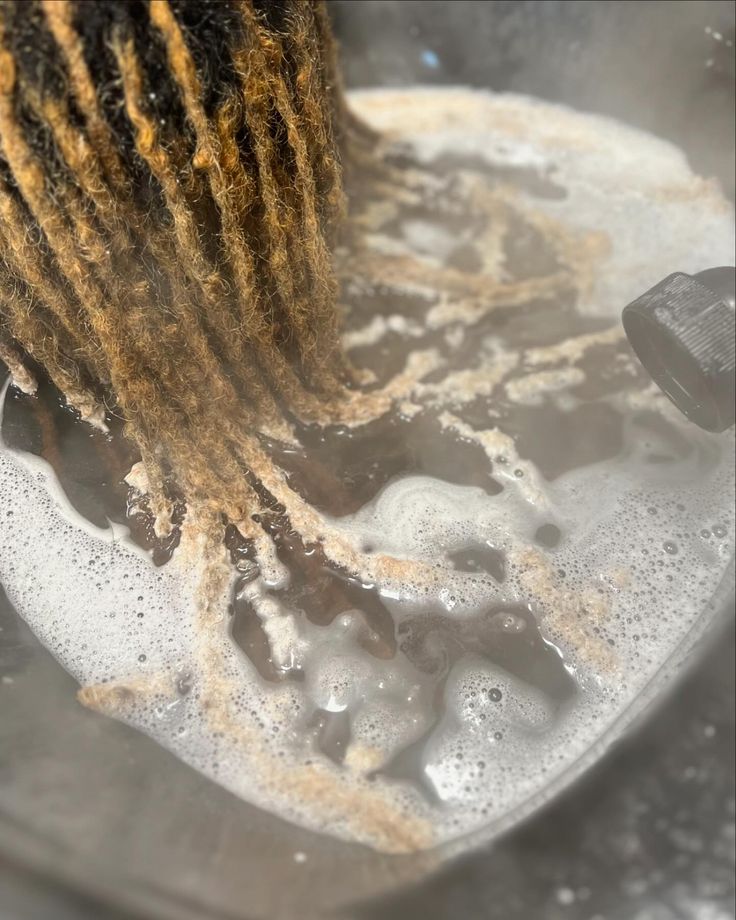
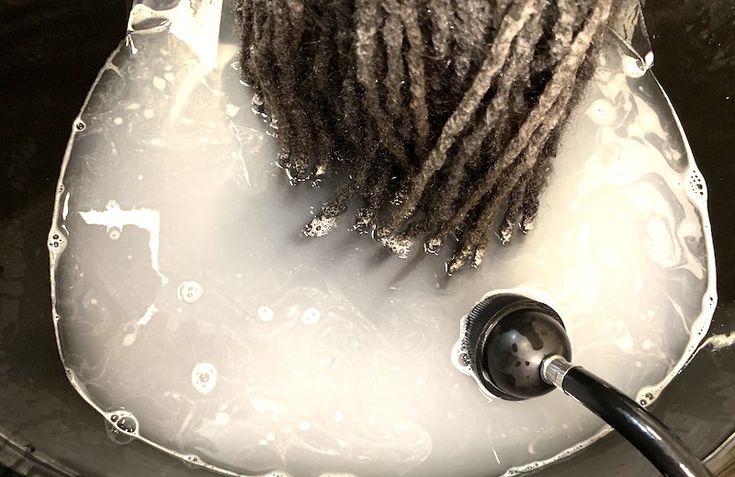
Watch the water. This part is both gross and satisfying. You will likely see the water change color. It may turn brown, grey, or even greenish depending on what your locs have been holding. That is old buildup leaving your locs. Let it go.
Do not be alarmed by how much comes out. It is not damaging your locs. It is simply releasing what was trapped inside. Some people are shocked by how dark the water gets. First-time detoxers especially should expect this.

Step 5: Rinse Thoroughly
After soaking, stand up carefully. Your locs will feel heavier than usual because they are fully saturated. Move slowly and avoid sudden head movements.
Get into the shower and rinse your locs with warm water for a full five to seven minutes. This is longer than your usual rinse. You need to clear every trace of the detox solution from inside your locs.
Work through your locs in sections. Hold each section and squeeze from root to tip as the water runs through. Keep rinsing until the water running off your locs runs completely clear.
Do not skip this rinse step or rush through it. Apple cider vinegar left sitting in your locs will dry them out. Baking soda residue can cause flaking on your scalp. Rinse completely and then rinse again just to be sure.

Step 6: Clarifying Shampoo Wash
Right after rinsing out the detox solution, follow up immediately with a clarifying shampoo wash. This removes any final traces of the detox mixture and cleanses your scalp.
Work the shampoo directly into your scalp with your fingertips. Use small circular motions. Let the lather run down through your locs naturally. Do not scrub the length of your locs aggressively.
Rinse the shampoo out completely. If your locs still feel like they have product sitting on them, shampoo a second time. Two washes are perfectly fine after a detox. In fact, for very heavy buildup, a second wash is often necessary.
Avoid using a moisturizing conditioner immediately after the detox. Your locs just went through a deep cleanse. Let them sit clean for at least a day before you add any product back in. Your scalp and locs need to breathe.
Step 7: Dry Your Locs Completely
This step is just as important as the soak itself. Locs that are not dried fully after a detox will develop mildew. That mildew is exactly what causes that persistent sour smell that no amount of washing seems to fix.
Squeeze out as much water as possible using your hands first. Then gently press a clean towel against your locs. Do not rub back and forth. Press, hold, and release. Repeat this throughout your entire head.
Then sit under a hooded dryer for thirty to forty-five minutes. If you do not have a hooded dryer, sit in a warm room with good air circulation. Point a fan at your locs if possible to speed up drying.
After the dryer, check each loc individually. Squeeze from root to tip. If any loc still feels cold or damp in the middle, it is not dry. Keep drying until every single loc is warm and completely dry from root to tip.
Only once everything is fully dry should you apply any product. A light oil on your scalp and tips is all you need right after a detox. Keep it minimal for the first day or two.

Step 8: Assess Your Locs After the Detox
Once your locs are dry, do a full assessment. Run your hands through them. Feel the difference. They should feel noticeably lighter, softer, and more flexible than before the detox.
Look at your scalp under good lighting. It should look cleaner with no visible buildup sitting at the roots. Your locs should also have more natural sheen than before.
This is also a good time to check on the overall health of your locs. Look for locs that feel thinner than others. Check the root areas for any signs of thinning or weakness.
If you notice locs that look or feel significantly thinner after the detox, that thinning was already there. The detox just made it more visible by removing the buildup that was masking it. Address thinning locs early. You can find specific guidance on how to fix locs that are too thin, too thick, or uneven before small issues become bigger ones.
How to Maintain Clean Locs Between Detoxes
A detox is a reset, not a permanent fix. What you do between detoxes determines how quickly buildup returns. Good daily and weekly habits are what keep your locs clean long-term.
Product Choices Matter Most
The single biggest cause of buildup is heavy product use. Thick butters, wax-based gels, and oil-heavy products feel great going on but they do not fully wash out. They sit inside your locs and accumulate with every application.
Switch to water-based leave-in conditioners and lightweight oils. Jojoba, grapeseed, and sweet almond oil absorb better than heavy butters. Use less product overall. Your locs do not need to be dripping in product to be healthy.
Wash on a Consistent Schedule
Washing every one to two weeks keeps surface buildup from getting a chance to work its way deep into your locs. The longer you wait between washes, the more buildup accumulates. Find your washing rhythm and stick to it.
If you are unsure about your retwisting schedule alongside your washing schedule, revisit how often should you really be retwisting your locs. The two schedules work together and getting both right makes a huge difference.

Watch What You Put on Your Hair Before Bed
Night products are a hidden source of buildup. Thick leave-ins applied at night, especially under a tight satin cap, can get pushed deep into your locs while you sleep. If you apply anything at night, keep it very light and water-based.
Also make sure your locs are always fully dry before you cover them. Covering damp locs at night creates the perfect environment for mildew growth, which eventually leads to smell and buildup even if you are washing regularly.
When to Detox More or Less Often
Every three to six months works for most people. But your locs will tell you when they need attention sooner. If you are noticing heaviness, smell, or dullness before your scheduled detox window, do not wait. Go ahead and detox early.
Some situations call for more frequent detoxing. Swimming in pools or the ocean exposes your locs to chlorine, salt, and minerals that regular washing does not fully remove.
If you swim often, plan to detox once a month or after every few swim sessions. For tips on protecting your locs before and after swimming, check out how to travel with locs: airport, beach, pool, and humidity tips. Prevention is always easier than correction.
If you have just done your first detox after years without one, wait at least four to six weeks before doing another one. Your locs need recovery time. Back-to-back detoxes can dry out your scalp and temporarily weaken your loc structure.

Special Considerations for Starter Locs
If your locs are less than six months old, be careful with detoxing. Very new locs are not fully locked yet. A long soak can loosen the formation and set your progress back.
For starter locs, skip the long soak and replace it with a thorough clarifying shampoo wash instead. Wash your scalp in sections, rinse very well, and dry completely. You are doing a lighter version of the detox without the soaking risk.
Once your locs have fully matured and locked, usually around the one-year mark, you can follow the full detox steps with no concerns. If you are not sure where your locs are in the maturity timeline, learning the difference between traditional locs vs two-strand twist locs: what’s the difference helps you understand what stage your locs are at and what they can handle.
Also, if you started your loc journey with loc extensions, the detox process is slightly different. Extensions add extra volume and length that holds water longer and traps more product. Make sure you give yourself extra drying time and be very thorough with your rinse. For context on what goes into extensions and why that matters for cleaning, look at how to do loc extensions for instant length.
A Note on Men and Loc Detoxing
Men with locs often go longer between maintenance appointments than women. There is also a tendency to use styling products more casually without thinking about buildup. A quarterly detox should be a non-negotiable part of every man’s loc care routine.
The same steps apply regardless of loc length or style. Short locs actually detox faster because there is less volume to saturate and dry. The soak time can be reduced to ten to fifteen minutes for shorter locs.
If you want your locs to look polished and professional every day, clean locs are the foundation. No style looks good on top of buildup. For more on maintaining a clean, sharp appearance with locs, read men with locs: how to look polished and professional. A detox routine is mentioned there as a core maintenance step.
What to Expect After Your First Detox
Your locs will feel different. Lighter, softer, and maybe slightly more flexible than you are used to. This is normal and good. The weight you are used to was buildup, not healthy loc density.
Your scalp may feel slightly sensitive for a day or two. The clarifying process removes buildup but it also removes some natural oils. Give your scalp a day before you apply anything heavy. A few drops of a light oil like jojoba is enough for the first day.
Some people notice their locs look slightly thinner or smaller after a detox. Again, the buildup was adding bulk. What you are seeing now is the actual size of your locs. If they look healthier and feel cleaner, the detox worked exactly as it should.
Do your first post-detox retwist about a week after the detox. Give your roots and scalp time to recover and produce some natural oil first. Coming in with a retwist too soon on a freshly detoxed scalp can cause irritation.
Final Thoughts
A loc detox is one of the most powerful things you can do for your hair. Most people wait until something is obviously wrong before they try it. But the best approach is prevention. Build the detox into your routine before you even see the signs of heavy buildup.
Clean locs are healthy locs. Healthy locs grow faster, feel better, and look incredible. The whole process from start to finish takes a couple of hours including dry time. That is a small investment for the results you get.
As a loctician, I have seen the difference a single detox makes. Clients walk out feeling like they have brand new locs. All that was needed was removing what did not belong there in the first place.
Commit to your detox schedule. Keep your products light. Dry your locs completely every single time. And show up consistently for your hair. That is the entire formula.
Leave a Reply