If you have been working on growing and optimizing your hair health, this post is the perfect next read. Go check out my post on how to grow your locs faster what science says about loc growth alongside this one.
Because here is the thing. All the effort you put into growing beautiful locs means very little if the world refuses to respect them. You can have the healthiest, most stunning locs imaginable. But without legal protection, those locs can still cost you a job, a promotion, or a place in school.
That is exactly why the CROWN Act exists. And that is exactly why every loc wearer needs to understand it deeply and clearly. Today we are going into the full story of the CROWN Act. We will cover where it came from, what it actually does, and what it means for your daily life right now.
What Does CROWN Actually Stand For
The CROWN Act is not just a catchy name. It is an acronym with real meaning behind every single word. CROWN stands for Creating a Respectful and Open World for Natural Hair.
Each word in that phrase was chosen deliberately. Together they communicate the core purpose of the legislation very clearly. The goal is to create environments where natural hair is respected rather than penalized.
It aims to build workplaces, schools, and public spaces that are open to natural hair expressions. It also aims to ensure people do not have to choose between their identity and their opportunities.
Save this for your loc journey: Interlocking for Beginners: What It Is and How to Do It Safely
The Problem the CROWN Act Was Created to Solve
To fully understand why the CROWN Act matters, you need to understand the specific problem it addresses.
Hair discrimination against Black people is not a new phenomenon. It has deep historical roots that stretch back centuries.
Come back to this when you need it: How to Fix Locs That Are Too Thin, Too Thick, or Uneven
The Historical Context of Hair Discrimination
During the era of slavery in the United States, enslaved African people were forced to alter their natural hair.
Natural African hair textures were systematically associated with inferiority and uncleanliness by colonial systems of power.
These associations did not disappear when slavery ended. They persisted and evolved into social norms and workplace policies.
They continued to penalize Black people for wearing their hair naturally well into the twentieth century and beyond.
The Tignon Laws of Louisiana in the late eighteenth century are one of the earliest documented examples. These laws required free Black women to cover their hair in public. The stated reason was to enforce racial hierarchy.
While the Tignon Laws are long gone, the underlying impulse to control Black natural hair persisted across generations. It simply took on different forms in different eras.
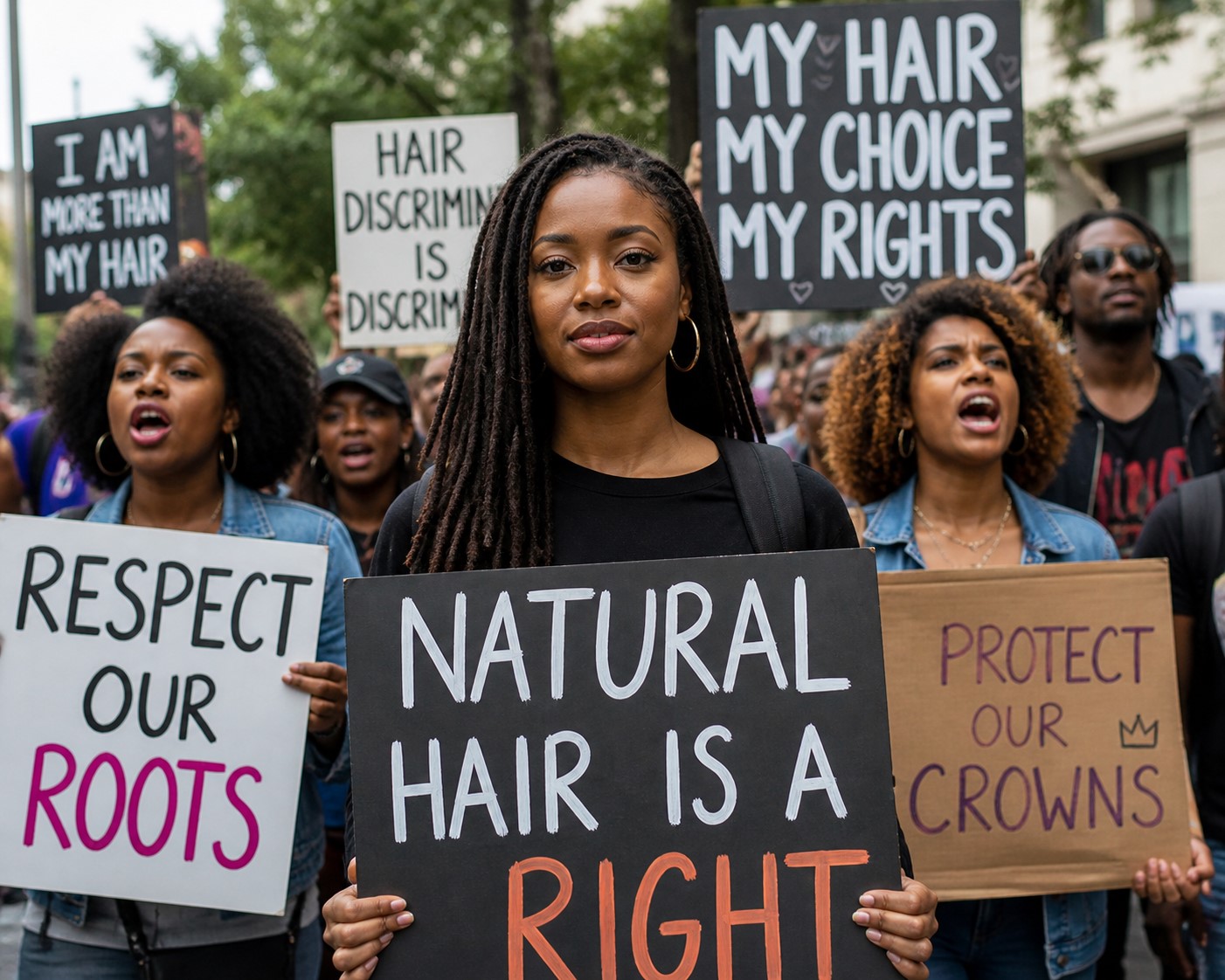
Modern Hair Discrimination: More Common Than You Think
Many people assume that hair discrimination is a relic of the past. The data tells a very different story. A 2019 study conducted by Dove and the CROWN Coalition found deeply troubling patterns.
Black women are eighty percent more likely to change their natural hair to meet workplace expectations than white women. Black women with natural hair are one and a half times more likely to be sent home from work because of their hair.
Furthermore, Black women’s hair is two and a half times more likely to be perceived as unprofessional.
These are not abstract statistics. Behind each one is a real person told their natural hair was not acceptable. A person who lost income, opportunity, or dignity because of how their hair grows naturally.
The CROWN Act was created specifically to address this documented, ongoing reality.
The Origins of the CROWN Act
The CROWN Act was first introduced in California in 2019. It was signed into law by Governor Gavin Newsom on July 3rd 2019. California became the first state to explicitly prohibit discrimination based on natural hair texture and protective hairstyles.
This prohibition applied to both workplaces and schools from the very beginning.
Bookmark this for later: How to Do a Deep Cleanse for Locs Step by Step
The People Behind the CROWN Act
The legislation was developed through a coalition of organizations and individuals. They had been documenting and fighting hair discrimination for many years before the law passed.
The CROWN Coalition includes organizations like Dove, the National Urban League, Color of Change, and the Western Center on Law and Poverty.
Their collective research, advocacy, and organizing made the CROWN Act possible.
Several high profile incidents of hair discrimination in the years before 2019 also helped build the necessary public and political momentum for the legislation.
What the CROWN Act Actually Does
Understanding what the CROWN Act specifically does is essential for every loc wearer. The details matter enormously for knowing how to use it as a protective tool in your own life.
Keep this guide handy: How to Add Color to Locs Without Major Damage
What the Law Explicitly Prohibits
The CROWN Act explicitly prohibits discrimination based on hair texture and protective hairstyles. The law defines protective hairstyles to include locs, braids, twists, and Bantu knots among others.
In states where the CROWN Act has been passed, employers cannot legally refuse to hire someone because of their locs. They cannot discipline, demote, or terminate an employee because of their locs either.
Schools cannot send students home or enforce dress codes that specifically target locs or other natural hairstyles.
The law also covers hair texture as a separate protected characteristic from hairstyle. This is an important distinction. It means protection extends beyond specific named styles.
It covers the fundamental texture of natural hair itself. Policies that target coily or kinky hair textures can potentially fall within the scope of the CROWN Act’s protections even if they do not name specific styles.

How the CROWN Act Connects to Existing Civil Rights Law
The CROWN Act builds on and strengthens existing civil rights protections. Title VII of the Civil Rights Act of 1964 prohibits employment discrimination based on race among other characteristics.
However, courts had historically been reluctant to extend race discrimination protections to cover hair specifically. The reasoning used was that hair is a mutable characteristic. Unlike skin color, hair can theoretically be changed.
The CROWN Act directly addresses this legal gap. It explicitly establishes that hair texture and protective hairstyles are characteristics associated with race.
Therefore, discriminating against these characteristics constitutes racial discrimination under the law. This legally significant clarification closes a loophole that had been used to justify hair discrimination for decades across the country.
The State by State Landscape
One of the most important things to understand about the CROWN Act is that it is not yet a single national law. As of the information available here, the CROWN Act has been passed in a significant and growing number of states.
However, it has not yet been enacted as federal law. This means its protections are not uniform across the entire country right now.
You’ll want to revisit this: How to Use a Crochet Needle to Maintain and Repair Your Locs
States That Have Passed the CROWN Act
California led the way in 2019 and was quickly followed by a growing list of states. New York, New Jersey, Virginia, Colorado, Washington, Maryland, Connecticut, New Mexico, and Nevada are among those that have passed their own versions.
Each state version has its own specific language and scope. Some state versions are broader and stronger in their enforcement mechanisms than others.
Knowing the specific version of the law in your state is important. It tells you exactly what protections you have available to you.
States Without CROWN Act Protections
In states that have not yet passed the CROWN Act, legal protections for loc wearers are less explicit. People in these states are not entirely without recourse though.
Existing racial discrimination laws may still provide some protection depending on the specific circumstances.
However, the absence of explicit hair discrimination legislation makes legal claims harder to bring and harder to win.
Advocacy organizations are actively working to pass CROWN Act legislation in every remaining state and at the federal level simultaneously.
The Federal CROWN Act Push
Federal CROWN Act legislation has been introduced in the United States Congress multiple times. It has passed the House of Representatives on several occasions.
However, it has repeatedly stalled in the Senate without reaching a floor vote. Federal passage would extend consistent protections to every person in every state.
It would not matter whether their state had passed its own version or not. Advocacy for federal passage remains an active and ongoing effort within natural hair and civil rights communities across the country.

The CROWN Act Beyond the United States
Hair discrimination is not uniquely an American problem. The legislative response to it has not been limited to the United States either.
Don’t lose this post: What is loc rot and how do you prevent it
United Kingdom Protections
In the United Kingdom, the Equality Act of 2010 provides broad protections against racial discrimination. UK courts and tribunals have increasingly recognized that hair discrimination against Black people constitutes racial discrimination.
This recognition falls under the existing Equality Act framework without needing new specific legislation. Several high profile cases of hair discrimination in UK schools and workplaces have resulted in successful legal challenges.
There is also growing advocacy for more explicit hair specific protections similar to the CROWN Act in the UK context.
Canada and Other Countries
Canada’s human rights legislation prohibits racial discrimination in employment and services at both the federal and provincial levels.
Canadian human rights tribunals have addressed cases of hair discrimination directly.
They have found in favor of complainants in several documented cases. Similar frameworks exist across other countries with strong anti discrimination legal traditions.
The global conversation about hair discrimination continues to grow as awareness of the issue increases internationally year by year.
What the CROWN Act Means for Your Daily Life as a Loc Wearer
Understanding the legislation in the abstract is one thing. Understanding what it means for your actual daily life is another matter entirely. Let us get into the practical implications for loc wearers specifically.
At Work
If you live in a state with CROWN Act protections, you have explicit legal grounds to wear your locs at work.
This means you can wear your locs to job interviews without legal fear of rejection because of them. It means you can wear your locs in client facing roles without being told they are inappropriate.
It means you can push back against appearance policies that specifically target your locs. And it means you have the law behind you when you do so confidently.
However, legal protection does not mean discrimination stops happening entirely. It means you have recourse when it does happen.
Documenting incidents carefully and knowing how to escalate formally are both important practical skills. My post on how to handle loc discrimination at work or school goes into specific detail about navigating these situations step by step and thoroughly.
At School
For students wearing locs, the CROWN Act provides protection against school policies that prohibit locs. It also protects against policies that require students to cut or cover them.
School dress codes have historically been one of the most common settings for hair discrimination against Black students. Several high profile cases involving students being suspended or excluded from graduation ceremonies attracted enormous national attention.
These cases were directly instrumental in building support for CROWN Act legislation across multiple states.
If you or your child is facing hair discrimination at school in a CROWN Act state, you have clear legal grounds to challenge the policy. Start by requesting the specific written policy being applied.
Then compare it carefully against the language of your state’s CROWN Act. If the policy conflicts with the law, you have the right to file a formal complaint with the relevant oversight body immediately.

In Housing and Public Accommodations
Some state versions of the CROWN Act extend protections beyond just employment and education. They also cover housing and public accommodations in their scope.
This means that in some states, landlords cannot legally discriminate against tenants based on their natural hair. Businesses and service providers cannot legally refuse service to someone because of their locs either.
The scope of these additional protections varies significantly between different state versions of the law.
The Limitations of the CROWN Act
As important as the CROWN Act is, it is not a perfect or complete solution to hair discrimination. Understanding its limitations helps you maintain realistic expectations about what legal protection can and cannot achieve.
Enforcement Challenges
Laws are only as effective as their enforcement mechanisms allow them to be. Even in states where the CROWN Act has been passed, enforcing it requires affected individuals to report violations.
They must navigate complaint processes and sometimes pursue formal legal action. Many people who experience hair discrimination do not report it at all. Some do not know their rights.
Others fear retaliation or cannot afford the emotional energy that formal complaints require. Effective enforcement remains an ongoing challenge even where strong legal protections exist on paper.
Changing Culture Alongside Changing Laws
Laws change behavior partly through deterrence and partly through the cultural shift that accompanies their passage.
However, deeply ingrained biases about natural Black hair are not instantly eliminated by a new law. Changing the cultural attitudes that drive hair discrimination requires sustained education and advocacy over years and decades.
The CROWN Act is a critically important legal tool. But it is one part of a much larger and longer process of genuine cultural change.
The Gap Between Protection and Reality
Even with legal protections in place, many loc wearers continue to experience discrimination that goes unreported or unaddressed.
The emotional toll of navigating these situations is real and significant even when you have the law on your side. Legal protection does not eliminate the experience of bias. It provides a framework for challenging bias formally when it occurs.
The work of building a world where those formal challenges become increasingly unnecessary is ongoing. It requires collective effort that goes far beyond individual legal cases.
How to Support the CROWN Act and Natural Hair Advocacy
Whether or not you personally need the CROWN Act’s protections right now, supporting natural hair advocacy contributes to a better world for every loc wearer.
Know Your State’s Status
First and most practically, know whether your state has passed the CROWN Act. Know what specific protections it includes for loc wearers.
This knowledge is the foundation of your ability to advocate for yourself and others effectively. Look up your state’s legislation directly.
Read the specific language of the law rather than relying on summaries or secondhand information alone.
Support Advocacy Organizations
Organizations like the CROWN Coalition, the NAACP, Color of Change, and various natural hair advocacy groups are actively working on both legislative and cultural fronts.
Supporting these organizations through donations, volunteering, or amplifying their work contributes to the broader movement.
Even small contributions of time or resources add up significantly when multiplied across a whole community of supporters.
Share Your Story
Personal stories are one of the most powerful tools for building awareness and political will around hair discrimination.
If you have experienced hair discrimination as a loc wearer, sharing your story contributes to the body of evidence that advocates use to push for legislative change. Your experience is not just personal.
It is part of a larger documented pattern that directly shapes policy decisions at every level of government.
Model Confidence and Pride in Your Locs
Sometimes the most powerful thing you can do is wear your locs with visible confidence and pride. Visibility matters deeply in this conversation.
Every loc wearer who walks into a boardroom, a courtroom, or a classroom looking polished and professional challenges the bias that locs are incompatible with these spaces.
My post on how to style locs for a job interview and still look like yourself has beautiful ideas for presenting your locs confidently in any professional setting you enter.
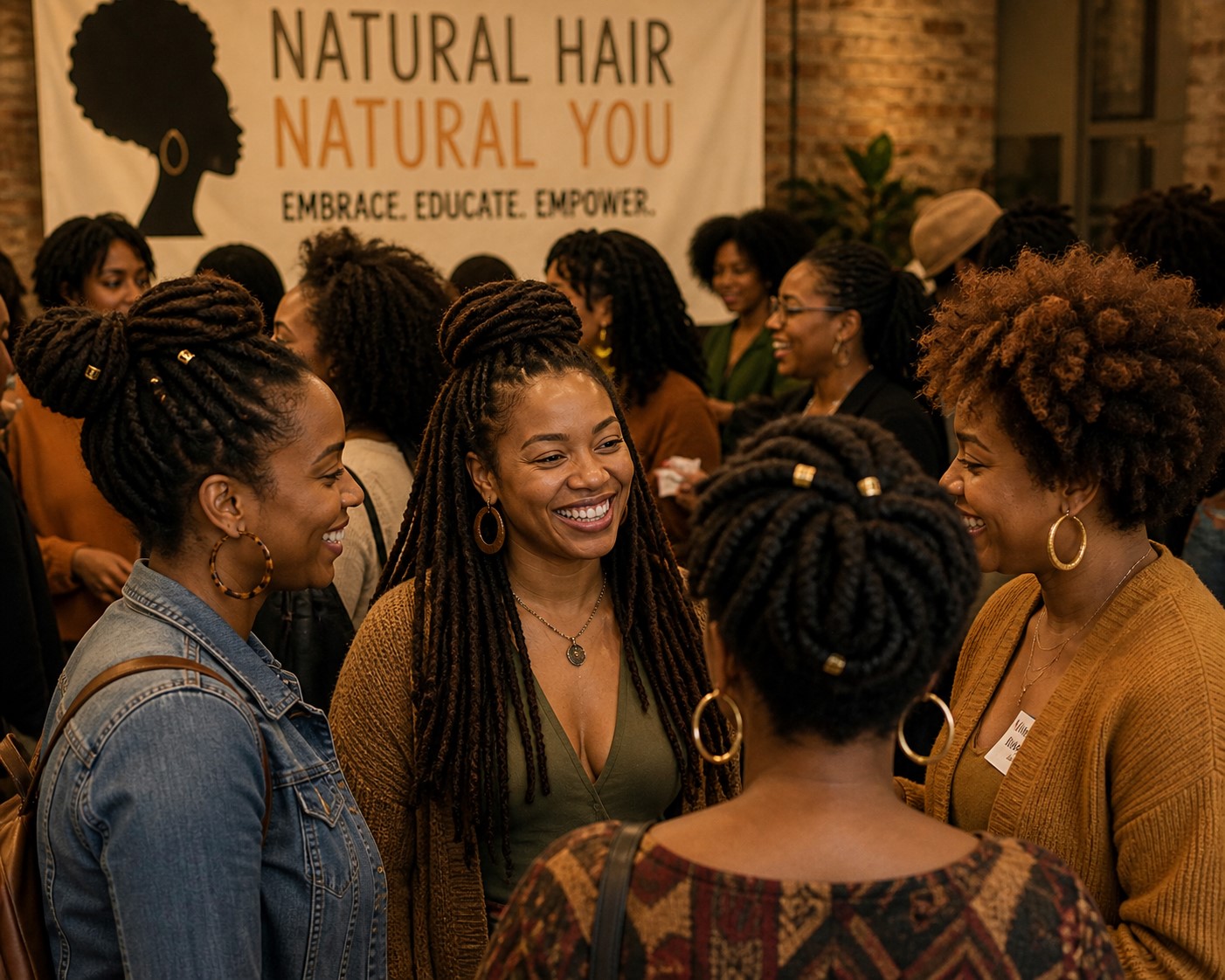
The Bigger Picture: Why This Matters Beyond Hair
The CROWN Act is ultimately about more than hair. It is about the right of Black and Indigenous people to exist in professional spaces as their full, authentic selves.
It is about dismantling the legacy of a colonial standard of beauty. That standard was built on the exclusion and erasure of non European aesthetics and identities across centuries.
When a young Black student is told their locs are not appropriate for graduation, the message is not really about hair. It is about belonging.
It is about whose presence is considered legitimate in spaces of achievement and celebration. When a qualified candidate is passed over because of their locs, the harm extends far beyond lost income.
It reinforces deeply damaging messages about whose appearance is acceptable in positions of authority and success.
The CROWN Act pushes back against all of that directly and explicitly. It says legally that natural Black hair belongs in every room, every school, and every workplace.
For loc wearers specifically, it provides legal backing for something that the spiritual and cultural traditions behind locs have always affirmed. Your locs are not a liability. They are a legacy worth protecting.
My post on the spiritual and cultural meaning of locs across different traditions captures the depth of that legacy beautifully and is a really grounding read alongside this one.
Final Thoughts
The CROWN Act is one of the most significant pieces of legislation affecting loc wearers in recent history. It is not perfect and it is not finished. Federal passage in the United States is still needed urgently.
Cultural change must accompany legal change consistently. Enforcement must be strengthened and made more accessible to affected communities. But what has already been achieved represents real, meaningful progress.
It was built through years of advocacy, organizing, and the courage of individuals who refused to accept discrimination quietly.
Know your rights. Document your experiences. Support the broader movement actively. And wear your locs with the full knowledge that you are part of a community shaping a more just and equitable world. Your hair is not just beautiful. It is a statement. And now, in a growing number of places, it is also protected by law.
If you want to keep building your knowledge around loc advocacy and care, my posts on my honest review of going from relaxed hair to locs and everything you need to know about getting locs as a man are both really valuable next reads. They connect the personal and political dimensions of the loc journey in meaningful and powerful ways.
Leave a Reply